Military Scours Region for Missing Pilot
A U.S. F-15E pilot is missing in action, prompting an intensive, round-the-clock search and rescue operation. The incident highlights the unpredictable risks of modern warfare and the military's core principle of leaving no one behind. Officials are working tirelessly to bring the pilot home safely.


Military Scours Region for Missing Pilot
In the midst of a complex conflict, a U.S. F-15E pilot has gone missing. The incident highlights the inherent dangers of modern warfare and the military’s unwavering commitment to its personnel. Officials are working around the clock to bring the pilot home safely.
Unpredictable Nature of Warfare
The disappearance of the F-15E pilot serves as a stark reminder of how unpredictable war can be. Even with advanced technology and highly trained personnel, the risks are immense. “It really does put a fine point on how unpredictable warfare is, doesn’t it?” stated a National Security Council Chief of Staff. This sentiment was echoed by others, emphasizing that regardless of how sophisticated the military or how incredible the equipment, warfare always involves extraordinary risk.
Commitment to ‘No One Left Behind’
A cornerstone of the American military’s strength is its commitment to leaving no one behind. This principle guides the intensive search and rescue efforts currently underway. “One of the reasons we have the finest military force on the planet is because we leave no man or woman behind in a battle zone,” noted a commentator. This commitment means that the entire nation, from the Pentagon to search and rescue teams on the ground, is focused on retrieving the pilot.
Personnel across various agencies, including CENTCOM headquarters in Tampa, the Middle East, the Pentagon, the National Security Council, and the White House Situation Room, are engaged in a 24/7 effort. This coordinated operation underscores the military’s unique approach to personnel recovery. “There is no, in no circumstance, do we stop until we bring that man or woman home,” officials stated.
Nighttime Operations and Advanced Capabilities
The pilot went down in enemy territory, raising concerns about operating in darkness. However, experienced military personnel suggest that nighttime can offer advantages. Colonel Dan Rooney, an F-16 fighter pilot, explained that darkness can be an asset. “The darkness is our friend,” he said. This is because pilots have sophisticated equipment to navigate at night, and search and rescue teams can sometimes maneuver their aircraft more effectively in the dark than in daylight.
The military possesses extraordinary capabilities and equipment that enable these challenging missions. “We have extraordinary capabilities and equipment that allow us to be able to do what you just said, to never leave anyone behind,” an official confirmed. There is strong confidence that if retrieval is possible, the pilot will be brought home.
Geopolitical Context and Air Superiority
Some have used the incident to question U.S. air superiority in the region. However, many argue that drawing broader political conclusions from this mishap is inappropriate. Instead, the focus remains on the recovery mission. Officials maintain that the U.S. holds significant command of the air, arguably the most since the first Gulf War, despite aircraft occasionally going down.
This event serves as a reminder of the daily risks pilots undertake, even during peacetime. Mishaps can happen, but the overall command and overmatch in the air over the last 35 years have been extraordinary. This situation underscores the sacrifices made by pilots every day.
Information Warfare and Potential Targets
Iran has reportedly offered rewards for information leading to the pilot’s capture. This raises questions about potentially disrupting Iran’s propaganda efforts. While Iranian television broadcasts offer a window into the regime’s messaging, there’s a debate about whether this is the right time to target such infrastructure.
An argument exists for considering economic and industrial targets within Iran. This could include telecommunications, roads, and bridges that might facilitate the search for the pilot. Prioritizing actions that could hinder Iran’s ability to apprehend the pilot is seen as a top concern.
Strategic Implications and Allied Support
The immediate strategy has shifted to prioritize the pilot’s recovery, leading to a temporary reduction in targeting operations. However, this incident is not expected to alter the broader strategy concerning the Strait of Hormuz. The situation highlights the complexity and persistent dangers in the region, even with degraded enemy capabilities.
Reopening the Strait of Hormuz remains a critical objective. The U.S. Navy has long prepared for such missions, with past operations in the late 1980s. While successful, these missions are inherently dangerous, a fact underscored by the downed aircraft. The risk to service members must always be considered.
Call for Allied Cooperation
The incident also serves as a reminder to allies about the importance of their support. The U.S. has invested significant resources and lives to protect allies in past conflicts. There is a call for these allies to step up and support current operations, particularly by allowing the use of air bases that the U.S. helps fund.
The denial of access to bases in countries like Spain and Italy is viewed as a significant issue in international politics. Allies who have benefited from U.S. defense deterrence are not stepping up in a time of need. Part of this inaction is attributed to political disagreements, but a more profound problem is the atrophy of some European militaries, leaving them unable to contribute effectively even if they wished to.
This situation raises concerns about the future of alliances, where some partners not only disagree on fundamental political questions but are also militarily unprepared to support collective security efforts. The frustration among military personnel about this lack of support is palpable, with many believing that service members themselves would readily assist in such critical missions, unlike some political leaders who may not fully grasp the stakes involved in defending freedom.
Source: 'NO ONE IS EVER LEFT BEHIND': Officials work 24/7 to bring missing pilot home (YouTube)

Related Articles


Networks Aid Migrants Crossing Borders Illegally
People from the same countries often form networks when crossing borders. These groups provide support and help manage activities, both legal and illegal. Understanding these networks is key for authorities trying to manage migration and security.
US Pilot Rescued After F-15 Jet Shot Down Over Iran
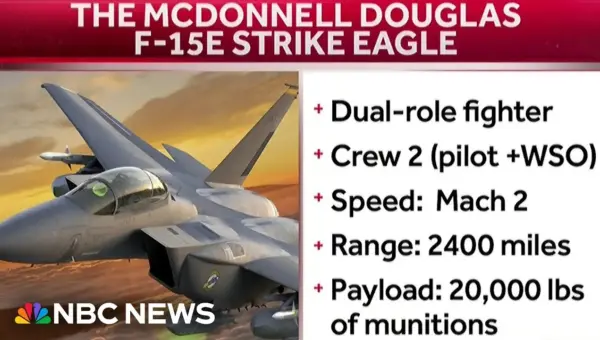
One U.S. pilot has been rescued alive after their F-15 fighter jet was shot down over Iran, U.S. officials confirmed. Search and rescue efforts are ongoing for a second pilot who remains unaccounted for. The incident challenges previous U.S. claims of full control over Iranian airspace.
Iran Downs US Jet, Pilot Missing Amid Propaganda Victory
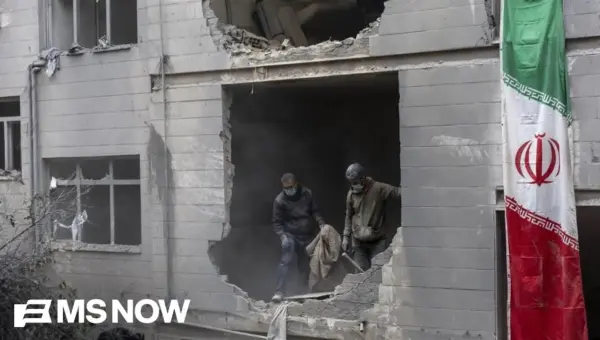
An American F-15 fighter jet was shot down by Iranian forces, marking a significant propaganda victory for Iran and challenging U.S. claims of diminished Iranian air power. One pilot has been rescued, but the second remains missing amid a tense search and rescue operation.