Military Might or Madman’s Musings: Decoding Hegseth’s Iran Rhetoric
Pete Hegseth's aggressive rhetoric on Iran drew sharp criticism, highlighting the disconnect between hawkish posturing and public sentiment. The analysis explores the implications of his 'GI Joe' style pronouncements in the current geopolitical climate.

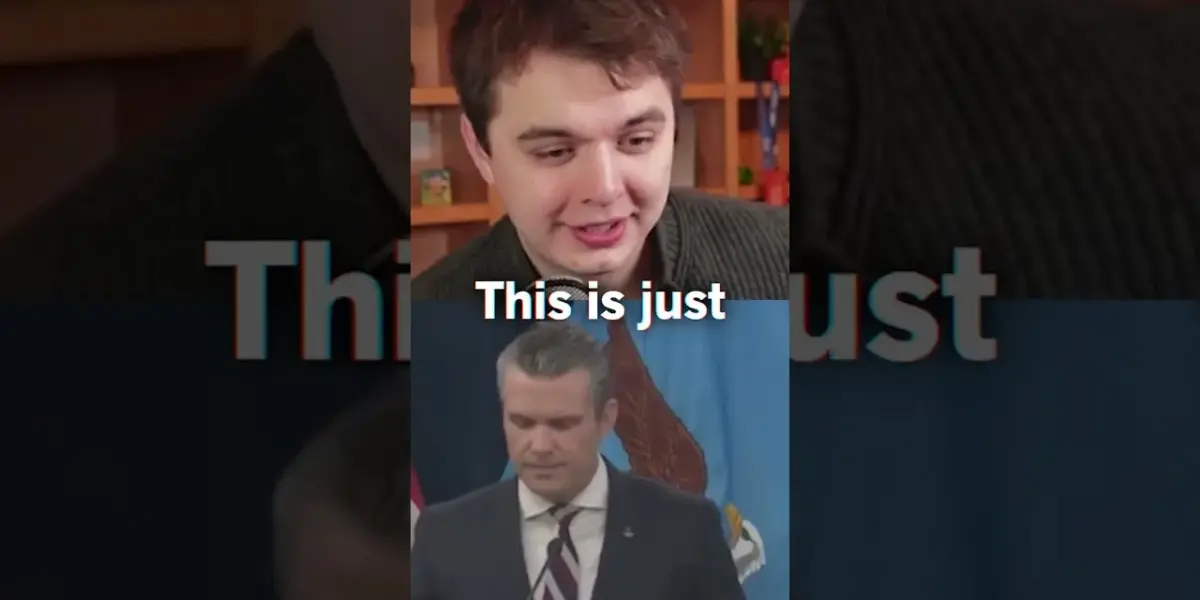
Hegseth’s Hawkish Humiliation: A PR Stumble or Strategic Signal?
Pete Hegseth, a familiar face in conservative media, recently found himself in the crosshairs of public opinion following a particularly aggressive and arguably unhinged public statement regarding Iran. The content of his remarks, which seemed to revel in the idea of overwhelming military might and “death and destruction from the sky all day long,” has sparked significant debate. Was this a genuine, albeit alarming, expression of his views on foreign policy, or a strategic misstep that backfired spectacularly?
The Rhetoric of Raw Power
Hegseth’s language was stark and unflinching, painting a picture of a one-sided military engagement. He invoked a litany of advanced military hardware – B-52s, B-1s, Predator drones, and fighter jets – emphasizing their role in dominating the skies and selecting targets with impunity. The core of his argument, or at least his visceral reaction, seemed to be that such a conflict was never intended to be fair, and indeed, it would not be.
“This was never meant to be a fair fight, and it is not a fair fight,” he declared, a statement that elicited strong reactions. The sheer intensity and graphic nature of his description – “death and destruction from the sky all day long” – left many listeners questioning the intent and the audience for such pronouncements. Is this a briefing for the American people, a justification for potential military action, or a “deranged note to other countries,” as one observer cynically put it? The lack of clarity on the objective of his speech, coupled with its aggressive tone, left many feeling that “he’s not landing it.”
Echoes of ‘GI Joe’ and AI Ambitions
The public’s response was swift and, for Hegseth, likely unwelcome. The top online comment, suggesting the speech sounded like “a guy playing GI Joe,” perfectly encapsulated the sentiment of many. This comparison, while perhaps dismissive, highlights a perceived disconnect between the gravity of military conflict and the almost game-like portrayal offered by Hegseth. It suggested a lack of serious engagement with the complex geopolitical realities and human costs involved.
Further amplifying this critique, the notion that “ChatGPT definitely wrote this script” emerged. This observation, while a hyperbolic jab at the perceived artificiality and perhaps even the lack of genuine human insight in the speech, points to a broader concern in the digital age: the blurring lines between authentic expression and algorithmically generated content. The input for such a script, the critique implied, might have been something akin to “write me a really cool badass speech like I’m in a movie,” rather than a carefully considered foreign policy doctrine.
Historical Context: The Spectacle of War Talk
The tendency for political figures to engage in bellicose rhetoric, particularly concerning adversaries like Iran, is not new. Throughout history, leaders have used displays of military strength and aggressive language to project power, deter enemies, and rally domestic support. However, the effectiveness and appropriateness of such tactics are constantly in flux, influenced by the media landscape, public sentiment, and the specific geopolitical climate.
In the post-9/11 era, and particularly in the context of ongoing tensions in the Middle East, discussions about military intervention have been fraught with complexity. The “shock and awe” campaigns, the debates over the Iraq War, and the persistent nuclear anxieties surrounding Iran have all shaped public perception of military solutions. Hegseth’s current rhetoric can be seen as a continuation of a hawkish tradition, but one that is increasingly scrutinized in an era where the human and economic costs of war are more widely understood and debated.
Balanced Perspectives: The Case for Deterrence
While Hegseth’s delivery was widely criticized, it’s important to acknowledge the underlying strategic thinking that such rhetoric, however clumsily expressed, might be intended to serve. Proponents of a strong military posture often argue that clear and unambiguous displays of power are essential for deterrence. The idea is that by projecting an image of overwhelming capability and a willingness to use it, a nation can dissuade potential adversaries from aggression.
In the complex and often volatile relationship between the United States and Iran, deterrence has long been a cornerstone of U.S. policy. The Islamic Republic has a history of challenging U.S. interests in the region, supporting proxy groups, and pursuing nuclear ambitions. From this perspective, Hegseth’s emphasis on military superiority, while lacking in diplomatic nuance, could be interpreted as an attempt to reinforce the message that any hostile action would be met with a devastating response. The “fair fight” comment, in this light, might be an assertion that the U.S. military’s advantage is so profound that an Iranian challenge would be futile.
Why This Matters
The significance of Hegseth’s remarks extends beyond a single instance of controversial public speaking. It highlights several critical aspects of contemporary political discourse:
- The Power of Language in Foreign Policy: Rhetoric matters. Aggressive and simplistic language can escalate tensions, alienate allies, and misinform the public about the true costs and complexities of conflict. Conversely, measured and precise language is crucial for de-escalation and diplomacy.
- Public Perception of Military Action: The “GI Joe” and AI analogies underscore a growing public fatigue with, and skepticism towards, overly militaristic posturing. In an era where the human toll of war is widely documented, a detached or glorifying approach to military might is likely to be met with resistance.
- The Role of Media and Online Discourse: The rapid spread and dissection of Hegseth’s comments via social media illustrate the amplified impact of political statements. Online platforms can quickly turn a single utterance into a widespread public critique, forcing a reckoning with the substance and style of political communication.
- Geopolitical Tensions: The context of U.S.-Iran relations is a critical factor. Any rhetoric concerning military options in this region carries significant weight and potential consequences, demanding careful consideration of diplomatic avenues and the avoidance of gratuitous escalation.
Implications, Trends, and Future Outlook
Hegseth’s public relations misstep serves as a case study in the evolving nature of political communication. The trend towards more direct, often unfiltered, communication via social media has empowered figures like Hegseth to bypass traditional media gatekeepers. However, it also exposes them to immediate and widespread public scrutiny, as seen in the swift condemnation of his remarks.
The future outlook suggests a continued tension between the desire for strong, decisive leadership and the public’s demand for thoughtful, nuanced engagement with complex issues like foreign policy. As artificial intelligence becomes more sophisticated, the comparison to ChatGPT may become less of an insult and more of a genuine concern about the authenticity of political messaging. We may see a greater emphasis on verifying the human authorship and intent behind public statements, particularly those concerning matters of war and peace.
Moreover, the effectiveness of pure deterrence through aggressive rhetoric is increasingly being questioned. While a strong military is a necessary component of national security, its deployment, or even the credible threat of its deployment, requires careful calibration with diplomatic efforts and a clear understanding of the potential consequences. The era of “talking tough” without a solid strategic foundation or public buy-in may be waning, replaced by a demand for more substantive and responsible articulation of foreign policy goals.
In conclusion, Pete Hegseth’s recent commentary on Iran, while perhaps intended to project strength, ultimately served as a cautionary tale. It underscored the delicate balance between projecting military power and engaging in responsible, clear, and effective communication. The public’s reaction highlights a desire for foreign policy discourse that is grounded in reality, sensitive to the human cost of conflict, and ultimately, more strategic than simply a “badass speech.”
Source: Pete Hegseth Goes On UNHINGED Rant Over Iran #politics #fyp #new (YouTube)

Related Articles

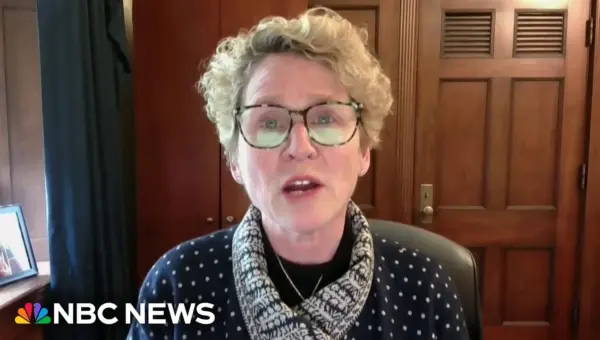
Democrat Questions World Safety Post-Iran Action
House Democrat Chrissy Houlahan stated there is "no evidence that the world is safer" following recent military actions in Iran. She emphasized that only Congress has the constitutional authority to declare war and criticized the lack of clear explanations and off-ramps from the administration regarding military operations. Houlahan also expressed disagreement with claims that the strikes have improved global security, warning of potential destabilization.
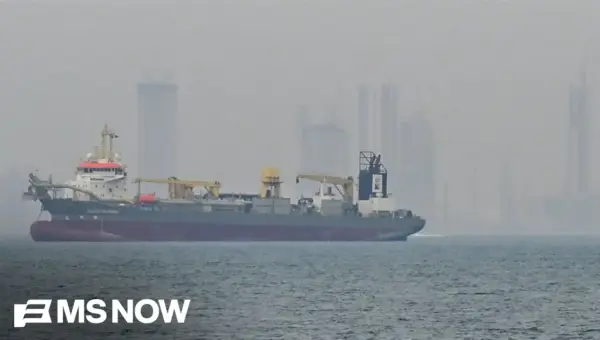
Strait of Hormuz Blockade Threatens Global Economy Amid Iran Tensions
The Strait of Hormuz faces a critical blockade, paralyzing global oil routes and sending energy prices soaring. The UAE is increasingly frustrated by Iranian strikes, considering retaliatory action. Meanwhile, conflicting accounts emerge regarding the justification for U.S. military actions against Iran.
McCaul: Trump Must Explain Iran War Justification
Texas Congressman Michael McCaul is calling on President Trump to clearly explain the justification for U.S. military involvement in Iran. McCaul emphasized the need for transparency regarding the "imminent threat" and the administration's strategic objectives beyond the initial military operation.