Mideast War Escalates: US Jets Downed, Israel Strikes Hezbollah
The Middle East is on high alert as a conflict with Iran escalates, marked by the downing of three U.S. warplanes in Kuwait and Israel's new offensive against Hezbollah. The strikes follow joint U.S.-Israeli attacks on Iran that reportedly killed its Supreme Leader, Ayatollah Ali Khamenei.

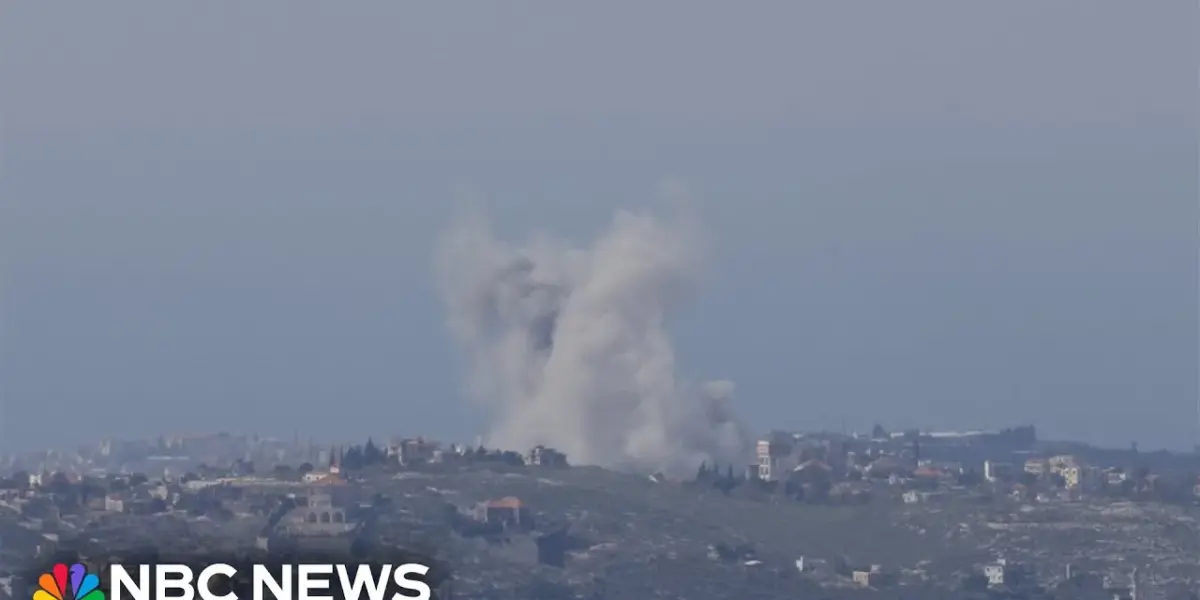
Mideast Conflict Intensifies: US Warplanes Downed in Kuwait, Israel Targets Hezbollah
DUBAI, UAE – The ongoing conflict in the Middle East, now in its third day, has seen a significant escalation with the downing of three U.S. F-15 fighter jets over Kuwait in what officials are describing as a friendly fire incident. All six crew members aboard the downed aircraft survived and are in stable condition. This development comes as Israel launches a new offensive against Hezbollah in Lebanon’s capital, Beirut, following weekend joint U.S.-Israeli strikes on Iran that reportedly killed hundreds, including Supreme Leader Ayatollah Ali Khamenei.
Iran Retaliates, US Casualties Mount
In response to the strikes on Iran, the nation has retaliated with a series of attacks targeting Israel and several other locations across the Middle East. These retaliatory actions have resulted in the deaths of at least three American troops, with President Trump warning that further casualties are likely. “We pray for the full recovery of the wounded and send our immense love and eternal gratitude to the families of the fallen. And sadly, there will likely be more,” President Trump stated from Washington.
Regional Tensions Flare Amidst Strikes and Protests
The escalating conflict has triggered a mixed reaction across the United States, with celebrations from some Iranian diaspora communities and protests from those wary of prolonged military engagement in the Middle East. “All the diaspora of Iranians are chanting and excited because we see freedom at hand,” one demonstrator expressed, advocating for regime change in Iran. Conversely, another protester voiced concern, stating, “The vast majority of Americans do not want yet another endless war in the Middle East. It’s disgusting that we do not have our basic needs met, but we have enough money, supposedly to bomb people across the world.”
Eyewitness Accounts from the Front Lines
NBC News Chief International Correspondent Keir Simmons, reporting from Dubai, detailed the weekend’s events, including persistent missile and drone attacks that saw the Burj Khalifa, the world’s tallest building, narrowly miss a drone strike. Explosions were reported at airports in Dubai, Abu Dhabi, and Kuwait. Simmons noted that while air defenses in the UAE have been highly effective, with an estimated 1% of munitions penetrating, Iran’s strategy appears aimed at destabilizing economies and pressuring regional governments. “The Iranians are accused of choosing not just air bases across this region… but also of targeting civilian targets,” Simmons reported. He also highlighted the opening of a new front with Israeli forces engaging Hezbollah in Lebanon and the targeting of a tanker off the coast of Oman in the Strait of Hormuz, a critical chokepoint for global oil and gas.
“The Iranians are accused of choosing not just air bases across this region… but also of targeting civilian targets.”
Keir Simmons, NBC News Chief International Correspondent
Israel Faces New Front in Lebanon, Civilian Targets Hit
In Tel Aviv, NBC News International Correspondent Matt Bradley reported on the new escalation with Hezbollah in Lebanon. The militant group has launched missiles into Israel, claiming retaliation for the Supreme Leader’s death. In response, the Israeli military has initiated an offensive expected to last several days. The Lebanese Prime Minister has announced a ban on Hezbollah’s activities, deeming them illegal, though the effectiveness of this measure remains uncertain. Bradley also described a tragic scene near Jerusalem where an Iranian missile struck a bomb shelter beneath a synagogue, resulting in a significant casualty count. “This was a really tragic thing to witness. I mean, we saw what looked like bombed out cars, destroyed buildings,” Bradley recounted. “This is going to be very disturbing to Israelis, not just because this is the highest casualty count that we’ve seen so far in this conflict from Iranian attacks on Israel, but also because of the people who were inside this safe room.”
Military Analysis: Strategy and Potential Outcomes
Colonel Steve Warren, a U.S. Army (Ret.) and NBC News Military Analyst, provided insight into the military operations. He suggested that friendly fire incidents, while concerning, are more common in the early stages of conflict as units adapt. Colonel Warren explained that U.S. Central Command is likely focused on assessing damage and prioritizing targets. Regarding the possibility of regime change in Iran, he stated, “Regime change cannot happen with just airstrikes. So something has to happen in order to cause the regime to change. In that case, it can only be two things: boots on the ground as you described, or an uprising inside of Iran.” He noted the absence of evidence suggesting a large-scale U.S. troop deployment for an invasion.
Colonel Warren also addressed Iran’s retaliatory capabilities, noting that while their missile and drone stockpiles are dwindling, the production of certain drones is relatively inexpensive, allowing for sustained attacks. However, he emphasized that U.S. and Israeli forces are actively degrading these capabilities.
Political Ramifications: Congressional Scrutiny and Shifting Alliances
Back in Washington, NBC News Senior White House Correspondent Garrett Haake and Political Reporter Megan Lebowitz discussed the political landscape. Critics in Congress, including Democrats and some Republicans, have voiced concerns about the administration’s decision to launch strikes without prior congressional approval. “Democrats and even some Republicans… have been criticizing the President and the administration for not going to Congress first to get congressional approval before taking part in this operation,” Lebowitz reported. A vote on restricting the President’s war powers is expected this week, though similar measures have failed in the past.
Haake noted that while President Trump had previously campaigned on an “America First” platform, refraining from foreign entanglements, his decision to strike Iran has drawn both support and criticism from within the Republican party. Senator Lindsey Graham has been a vocal supporter, while figures like former Congresswoman Marjorie Taylor Greene have accused the President of betraying his promises.
The Future of Iran’s Leadership
The death of Ayatollah Khamenei raises questions about Iran’s future leadership. Alex Vatanka, a Senior Fellow at the Middle East Institute, explained that President Mahmoud Pezeshkian, who survived the weekend attacks, remains in his formal role and is part of an interim council tasked with guiding the nation until a new Supreme Leader is chosen. Vatanka suggested that Pezeshkian might seize this moment to advocate for change, but currently, the focus in Iran appears to be on military actions. He also highlighted the fragmented nature of Iran’s opposition movement, divided by geography, generation, ideology, and exposure to repression, suggesting a lack of a clear leader to emerge in the event of a popular revolution.
Looking Ahead
As the conflict continues to unfold, the world watches closely for further developments. Key areas to monitor include the trajectory of the Israeli-Hezbollah conflict, the effectiveness of international diplomatic efforts, and the potential for internal shifts within Iran. The coming days and weeks will be critical in determining the long-term consequences of this sudden and dramatic escalation in the Middle East.
Source: This Morning’s Top Headlines – Mar. 2 | Morning News NOW (YouTube)

Related Articles


Iran Conflict: Critics Question US Long-Term Strategy
Critics are questioning the long-term strategy of the U.S. in its ongoing conflict with Iran, citing a lack of clear objectives beyond immediate military strikes. Concerns are mounting over munitions depletion, economic impacts from oil disruption, and the viability of relying on Iranian citizens to instigate change against a heavily armed regime.

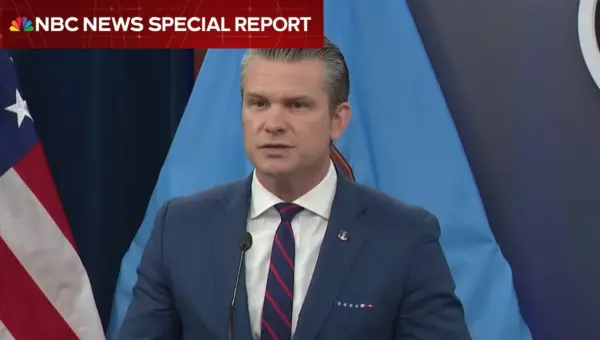
US Launches ‘Operation Epic Fury’ with Over 1,000 Strikes in Iran
The U.S. military has launched 'Operation Epic Fury,' conducting over 1,000 aerial strikes in Iran. Directed by President Trump, the operation aims to neutralize Iran's nuclear program, ballistic missiles, and naval capabilities, marking a significant escalation after decades of hostility.

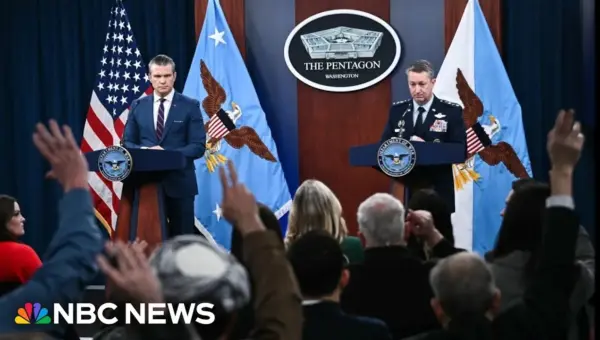
US Military Strikes Iran to Curb Missile, Nuclear Threats
The U.S. military has launched strikes targeting Iran's missile production, naval power, and nuclear program, aiming to prevent regional aggression. While military objectives are clear, the administration navigates a delicate political path, avoiding explicit regime change goals but creating conditions for internal shifts.