Mideast Tensions Flare: Iran, Israel Exchange Strikes, Fueling Global Energy Fears
Escalating tensions between Iran and Israel have led to direct strikes on vital energy infrastructure, sending global oil prices soaring. The U.S. administration is working to manage the fallout, while conflicting statements emerge regarding U.S. knowledge of the attacks and strategic objectives.


Global Energy Markets Roiled by Iran-Israel Conflict
WASHINGTON D.C. – The Trump administration is working to calm rising fears over soaring energy prices as the conflict between Iran and Israel intensifies. The exchange of strikes on critical energy infrastructure in the region has sent crude oil prices climbing and raised concerns about global supply stability.
Strikes Hit Major Energy Hubs
Stunning images emerged from Iran showing large fires and smoke billowing into the air after Israel launched an attack on South Pars, one of the world’s largest natural gas fields, shared by Iran and Qatar. In response, Iran retaliated with strikes on energy infrastructure across the Gulf region, targeting a refinery in Saudi Arabia, an energy facility in Qatar, and two oil refineries in Kuwait.
Presidential Statements and Diplomatic Signals
President Trump took to social media to state that the U.S. had no prior knowledge of the Israeli strike on South Pars. He also issued a warning to Iran, threatening to “massively blow up the South Pars gas field” if Iran carried out further strikes on Qatar. However, a U.S. official familiar with the matter told NBC News that Israel had, in fact, informed the U.S. of its planned strike.
Speaking from the Oval Office, President Trump stated he had told Israeli Prime Minister Benjamin Netanyahu to halt strikes on Iran’s energy fields. “Yeah, I did. I did. I told him, don’t do that and he won’t do that,” Trump said. He described the relationship as independent but working well together, adding, “But on occasion, he’ll do something. And if I don’t like it. And so we’re not doing that anymore.”
Prime Minister Netanyahu, speaking later, confirmed Israel acted alone in striking the oil field but did not directly answer whether President Trump had prior knowledge or approval. Differing perspectives on the alignment of U.S. and Israeli goals emerged. Prime Minister Netanyahu stated, “Together, in close coordination with President Trump, the close coordination between America and Israel, our militaries, our intelligence services, we’re achieving goals at lightning speed.” Conversely, Director of National Intelligence Tulsi Gabbard noted, “The objectives that have been laid out by the President are different from the objectives that have been laid out by the Israeli government.”
Economic Impact and Administration Response
In the wake of these strikes, energy prices have surged. Crude oil settled around $96 per barrel, a 43% increase since the war began. Gas and diesel prices are also rising. Despite this, President Trump attempted to downplay the economic consequences, stating, “Iran is a serious threat to the world… And everybody agrees with me. I think virtually every country agrees with me on that. So I wanted to put out that fire and I said, you know, if I do that, oil prices will go up, the economy will go down a little bit. I thought it would be worse, much worse.”
To help stabilize prices, Treasury Secretary Scott Bessent indicated the U.S. might remove some sanctions on Iranian oil. “In the coming days, we may unsanction the Iranian oil that’s on the water. It’s about 140 million barrels,” he explained. This move would release a supply estimated to last ten days to two weeks, intended to keep prices down during the ongoing conflict.
Analysis from the Ground and Capitol Hill
Senior White House correspondent Garrett Haake reported that the White House is aware of the problem and willing to take politically difficult steps to address it, citing attempts to loosen sanctions on Russian oil. He noted that loosening restrictions on Iranian oil seems counterintuitive but could help with relations with China.
Senior National Security correspondent Courtney Kube confirmed that U.S. officials believe Israel did inform the U.S. about the planned strike, despite President Trump’s statements. The retaliation by Iran, hitting facilities in Qatar, has caused significant concern in the region. The uncertainty of future actions by both Israel and Iran, coupled with high gas prices, remains a major point of focus.
Chief International correspondent Keir Simmons, reporting from Saudi Arabia, conveyed that officials in the region are worried, angry, and frustrated. He described hearing missile alerts during an emergency meeting of regional foreign ministers in Riyadh, highlighting Iran’s persistent actions. Saudi Foreign Minister stated, “The attack today was timed to coincide with this meeting. In order to attempt, I don’t know, to intimidate those present, to send home the message that Iran will not stop. All I can say is we were not intimidated.” Simmons added that trust with Iran has been shattered and the region is nearing a point of no return.
Energy Market Expert Weighs In
Energy industry analyst John Kilduff commented on the potential impact of further strikes. He noted that while Iranian gas production is largely for domestic use, hitting the Qatari portion of the South Pars fields would significantly affect global supply. Kilduff suggested that damage estimates and repair timelines might be exaggerated, with operations potentially returning online within a year to eighteen months.
Kilduff also discussed the market’s reaction, including a slight decline in oil prices due to the proposal of sanctioning Iranian floating storage. He described this as a “band-aid for an acute problem” and stated that no short-term fix exists for the current situation, with about 10 million barrels per day of production and supply offline globally. He warned that if no resolution is near by April, oil prices could significantly increase, leading to supply shortages, particularly in Asia.
Intelligence Community and War Justification
Intelligence reporter Dan De Luce highlighted discrepancies between the administration’s justification for the war with Iran and the intelligence presented on Capitol Hill. While President Trump repeatedly cited an imminent threat, top intelligence officials presented no specific evidence of such a threat during testimony. Director of National Intelligence Tulsi Gabbard stated that the intelligence community assesses Iran’s intention to rebuild nuclear capabilities but has not resumed uranium enrichment.
De Luce pointed out the contrast between intelligence officials confirming the President was briefed on potential impacts like the Strait of Hormuz shutdown and President Trump’s claim that no expert predicted such actions. This raises questions about how the President reviews intelligence and articulates the rationale for the war, which appears to be shifting.
Looking Ahead
As the conflict continues to escalate, the world watches closely for further developments in the Middle East. The administration’s efforts to manage energy prices, the potential for further military actions, and the clarity of U.S. strategic goals in the region will be critical factors to monitor in the coming weeks. The implications for global energy markets and regional stability remain significant.
Source: Meet the Press NOW — March 19 (YouTube)

Related Articles
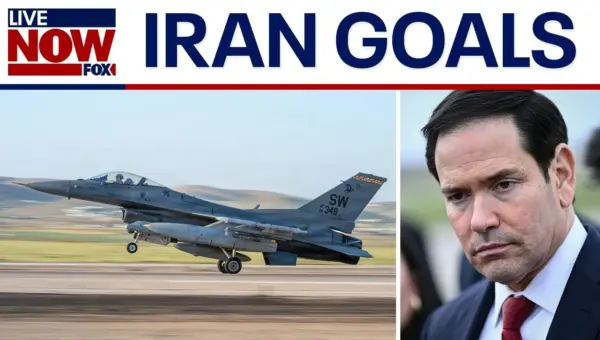
Rubio: US Can Achieve Iran War Goals Without Troops
Senator Marco Rubio outlined a strategy to counter Iran without deploying U.S. ground troops, focusing on weakening the regime and enhancing maritime security. He also criticized Cuba's economic system and expressed concerns about West Bank violence.


Israelis Forge Resilience Amidst Constant Bomb Shelter Drills
Life in Israel is a blend of resilience and constant vigilance, with many families adapting to frequent bomb shelter drills and even sleeping in makeshift shelters. Despite ongoing missile attacks, Israelis strive to maintain normalcy, though businesses face disruption and emotional fatigue is a growing concern.

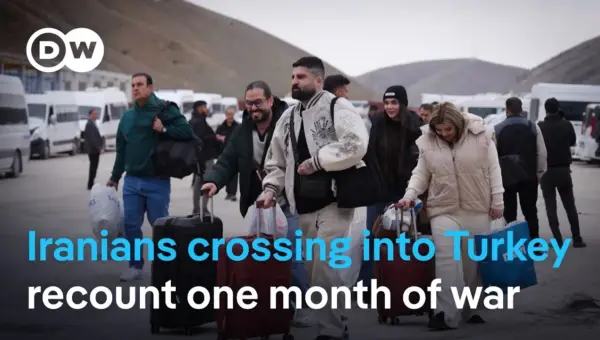
Iran War Exodus: Refugees Flee to Turkey Amidst Bombings
A train from Tehran brings refugees to Turkey, fleeing daily bombings and economic collapse. Many express deep fear for loved ones left behind, while some hold onto national pride and hope for victory. The conflict's impact is also felt economically in Turkey, with rising gas prices.