Middle East Tensions Flare: Oil Prices Soar Amid Iran Conflict
Middle East conflicts are driving up oil prices, impacting global energy markets and consumer costs. Strikes on energy facilities, diplomatic tensions, and humanitarian crises in the region are creating a volatile situation. Meanwhile, other news includes the tragic discovery of a missing student, the cancellation of 'The Bachelorette', and NASA's preparations for its moon mission.


Global Energy Markets Rocked by Middle East Conflict
The global energy market is facing significant turmoil as conflicts in the Middle East escalate, leading to a sharp rise in oil prices. The ongoing tensions, particularly involving Iran, have pushed oil prices to highs not seen in years, with crude oil touching $119 a barrel at one point. This situation is directly impacting consumers, with national average gas prices climbing to $3.88 per gallon, a noticeable jump from just a month prior. The White House, while downplaying fears of a full-blown energy crisis, acknowledges the rising costs and states that efforts are underway to stabilize prices.
Iran and Allies Face Attacks on Energy Infrastructure
The current crisis appears to have energy facilities as a new front in the ongoing conflict with Iran. Strikes have targeted critical energy infrastructure, including a natural gas facility jointly owned by Iran and Qatar. Iran has reportedly retaliated with strikes on oil facilities in Qatar, the UAE, and Saudi Arabia. President Trump has stated that the United States was not aware of certain attacks and has warned Iran against further aggression towards allies. This complex situation involves a delicate balance of international relations, with allies like Israel engaged in strikes while the U.S. navigates its involvement.
Diplomatic Maneuvering and International Concern
The diplomatic landscape is equally tense. President Trump has indicated a divergence in strategy with Israeli Prime Minister Benjamin Netanyahu regarding specific military actions. Despite this, allies such as the UK, France, Germany, Italy, the Netherlands, and Japan have expressed readiness to support efforts to restart shipping through the Strait of Hormuz. However, experts note that the effectiveness of such support hinges on de-escalation of the conflict, as the fighting itself is the primary reason for the disruption of shipping lanes. Concerns are also rising about the potential for Iran to retain its nuclear capabilities, with questions about the whereabouts of enriched uranium stockpiles if the country becomes unstable.
US Military Presence and Funding
The United States military’s role in the Middle East remains a subject of discussion and potential expansion. Reports indicate that over 2,000 U.S. Marines are being deployed to the region more quickly than initially planned, signaling an escalating situation. The Pentagon has confirmed significant costs associated with the conflict, requesting approximately $200 billion in funding from Congress. This request comes at a time when rising gas prices and economic concerns may lead to skepticism among lawmakers.
Broader Regional Impact and Displacement
The conflict’s impact extends beyond energy markets and direct military actions. In Lebanon, intense bombardments have led to the displacement of over a million people. Reports detail strikes on civilian areas and infrastructure, with Hezbollah being a primary target. The United Nations is working to provide support to those affected, highlighting the humanitarian cost of the ongoing violence. The situation underscores the interconnectedness of regional stability and global security.
Other News: Missing Student Found, Bachelorette Cancelled, NASA’s Moon Mission
In other news, a tragic development has occurred with the discovery of the body of James Gracie, a missing University of Alabama student, on a beach in Barcelona. Investigators are working to determine the circumstances surrounding his death. In the world of entertainment, ABC has canceled the upcoming season of ‘The Bachelorette’ after a video surfaced showing the star, Taylor Frankie Paul, involved in an assault. The incident, which occurred in 2023, led to charges and a plea deal for aggravated assault. Meanwhile, NASA is moving forward with its Artemis program, preparing its massive rocket for a return to the launchpad as part of its mission to send humans back to the moon for the first time in over 50 years.
AI Assists in Canine Cancer Treatment
On a more hopeful note, a man in Australia has utilized artificial intelligence to help treat his dog’s cancer. By analyzing the dog’s DNA and cross-referencing it with cancerous cells, AI helped identify potential treatment pathways. This innovative approach, in collaboration with scientists, led to the development of an mRNA vaccine that has shown positive results in improving the dog’s health.
Looking Ahead
As the situation in the Middle East continues to develop, attention will remain focused on oil price fluctuations, diplomatic efforts to de-escalate the conflict, and the broader geopolitical ramifications. The effectiveness of international cooperation in managing energy security and regional stability will be crucial in the coming weeks and months.
Source: Stay Tuned NOW Streaming Behind The Scenes! – March 19 (YouTube)

Related Articles
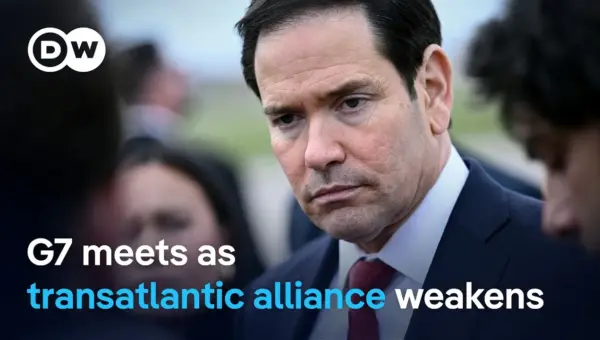
G7 Allies Clash Over Iran War Strategy, Urge Focus on Russia
G7 foreign ministers met in Paris, revealing deep divisions over the U.S. war with Iran. European allies urged the U.S. to pressure Russia, linking its actions to the conflict and fearing support for Ukraine will wane.
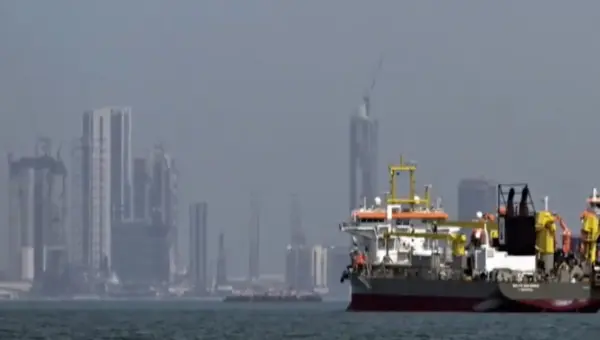
Iran Blocks China Ships, Exposing Beijing’s Weak Grip
Iran's recent decision to block Chinese ships at the Strait of Hormuz is exposing the limits of Beijing's influence in the Middle East. This action is causing delays and cancellations for Chinese manufacturers, turning a perceived geopolitical win into an economic strain.
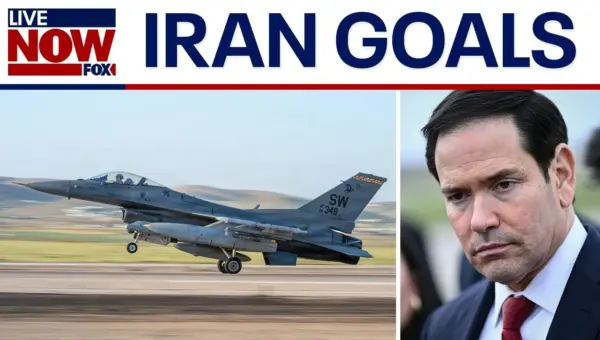
Rubio: US Can Achieve Iran War Goals Without Troops
Senator Marco Rubio outlined a strategy to counter Iran without deploying U.S. ground troops, focusing on weakening the regime and enhancing maritime security. He also criticized Cuba's economic system and expressed concerns about West Bank violence.