Middle East Erupts: US-Iran War Escalates, Jets Downed
The U.S.-Iran war has escalated dramatically, with three American jets downed by friendly fire in Kuwait and Israel launching a new offensive against Hezbollah in Lebanon. These events follow U.S.-Israeli strikes that killed Iran's Supreme Leader, Ayatollah Khamenei, prompting Iranian retaliation that has killed U.S. troops and targeted regional infrastructure.


Middle East Erupts: US-Iran War Escalates, Jets Downed
DUBAI/TEL AVIV/WASHINGTON D.C. – March 2 – The conflict between the United States and Iran intensified significantly on its third day, marked by the dramatic downing of three American F-15 fighter jets over Kuwait in what officials are now identifying as a tragic friendly fire incident. All six crew members survived the ejection and are in stable condition. Simultaneously, Israel launched a new offensive against Hezbollah in Lebanon’s capital, Beirut, escalating regional tensions further. These developments follow a weekend of coordinated U.S.-Israeli strikes on Iran that reportedly killed hundreds, including the nation’s Supreme Leader, Ayatollah Ali Khamenei. Iran has retaliated with a series of attacks targeting Israel and other Middle Eastern locations, resulting in the deaths of at least three American service members.
US Jets Downed in Kuwaiti Airspace
The most alarming development for the U.S. military came with the loss of three F-15 fighter jets over Kuwait. U.S. Central Command (CENTCOM) stated that during active combat, which included attacks from Iranian aircraft, ballistic missiles, and drones, the U.S. Air Force jets were “mistakenly shot down by Kuwaiti air defenses.” While the crew members were safely recovered, the incident underscores the perilous and chaotic nature of the unfolding conflict. Kuwait has acknowledged the event, adding a new layer of complexity to the already volatile situation.
Israel Launches Offensive in Lebanon
In response to escalating threats, Israel has initiated a new campaign against Hezbollah in Beirut. This move signals a potential opening of a new front in the widening conflict. The Israeli military has stated that the offensive is likely to last several days. This action comes after Hezbollah, an Iranian proxy group, began launching missiles into Israel, vowing retaliation for the killing of Ayatollah Khamenei, a key patron of the organization. Despite a recent announcement from the Lebanese Prime Minister banning Hezbollah’s activities as illegal, the situation remains highly precarious.
Iran’s Retaliation and Regional Impact
Iran’s response to the U.S.-Israeli strikes has been multifaceted, targeting not only Israel but also civilian infrastructure and military bases across the Middle East. Reports from Dubai indicate that the Burj Khalifa, the world’s tallest building, was near a drone attack, and explosions were reported at airports in Dubai, Abu Dhabi, and Kuwait. While many of these munitions were intercepted by sophisticated air defense systems, the attacks aim to disrupt regional economies and pressure governments to demand an end to the conflict. Keir Simmons, NBC News Chief International Correspondent, reporting from Dubai, noted that while air defenses have been remarkably effective, the Iranian strategy appears to be creating chaos and frightening neighboring governments.
“The Iranians are accused of choosing not just air bases across this region… but also being accused of targeting civilian targets.” – Keir Simmons, NBC News Chief International Correspondent
U.S. Casualties and Presidential Response
President Trump, back in Washington, acknowledged the grim reality of the conflict, stating, “Sadly, there will likely be more casualties.” CENTCOM confirmed the deaths of three U.S. military service members stationed in Kuwait, with families awaiting official notification. The administration has been cautious in releasing details, prioritizing communication with the families. The President has indicated that the operation could last several weeks, though he has also described it as being ahead of schedule. His communication strategy has been unconventional, relying on video posts on Truth Social and brief remarks to reporters, rather than a formal address to the nation.
Domestic Reactions: Celebration and Protest
Across the United States, the news of the strikes has been met with a divided public reaction. While some Iranian diaspora communities expressed excitement and hope for freedom in Iran, others voiced strong opposition to further military engagement in the Middle East. Protesters decried the potential for prolonged conflict and the diversion of resources from domestic needs. “The vast majority of Americans do not want yet another endless war in the Middle East,” one protester stated, questioning the allocation of funds for international military action.
Congressional Scrutiny and War Powers Debate
The decision to launch strikes without prior congressional consultation has drawn criticism from both Democrats and some Republicans. Democrats are pushing for a War Powers vote this week, which, if passed, would restrict the President’s authority for future military operations in Iran without congressional approval. Critics argue that the administration lacked a clear strategic plan and that the U.S. is not safer as a result of the strikes. While similar War Powers resolutions have failed in the past, the current political climate suggests a renewed push for congressional oversight.
The Future of Iran’s Leadership
The death of Supreme Leader Ayatollah Khamenei has raised questions about the future leadership of Iran. While President Mahmoud Pezeshkian survived the attacks and has joined an interim council, his ability to steer the country through this crisis remains uncertain. Analysts suggest that Iran’s immediate focus is on the military aspect of the conflict, with a period of consolidation and response. The broader Iranian opposition movement is described as large but divided, lacking a clear unified leader, making the prospect of internal regime change complex and unpredictable.
Looking Ahead
As the conflict enters its fourth day, the world watches with bated breath. Key developments to monitor include the ongoing military operations in Lebanon and Iran, any further retaliatory actions from Iran, the U.S. administration’s strategy for potential regime change, and the evolving response from Congress. The stability of the Middle East, global energy markets, and the future political landscape of Iran hang precariously in the balance.
Source: Morning News NOW Full Episode – March 2 (YouTube)

Related Articles


Pentagon Hints at Iran Ground Troops: ‘Go As Far As We Need’
Defense Secretary Pete Hegseth has refused to rule out deploying U.S. ground troops into Iran, stating "We'll go as far as we need to go." The ambiguous comment from the Pentagon raises concerns about potential military escalation in the volatile Middle East region.
Dem Rep: Trump Ignores Congress on Iran War
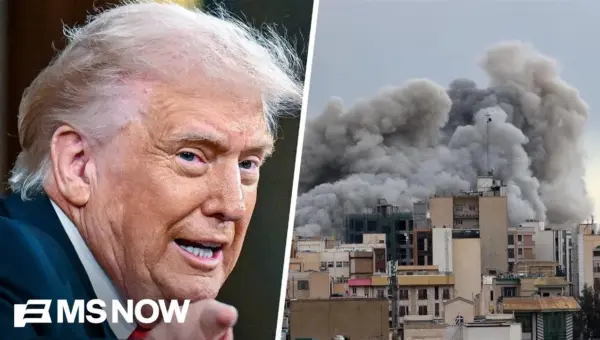
Democratic Congressman Gregory Meeks criticizes President Trump's unilateral approach to the military conflict in Iran, demanding transparency and adherence to congressional oversight. Meeks questions the administration's unclear objectives and draws parallels to past failed military interventions.

US General Warns of More Losses in Escalating Iran Conflict
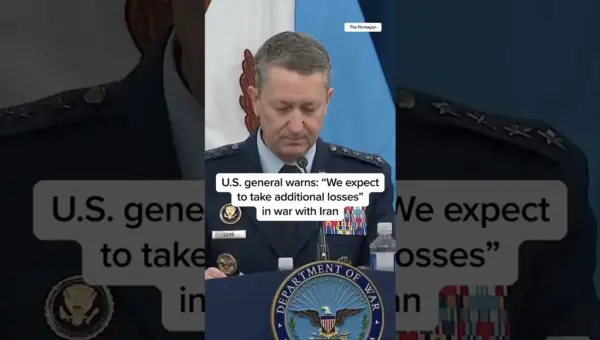
U.S. military leadership has issued a stark warning about the ongoing conflict with Iran, with the Chairman of the Joint Chiefs of Staff General Dan Caine stating that the U.S. anticipates "additional losses." The acknowledgment comes amidst coordinated U.S. and Israeli strikes and signals a potentially prolonged and costly engagement in the Middle East.