Middle East Erupts as Trump’s War Escalates
Recent events show a sharp escalation in the Middle East, with US troops narrowly avoiding a missile attack. Iran is striking targets in Kuwait, Qatar, and Bahrain, while the US and Israel conduct airstrikes in Iran. International alliances are strained, and public opinion in the US favors withdrawal from the conflict.

Middle East Erupts as Trump’s War Escalates
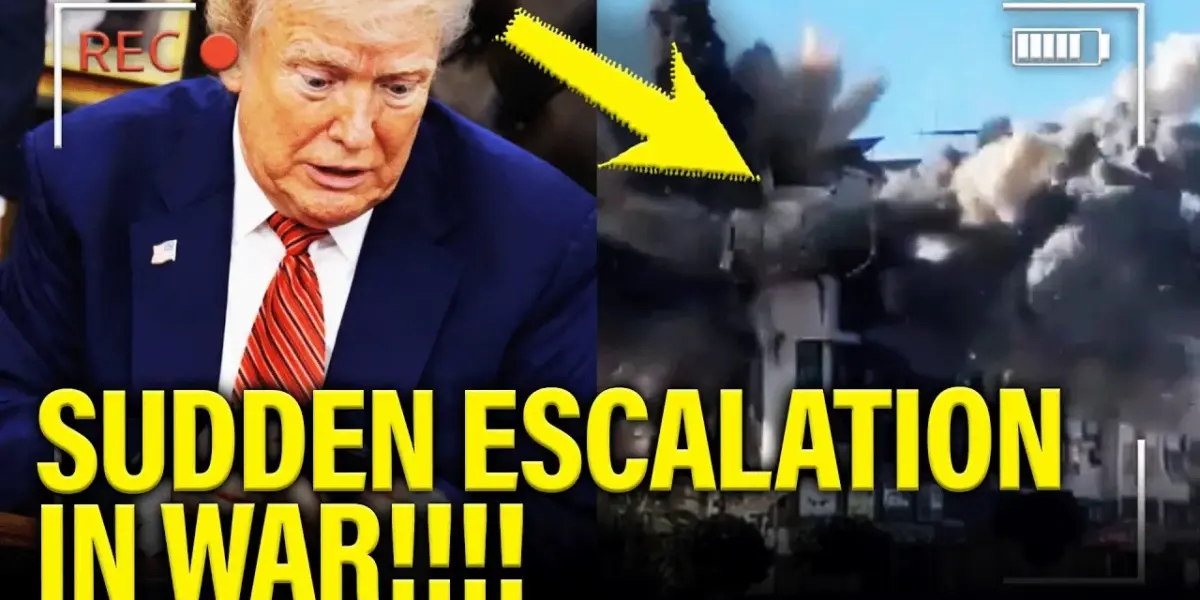
Recent days have seen a sharp increase in fighting in the Middle East, with US troops narrowly avoiding a ballistic missile attack. This sudden escalation, occurring in places like Bahrain, Kuwait, and the United Arab Emirates, suggests a conflict that is growing beyond initial expectations.
Donald Trump has recently spoken about wanting to step back from the conflict, even suggesting that other countries should handle the situation in the Strait of Hormuz. He has stated that the US economy is suffering and questioned why America needs to be so involved. However, wars involve more than one side. Iran has made it clear they intend to control the Strait of Hormuz firmly.
Iran has also followed through on threats to attack American companies in Arab nations, and to escalate their own actions. In the past 12 hours, major fires broke out at Kuwait’s airport after an Iranian attack hit fuel tanks. This shows Iran’s ability to strike these areas with little resistance.
Unknown projectiles also hit oil tankers off the coast of Qatar. Qatar had previously seemed to have a temporary pause in attacks, possibly due to a ceasefire. However, these recent strikes indicate that the situation remains volatile.
In Bahrain, a large fire burned through the night following what locals described as the loudest night of missile and drone attacks since the war began. There are reports that the targeted facility was a major telecommunications company, housing interests like Amazon’s Web Services. This aligns with Iran’s threats to strike important infrastructure.
Escalation on Multiple Fronts
Meanwhile, heavy airstrikes have been reported in Tehran, Iran’s capital, carried out by the US and Israel. In southern Lebanon, Israel has also been active, reportedly destroying an entire building complex in Beirut. These actions have led to widespread destruction and civilian casualties in southern Lebanon.
The conflict appears to be straining international alliances. Several European countries, including France, Spain, and Italy, are reportedly denying the US access to their airspace and military bases. This is partly because these countries were not consulted before the current military actions began.
There are also signs of disagreement within NATO. Some US politicians, including Donald Trump and Senator Marco Rubio, have expressed frustration with NATO, suggesting the alliance may no longer be valuable to the US. This could weaken the alliance and potentially benefit Russia and China.
Adding to the complexity, oil sanctions against Iran and Russia have been lifted. Russia is reportedly using the funds to support its invasion of Ukraine. Russia is also said to be helping Iran target American military bases in the Middle East.
Iran’s Demands and US Response
Iran’s Foreign Minister has stated that negotiations with the US are unlikely to be fruitful. Iran has put forward its non-negotiable demands, which include reparations, keeping their ballistic missiles, controlling the Strait of Hormuz, and security guarantees for various groups in the region.
While this conflict escalates, some members of the US Congress have been criticized for vacationing during a government shutdown. This has drawn public criticism, especially as the situation in the Middle East worsens.
Donald Trump has downplayed Iran’s military capabilities, referring to their threats as “BB guns” and claiming Iran has been “decimated.” He has stated that US planes have full control of the skies and that Iran has no navy or significant military strength. He believes Iran is desperate to make a deal.
However, evidence from the ground suggests a different reality. Reports of fires and missile attacks contradict the idea that Iran is not fighting back. The control of the Strait of Hormuz by Iran, despite US military presence, also raises questions about the effectiveness of US actions.
Recent polls indicate that a majority of Americans want the US to withdraw from the conflict. A Reuters Ipsos poll found that about two-thirds of Americans support leaving the involvement, with only 27% supporting the war.
Domestically, there have been reports concerning the personal lives of some public figures, highlighting perceived hypocrisy within certain political groups. Additionally, there are ongoing discussions about Donald Trump’s plans for a presidential library, with questions raised about whether it will actually be a hotel for personal profit.
In a concerning development, a reporter named Shelley Kitzinger was reportedly abducted in Baghdad by Kataib Hezbollah. The US State Department has stated they are aware of the situation and are working with Iraqi authorities for her release. However, their response has been criticized for appearing to blame the victim by mentioning they had previously warned her of threats.
Why This Matters
The ongoing conflict in the Middle East, marked by sudden escalations and Iranian counter-attacks, presents a complex challenge. The differing accounts from political leaders and on-the-ground reports create uncertainty about the true state of the war. The strain on international alliances and the potential for wider regional instability are significant concerns.
The public’s desire for de-escalation, as shown in polls, contrasts with the continued military engagement. The perceived weakening of US influence and the strengthening of rivals like Russia and China are important trends to watch. The situation also raises questions about the effectiveness of current foreign policy strategies and the long-term consequences of military intervention.
Implications, Trends, and Future Outlook
This situation highlights the unpredictable nature of international conflicts. The ability of Iran to launch significant attacks despite US efforts suggests a resilient and determined adversary. The questioning of NATO’s role and the growing number of countries hesitant to support US military actions point to a potential shift in global power dynamics.
The trend of public opinion turning against prolonged military involvement could put pressure on political leaders to seek diplomatic solutions. However, the demands from Iran suggest that a swift resolution may be difficult. The involvement of various regional and international actors, each with their own interests, further complicates the path to peace.
Looking ahead, the conflict could lead to increased instability in the Middle East, with potential spillover effects into global trade and security. The effectiveness of sanctions, the role of diplomacy, and the willingness of major powers to de-escalate will be crucial factors in shaping the future outlook.
Historical Context and Background
Tensions between the US and Iran have a long history, particularly since the Iranian Revolution in 1979. Past incidents, including the seizure of American hostages and ongoing disputes over Iran’s nuclear program and regional influence, have created a backdrop of mistrust and animosity. The current escalation appears to be a continuation of these long-standing issues, exacerbated by recent political decisions and military actions.
The Strait of Hormuz has historically been a critical chokepoint for global oil transport. Any disruption to shipping in this region has significant economic consequences worldwide. Iran’s ability to exert control over this waterway is a major strategic concern for the US and its allies.
The role of alliances like NATO has also evolved over time. While NATO was formed to counter Soviet influence during the Cold War, its purpose and effectiveness have been debated in the post-Cold War era. Current geopolitical shifts may be testing the strength and unity of such alliances.
Source: Trump PANICS over SUDDEN ESCALATION in WAR!!! (YouTube)

Related Articles
US Weighs NATO Future Amidst Global Security Shifts
The U.S. is reportedly re-evaluating its commitment to NATO, with "everything on the table" regarding alliance contributions. Experts warn that leaving the current Iranian regime in power poses a "disastrous outcome" for global security and stability.
China’s Iran Gambit: A Risky Game of Two Faces
China's public calls for peace in the Iran conflict mask a private strategy of buying discounted oil, reports suggest. This "double game" now risks China's economy through rising oil prices and supply chain stress, potentially costing billions.
Trump’s Iran Strategy Falters, Sparking Global Oil Pain
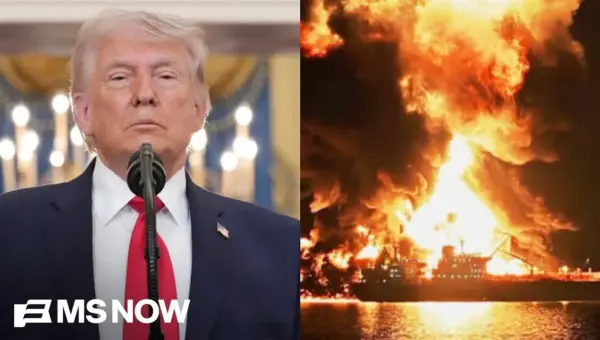
President Trump's recent speech defending his administration's actions in Iran has drawn widespread criticism for its lack of clarity and strategic direction. The address coincided with growing global concerns over oil prices and potential energy crises, as international diplomats met to address the Strait of Hormuz while the U.S. was absent. Domestic polls also show a significant disapproval of Trump's handling of the conflict.