Middle East Crisis Triggers Global Chaos: Flights, Oil Prices Hit
A major global crisis has erupted following coordinated strikes on Iran, triggering a massive retaliatory response that has impacted multiple countries across the Middle East. The large-scale attacks have caused widespread aviation chaos and pose significant risks to global energy markets and financial stability.

Global Crisis Erupts Following Targeted Strikes in Middle East
A significant escalation in the Middle East has plunged the region into a major global crisis, following coordinated strikes on Iran by the United States and Israel. These initial strikes, reportedly targeting military and strategic assets within Iran, have led to a devastating retaliatory response that has expanded far beyond the immediate conflict zone, impacting multiple countries and global infrastructure.
Iran’s Devastating Response: Regional Escalation Unfolds
The situation dramatically intensified with reports confirming the death of Iran’s supreme leader in the initial strikes, a development acknowledged by Iranian officials. This loss has triggered what appears to be a pre-planned, large-scale retaliatory strategy by Iran. Instead of a contained response, Iran has launched an extensive attack involving over 100 missiles and hundreds of drones. These strikes are not confined to military targets or solely directed at Israel and U.S. bases. Instead, they have impacted civilian infrastructure and operations across multiple Gulf nations, including the United Arab Emirates, Qatar, Bahrain, Kuwait, and Jordan, signaling a dangerous regional escalation.
Aviation Chaos Grips Global Hubs
The widespread attacks have caused immediate and severe disruption to global air travel. Key international airports, including Dubai International Airport and Doha’s Hamad International Airport, have faced flight suspensions and restrictions due to intercepted debris and safety concerns. These airports are not merely regional hubs but critical global transit points connecting continents. The closure and disruption of these vital aviation corridors have led to widespread flight cancellations, extensive rerouting, increased journey times, and rising fuel costs for airlines. Tens of thousands of passengers are reportedly stranded, with airlines facing significant immediate financial losses.
“Dubai and Doha are not just regional airports. They are global superhubs. They connect Europe to Asia. They connect Asia to Africa. They connect Australia to Europe… If those hubs go down, even temporarily, the knock-on effects are enormous.”
Energy Markets Brace for Impact: Oil Prices at Risk
The geopolitical turmoil is unfolding in a region that sits at the epicenter of global energy supply. The Middle East produces approximately one-third of the world’s oil, with a significant portion transiting through the critical Strait of Hormuz. Any further escalation, particularly threats to shipping routes, poses a substantial risk of driving up oil prices. Oil traders are expected to price in this heightened risk immediately, potentially leading to a sharp increase in crude oil costs even before physical supply disruptions occur. Such a spike in oil prices would have far-reaching economic consequences, increasing fuel, transportation, and manufacturing costs globally, thereby reigniting inflation concerns in economies that have only recently seen stabilization.
Financial Markets React to Heightened Geopolitical Risk
Financial markets are anticipated to react swiftly and predictably to the surge in geopolitical risk. Investors are likely to move away from riskier assets like equities and seek refuge in safe-haven assets such as gold. Stock markets are expected to face downward pressure, while the U.S. dollar and government bonds may strengthen. Conversely, energy stocks could see gains, while airlines, travel companies, and tourism-dependent businesses are likely to suffer significant downturns. The sustained volatility resulting from this crisis could have a profound impact on global economic stability.
Broader Economic Repercussions and Future Outlook
Beyond immediate market reactions, the crisis carries broader economic implications. Tourism in the affected region could experience a sharp decline, and business travel is likely to be significantly curtailed. Insurance costs for vessels operating in the region are also expected to surge. The potential for a renewed oil shock looms large, acting as a tax on the global economy and impacting households and businesses worldwide through higher operating expenses. While market reactions can sometimes be short-lived, the scale of the current events—over 100 missiles, hundreds of drones, multiple countries affected, and major airports disrupted—marks this as a serious escalation with potentially lasting consequences.
Key Factors to Monitor in the Coming Days
As the situation continues to develop, three critical factors will shape its trajectory. Firstly, the possibility of further retaliation from any involved parties remains a significant concern. Secondly, the security and uninterrupted flow of shipping through the Strait of Hormuz are paramount to global energy supply. Finally, the movement of oil prices will be a key indicator of the severity of the economic fallout; sharp and sustained increases will signal more profound global economic challenges. The coming days are expected to be critical in determining whether this crisis remains regional or evolves into a prolonged period of global uncertainty, marked by aviation disruption, energy market volatility, and inflationary pressures.
Source: GLOBAL Chaos (YouTube)

Related Articles

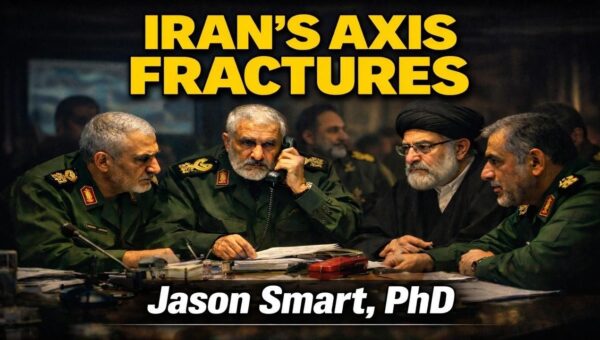
Iran’s Regime Under Siege: Attacks Cripple Leadership, Impact Russia
Iran's regime is reportedly facing critical blows from targeted attacks, crippling its leadership and severing a vital military supply line to Russia. This dual pressure is significantly impacting Russia's war efforts in Ukraine, while internal dissent grows within Iran.

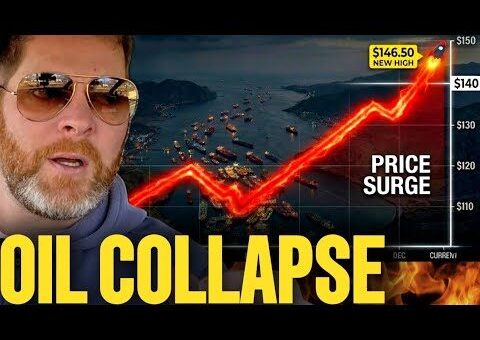
Oil Prices Skyrocket Amid Strait of Hormuz Closure
The Strait of Hormuz is now effectively closed due to conflict, disrupting a third of the world's oil supply and sending prices soaring. Experts warn of a new cost of living crisis as fuel and product costs rise globally.

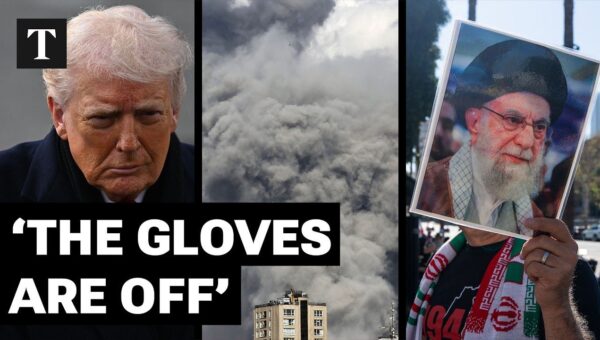
Iran Regime Change: Is It Further Off Than Expected?
Former diplomat Charlie Gammell suggests that the prospect of regime change in Iran may be further off than anticipated by the US and Israel. Despite strategic strikes and pressure, the Islamic Republic appears resilient and unified, with internal factors and the Iranian psyche playing a significant role in its endurance.