Middle East Conflict Sparks Global Oil Price Hikes
Intense fighting in the Middle East has led to widespread attacks on key oil and gas facilities, causing global energy prices to skyrocket. The conflict is impacting consumers with higher gas prices and contributing to chaos at airports due to unpaid TSA workers. Meanwhile, a contentious hearing on Capitol Hill addressed the war's intelligence and economic fallout, alongside a nomination for Homeland Security Secretary.


Global Tensions Escalate as Attacks Target Energy Facilities
Overnight, a series of intense air strikes have rocked the Middle East, targeting key oil and gas facilities and sending shockwaves through global energy markets. The escalating conflict, described as a war on the world’s energy supply, has immediate and significant impacts on prices at home and abroad.
Iran Retaliates Amidst Escalating Conflict
Iran launched a wave of attacks on major energy sites across the region. This action follows Israel’s strike on the South Pars natural gas refinery, the world’s largest, located on the Iranian coast. Iran states its actions are retaliation, a move that has further inflamed the situation. Both Iran and Qatar draw gas from the South Pars field, making the refinery a critical hub.
A senior official close to Qatar’s leadership expressed extreme displeasure with Iran and Israel, and frustration with Washington. This anger stems from the fact that a conflict, partly framed as protecting oil and gas flow, is now threatening to set these vital resources ablaze.
U.S. Involvement and Presidential Response
President Trump addressed the escalating conflict on social media, initially stating the U.S. had no knowledge of the strike on the South Pars field. However, a Qatari official and reports citing Israeli and U.S. officials suggest the U.S. did coordinate and approve the strike. In response to potential further Iranian attacks on Qatar, President Trump vowed massive retaliation against the South Pars gas field with unprecedented strength.
The conflict has also resulted in casualties. An Iranian missile fired at Israel was intercepted, with fragments landing in the West Bank and tragically killing three Palestinian women. President Trump’s justification for the war has shifted, initially described as a preemptive strike due to an alleged imminent Iranian nuclear threat, and now framed as a war to protect global energy supplies. No evidence for the nuclear threat has been presented.
Economic Fallout: Rising Gas Prices and Airport Chaos
The attacks on energy infrastructure are directly impacting consumers. SUV drivers with a 28-gallon tank are now facing an additional cost of nearly $26 per fill-up. Air passengers are also feeling the pinch, with airlines passing on the increased costs of rising gas prices through higher ticket prices. This economic pressure is compounded by significant disruptions at airports nationwide.
Thousands of TSA officers, unpaid due to the ongoing partial government shutdown, are calling out sick. This has led to extremely long wait times at airports across the country, with travelers facing delays of two to three hours. Spring break travel is being thrown into deeper chaos as the shutdown stretches into its second month, with no clear end in sight.
Congressional Scrutiny and Economic Uncertainty
Top Trump administration officials faced intense questioning on Capitol Hill regarding the intelligence behind the conflict and its economic impact. Officials were pressed on whether the administration anticipated Iran’s targeting of oil and gas facilities in retaliation. Tulsi Gabbard, Director of Negligence, faced scrutiny for deflecting questions about Iran’s nuclear program and the administration’s understanding of imminent threats.
The Federal Reserve has decided to leave interest rates unchanged, citing uncertainty about the economic impact of the Middle East conflict. Fed Chair Jay Powell acknowledged that while high energy prices are pushing up inflation, the long-term economic effects are still unclear. The administration has taken steps, such as waiving a 1920 law to allow easier movement of oil between U.S. ports, in an effort to lower gas prices, though its effectiveness remains to be seen.
Homeland Security Nomination Faces Tough Questions
The nomination of Mark Wayne Mullen to lead the Department of Homeland Security also faced a contentious hearing. Mullen, a former MMA fighter, clashed with committee chairman Rand Paul over a past personal dispute. Mullen also faced questions about his past remarks regarding law enforcement actions and his views on immigration policies, including the role of ICE and border protection.
Mullen sought to distance himself from the policies of the outgoing secretary and expressed openness to reforms within ICE. He also pledged to end a policy that required a signature for disbursing certain relief funds, a move criticized for causing delays. Allegations of personal profit from government contracts involving a former aide to the outgoing secretary were also raised.
Search for Missing Student Continues
In Spain, a desperate search is underway for Jimmy Gracey, a 20-year-old American college student from Chicago. Gracey went missing during a spring break trip in Barcelona. He was last seen leaving a nightclub at 3:00 AM on Tuesday. His family is pleading for information, and local authorities are investigating, with surveillance footage reportedly showing him leaving the club with someone, raising concerns of foul play.
AI and Hollywood: The Future of Performance
The use of artificial intelligence in Hollywood is taking a new turn with a film set to feature an AI-generated version of the late actor Val Kilmer. Kilmer’s family is collaborating with filmmakers to bring an AI version of the actor to the screen for a role he was passionate about before his health declined. This development raises questions about the future of acting and the ethical use of AI in filmmaking, especially as other actors are taking steps to protect their likeness and voices.
Source: Full Episode: TODAY Show – March 19 (YouTube)

Related Articles


AI Threatens White-Collar Jobs, Reshaping U.S. Workforce
Artificial intelligence is poised to significantly reshape the U.S. job market, raising concerns among recent graduates and experienced professionals about future employment. While some lawmakers call for regulation, experts emphasize adaptation and learning to work with AI.

AI’s Dual Future: Hope and Hazard for Humanity
Artificial intelligence presents humanity with both immense potential and significant risks. 'The AI Doc' explores this dual nature, highlighting AI's ability to solve global problems while warning of dangers like job loss and existential threats. The film aims to spark crucial conversations about shaping AI's future to align with human values.
Iran Missile Strikes Injure US Troops, Raise War Concerns
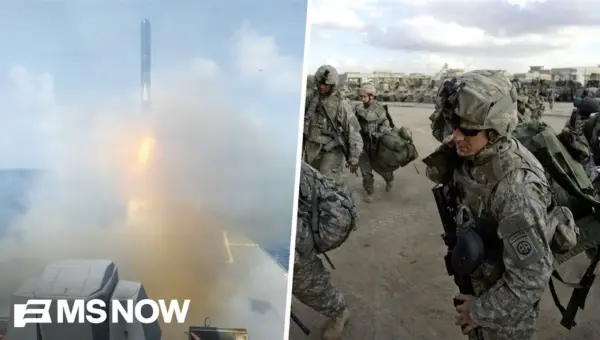
Iranian missile strikes have injured U.S. service members, escalating tensions as the conflict nears one month. The attacks are raising concerns about the effectiveness of U.S. military strategy and the depletion of crucial missile stockpiles. Global oil prices have surged, impacting economies worldwide.