Middle East Conflict Halts Helium Supply, Prices Soar
A drone strike on Qatar's main helium facility has taken 33% of the world's supply offline for years, doubling prices. This impacts critical industries like healthcare, technology, and defense, with consumers likely to see delays and higher costs soon.


Middle East Conflict Halts Helium Supply, Prices Soar
A conflict in the Middle East has caused a major disruption in the global supply of helium. Prices for this vital gas have more than doubled since the fighting began. This shortage is not just about party balloons; it affects many critical industries, from healthcare to technology.
Qatar’s Helium Production Offline
About 33% of the world’s helium supply comes from Qatar. This main helium facility was hit by a drone attack in the first week of the conflict. The company that runs the facility, QatarEnergy, says it will take at least 3 to 5 years to repair the damage and get production back online. This is a major blow because there are very few other places in the world that produce helium, especially the high-purity grade needed for advanced industries.
Why Helium is So Important
Helium is used in many everyday items and advanced technologies:
- Healthcare: MRI scanners use helium to cool the powerful magnets. Without it, these machines cannot work.
- Technology: Helium is essential for making semiconductors, the tiny computer chips found in phones, computers, and cars. It is also used in the production of batteries for phones and drones.
- Defense: High-purity helium is needed to detect leaks in critical systems, including those used in missile defense like Patriot systems and other munitions.
- Industry: It’s used in welding, in the production of fiber optics, and as a breathing gas mixture for deep-sea divers.
The current shortage means that companies relying on helium will face significant challenges. The normal global trade price for helium was about $0.38 per unit. Now, prices are expected to reach $1.50 or higher. This increase is just the beginning, as the conflict is still in its early stages.
Concerns from Industry Leaders
Leaders in industries that use helium are extremely worried. They point out that there is no easy way to quickly increase helium production elsewhere. Many facilities that produce helium have limited capacity and cannot simply ramp up output to meet the sudden demand. Some companies may be forced to slow down or even stop production if they cannot secure enough helium.
Impact on Consumer Goods
The effects of the helium shortage will likely be felt by consumers within the next 30 to 90 days. New smartphone upgrades, for example, might be delayed. The cost of goods that rely on helium for their manufacturing could also increase. This situation highlights how interconnected global supply chains are and how vulnerable they can be to regional conflicts.
Future Price Increases and Supply Issues
Even if the conflict ends and the Strait of Hormuz, a key shipping route, reopens, the helium shortage will continue for years. The damage to Qatar’s facility is extensive, and repairs will take a long time. This event represents a critical point of failure in the global helium supply system, a problem experts have worried about for years. Prices are likely to remain high, and potentially even increase further, as the world waits for the damaged plant to be fixed.
Advice for Helium Users
Companies that use helium are being advised to contact their suppliers immediately. They need to find ways to protect their current supply and plan for the long-term shortage. Many customers do not keep large reserves of helium on hand, relying on just-in-time deliveries. While some industries, like semiconductor manufacturing, have tried to keep some supply stored, these reserves typically only last about 30 to 45 days. After that, they need to be resupplied, which is now becoming extremely difficult.
Global Impact
This crisis shows how a regional conflict can have far-reaching global consequences. Helium is not a commodity that can be easily substituted or quickly produced. The disruption in its supply chain is a stark reminder of the fragility of modern industrial processes. The world’s reliance on a few key production sites, like Qatar, makes the global economy susceptible to single points of failure. This event could lead to a reevaluation of supply chain strategies, encouraging diversification of sources and greater investment in helium production technologies.
Historical Context
Helium is a finite resource, primarily extracted as a byproduct of natural gas. Major helium-producing countries include the United States, Qatar, Algeria, and Russia. Past supply disruptions, though less severe, have occurred due to production issues or geopolitical factors, often leading to price spikes. However, the current situation, with a major facility offline for an extended period due to conflict, presents a unique and severe challenge, unlike previous, more localized shortages.
Economic Leverage and Future Scenarios
The conflict and subsequent supply cut give Qatar significant leverage in the global helium market. Countries and industries desperate for supply may face higher prices and longer wait times. Future scenarios include potential new investments in helium exploration and extraction in other regions, though this is a slow and costly process. Another possibility is the development of more efficient helium recycling technologies. However, for the next 3 to 5 years, the world will likely grapple with the consequences of this severe supply shock, potentially leading to innovation but also economic strain.
Source: Helium prices have doubled since the start of the Iran war | NewsNation Live (YouTube)

Related Articles

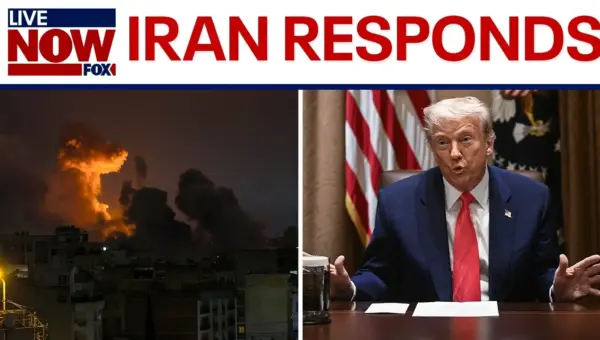
Iran Vows ‘Immediate Action’ as Trump Deadline Looms
Iran has warned of 'immediate and proportionate action' if President Trump follows through on threats to strike following a looming deadline. Tensions have escalated over the Strait of Hormuz, a vital global shipping lane, with direct diplomacy between the U.S. and Iran now severed.


Trump’s Nuclear Threat Sparks Global Crisis, Iran Cuts Ties
Former President Donald Trump's chilling post threatening Iran has plunged the world into crisis. Iran has cut off all communication with the US, leading to massive strikes and civilian human shields. The possibility of nuclear war looms large as international condemnation grows.


Trump’s Escalation: Ground Invasion of Iran Looms After Island Strikes?
Reports of explosions on Kharg Island, occurring just before a Trump deadline, raise fears of a potential ground invasion of Iran. While unverified, these strikes could signal a drastic escalation strategy, pushing the region toward wider conflict.