Middle East Conflict Fuels Oil Surge, Market Jitters
Markets showed little movement despite escalating Middle East tensions and the deployment of U.S. troops. Crude oil prices surged past $100 a barrel, driven by concerns over the Strait of Hormuz. The conflict has also intensified in Lebanon, causing a significant humanitarian crisis.


Middle East Conflict Escalates, Oil Prices Soar Past $100
Markets closed largely flat on Friday, despite the President’s latest efforts to ease concerns about the ongoing conflict in the Middle East. Tensions have flared as the U.S. confirms the deployment of 3,500 troops to the region, a move Iran has labeled a pretext for invasion. While the President stated the U.S. is engaged in serious peace talks, Iran’s Foreign Ministry dismissed these claims as unrealistic.
The ongoing hostilities have had a significant impact on global energy markets. Crude oil prices settled above $100 a barrel for the first time in over three years. This surge comes as the President warned Iran to reopen the Strait of Hormuz, a vital waterway for global oil transport. The President threatened to target Iran’s critical infrastructure, including power and desalination plants, if the strait does not reopen, a move that could create a humanitarian catastrophe.
Lebanon Conflict Intensifies Amidst Humanitarian Crisis
In Lebanon, the conflict has displaced 20% of the population, with tent cities emerging as a stark symbol of the crisis. The Israeli Prime Minister has vowed to continue operations in Lebanon, targeting areas where Hezbollah, a key Iranian proxy, operates. Reports indicate over 100 apartment buildings used by Hezbollah have been destroyed, and nearly 3,200 people have died across the region.
The violence has not spared civilians. In Tehran, strikes left a car and apartment in ruins, while smoke rose over Beirut. In Israel, the northern regions face daily rocket attacks from Hezbollah and Iran. A recent strike hit Israel’s largest oil refinery, and residential areas have also been caught in the crossfire. One priest described how cluster munitions, described as deadly bomblets larger than grenades, fell through his kitchen.
The sustained conflict has led to widespread fatigue and fear. Many in affected areas, particularly Arab communities in Israel, lack access to public or private shelters, leaving them vulnerable. The constant threat of attacks has left residents feeling exposed and weary.
U.S. Military Posture and Diplomatic Tensions
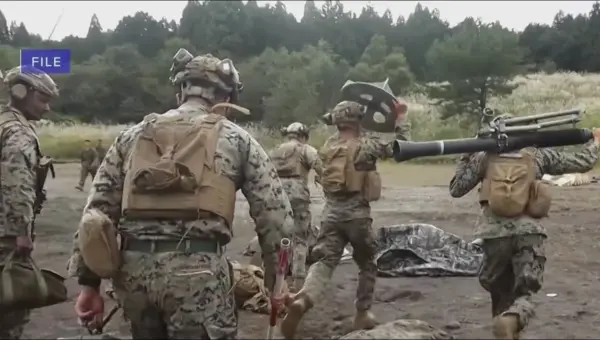
The U.S. has significantly increased its military presence in the region, deploying thousands of additional troops, including Marines and elements of the 82nd Airborne. This troop buildup occurs even as the President speaks of peace talks, creating a mixed message. White House Press Secretary Karine Jean-Pierre faced questions about the President’s threats to Iranian infrastructure, with the administration stating that U.S. forces will always act within the law while pursuing operational objectives.
However, the potential targeting of civilian infrastructure, such as desalination plants that provide water to millions, raises serious concerns. Experts note that while the U.S. military possesses the capability to strike such sites, holding them would be a dangerous and protracted undertaking. The ongoing military actions and diplomatic posturing highlight the complex and volatile situation.
Economic Repercussions: Markets, Oil, and Mortgages
The events in the Middle East are having a ripple effect on the global economy. While stock markets showed mixed results, crude oil prices have surged, reflecting investor concerns about supply disruptions. The U.S. benchmark West Texas Intermediate (WTI) crude oil closed above $102 per barrel, a level not seen since 2022. This indicates that traders anticipate a prolonged conflict and potential impact on oil flow through the Strait of Hormuz, where 20% of the world’s oil traffic passes.
The rising oil prices are contributing to broader inflation concerns. This, in turn, is influencing monetary policy. Mortgage interest rates have climbed, with 30-year fixed rates increasing significantly in the past month. Federal Reserve Chairman Jerome Powell acknowledged the need to monitor inflation expectations, noting that supply shocks from the conflict could lead to higher inflation over time. The Federal Reserve is carefully watching how the conflict unfolds to guide its decisions on interest rates.
Looking Ahead: Uncertainty and Potential Escalation
The situation remains highly uncertain, with no clear end in sight for the conflict. While diplomatic channels are reportedly open, Iran’s stance suggests little immediate progress. The dual approach of threatening military action and pursuing peace talks leaves many questioning the ultimate outcome. The coming weeks will be crucial in determining whether de-escalation is possible or if the region will face further turmoil and economic instability.
Source: Hallie Jackson NOW – March 30 | NBC News NOW (YouTube)

Related Articles

Gulf Allies Urge Trump to Continue Iran Conflict
U.S. allies in the Persian Gulf are urging President Trump to intensify military action against Iran, believing Tehran has not been sufficiently weakened. The ongoing conflict raises concerns about regional stability and global energy prices, while questions linger about the administration's long-term strategy.


Middle East Conflict Sends Gas Prices Soaring Past $4
The national average gas price has surpassed $4 per gallon for the first time since 2022, driven by escalating conflict in the Middle East. Recent attacks on oil tankers and military strikes have heightened fears of energy supply disruptions, impacting consumers globally.
US Weighs Troop Deployment Amid Iran Deal Push
The U.S. is considering deploying ground troops to Iran while simultaneously pushing for a diplomatic deal to reopen the Strait of Hormuz. Air strikes are ongoing as President Trump increases pressure on Iran.