Miami Murder Mistrial: Justice Delayed for Brian Pata?
A mistrial has been declared in the Rashawn Jones case, accused of murdering teammate Brian Pata in 2006. After 15 years and a two-week trial, the jury remains deadlocked, prolonging the search for justice and raising questions about the investigation.

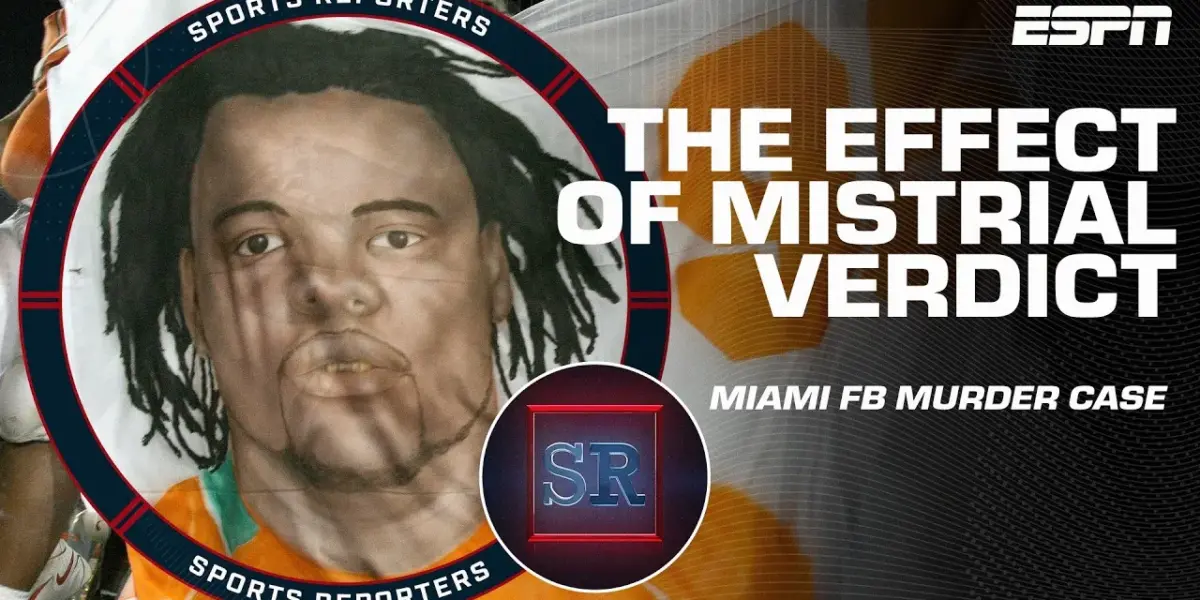
Miami Murder Mistrial: Justice Delayed for Brian Pata?
The trial of Rashawn Jones, accused in the 2006 murder of his University of Miami football teammate Brian Pata, has concluded with a mistrial, leaving the jury unable to reach a unanimous verdict. The decision, reached after two and a half weeks of testimony, has brought frustration and exhaustion to all parties involved, prolonging the quest for justice for Pata, a promising defensive lineman who was expected to be selected in the 2007 NFL draft.
A Frustrating Deadlock
Paul Lavine and Dan Aruda, whose award-winning podcast “Murder at the You” has meticulously documented the case for years, expressed the widespread disappointment. “It was frustrating. It was the conclusion nobody wanted. Neither side was happy with this,” stated Lavine. “The idea of having to go through this trial again with this complicated testimony and as emotional testimony and after all the waiting is just it’s exhausting.” Aruda echoed these sentiments, highlighting the impact on Pata’s family: “We’ve been speaking with the family for years now. They’ve been looking forward to this for so long. To try to find some form of justice for Brian. And then to have someone arrested and wait another four and a half years for a trial to start and then sit through the evidence for two and a half weeks and still come out with nothing.”
Circumstantial Evidence and Eyewitness Woes
The prosecution’s case against Jones, arrested 15 years after Pata’s murder, leaned heavily on circumstantial evidence. This included allegations of a dispute over a former girlfriend, a reported fight between Jones and Pata, and testimony that Jones possessed a gun matching the caliber used in the murder, though the murder weapon was never found. The prosecution also presented an eyewitness, a former University of Miami writing instructor, who identified Jones from a photo lineup as someone leaving the scene shortly after the shooting.
However, the defense effectively challenged this testimony. As Aruda explained, “The defense stressed that the identification came in a dark parking lot. They only passed each other very, very quickly. So Connor who also had issues with his eyes, wore glasses, did not have glasses on that day. Diabetic.” Furthermore, the defense highlighted the significant delay of seven and a half months before the eyewitness finally identified Jones, providing ample opportunity for doubt.
Prosecution Missteps and ESPN’s Crucial Role
The investigation itself has been plagued by missteps, notably the prosecution’s difficulty in locating their key eyewitness, Paul Connor. ESPN’s reporting uncovered that Connor was alive and living in Kentucky, contrary to the prosecution’s claims of his death. While Connor’s memory had degraded to the point where he was deemed unfit to testify, this revelation underscored broader issues with the investigation’s conduct.
ESPN’s involvement began when the Miami-Dade Police Department reached out, hoping College Game Day could produce a story for the 10-year anniversary of Pata’s death to elicit new information. However, ESPN reporters and producers took a deeper dive, leading to their extensive reporting and the “Murder at the You” podcast. Through a public records lawsuit, Lavine and Aruda uncovered that Rashawn Jones was identified as a suspect very early on, despite police initially claiming all were suspects.
Motive and Opportunity: A Divided Jury
The prosecution’s theory posited a motive rooted in jealousy and career disparity. Pata was a star player on the cusp of the NFL draft, while Jones had recently failed a second drug test, facing a two-game suspension and not living up to his potential. The defense countered that Jones and Pata did not compete for the same position, and that any past disputes were long resolved.
On the day of the murder, Jones was suspended from practice after failing a drug test. He claims he went home and stayed there, a claim supported by call records showing he changed his phone number that day. The jury’s deadlock – with only one juror voting to convict and five voting to acquit – underscores the difficulty the prosecution faced in proving its case beyond a reasonable doubt.
What Happens Next?
Prosecutors have a 90-day deadline to decide whether to retry Jones. They are expected to meet soon to discuss scheduling options. The mistrial highlights the challenges of prosecuting a case with decades-old evidence and potential investigative oversights.
A System Under Scrutiny
The handling of the Pata murder investigation has drawn criticism. Experts consulted by Lavine and Aruda suggested the case was “very solvable” early on, but too much time had passed. “If Miami-Dade Police had gone at this harder, quicker around the time of the murder, they probably could have been able to solve this,” Aruda stated. Lavine added, “It’s a real look at the criminal justice system and just how many mistakes were made in this and how many opportunities I think were squandered.” He concluded by suggesting that regardless of the case’s outcome, the Pata family deserves an apology for their prolonged suffering.
The Pata family, who had long believed Jones was responsible for Brian’s death, emerged from the trial even more convinced after hearing the evidence. However, the defense’s success in deconstructing the prosecution’s case, highlighting its circumstantial nature and poking holes in witness testimony, ultimately led to the jury’s inability to reach a consensus.
Lavine and Aruda are set to release another episode of “Murder at the You” in the coming weeks to wrap up their podcast series.
Source: REACTION to mistrial verdict in University of Miami football murder case | The Sports Reporters (YouTube)

Related Articles

Mistrial Declared in Miami Football Star Murder Case
A mistrial has been declared in the murder case of Brian Pata, with the victim's family expressing increased conviction in the guilt of the accused, Rashawn Jones. The trial exposed new evidence that strengthened their belief.


Arizona Wildcats Clinch Big 12 Title!
The Arizona Wildcats have officially clinched the Big 12 regular season title, capping off a dominant season in just their second year in the conference. Key performances from Jaden Bradley, Pelle Lipsey, and K. Bur led the charge as the Wildcats secured the championship trophy in front of a roaring home crowd.

Huskies EXPLODE for 10 runs, stun LSU Tigers!
The Northeastern Huskies unleashed a 10-run offensive explosion against the LSU Tigers, highlighted by Chris Walsh's first home run of the season. This dominant inning has put LSU in a deep hole early in the game.