MH17 Journalist: ‘I Knew Who Did It’ – Russia’s Lies Exposed
Italian war correspondent Lorenzo Cremani shares his harrowing firsthand account of the MH17 crash site and a Russian soldier's confession that exposed Moscow's role. Cremani details Russia's subsequent disinformation campaign and draws parallels to current geopolitical strategies.

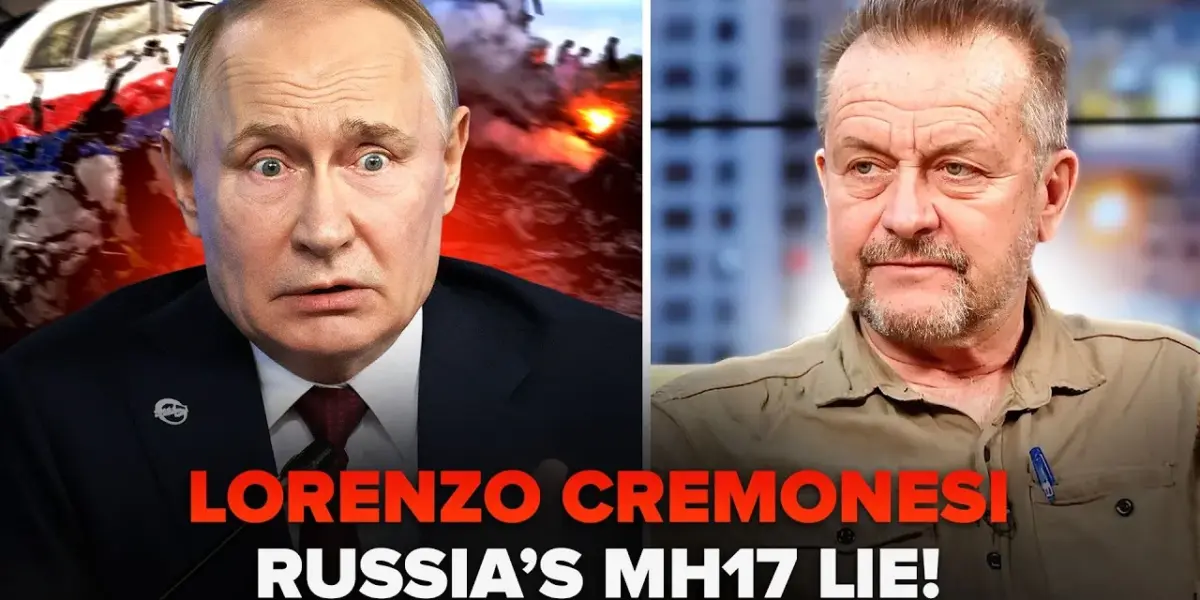
MH17 Crash Site: A Scene of Devastation and Deception
In July 2014, the world watched in horror as Malaysian Airlines flight MH17 was shot down over eastern Ukraine, a catastrophic event that claimed the lives of all 298 people on board. Amidst the tragedy, Moscow immediately launched a campaign of disinformation, flooding the global narrative with competing, false accounts. However, Italian war correspondent Lorenzo Cremani, who was among the first journalists on the scene, has provided a firsthand account that directly contradicts Russia’s denials and sheds light on the grim reality of that day.
Cremani, a seasoned correspondent with decades of experience reporting from conflict zones in the Middle East and a dedicated follower of the Russia-Ukraine war since 2014, recounted his harrowing experience on the ‘War and Politics Project.’ He described being called by his editor on the same day as the crash, with instructions to head to the Donbas region, an area he had covered previously. Arriving in Dnipro, he made his way to the crash site the following day, a time when crossing the front lines between Ukrainian and pro-Russian forces was still possible.
What he found was a scene of unimaginable devastation. “Cover of debris of of of remain of the of the planes of luggages,” Cremani described. “Open luggages, open suitcases, bodies. There were bodies scattered, remain of bodies.” The heat of the summer day amplified the horrific smell of decay. He noted that while some journalists had arrived the day before, the “peasants” in the area had begun looting the personal belongings of the deceased, evidenced by the open suitcases found scattered amongst the wreckage.
A Soldier’s Confession: The Smoking Gun
The crucial turning point in Cremani’s investigation came not from official channels, but from a chance encounter with a young Russian soldier guarding the train carrying the victims’ remains. Initially tasked with guarding the area after the crash, the soldier, who appeared to be in his late twenties, confessed to Cremani in a moment of profound remorse.
“The morning of the accident I was here guarding in this area. They were all block something. It was a kind of special unit and our commander tell us please go take your guns take everything go to the area of the accident because we shot down we shot down a Ukrainian military enemy planes,” the soldier recounted, as translated by Cremani’s interpreter. “And we saw on the rad there were someone with a parachute wide parachute coming down. So we assume the crew is still alive and we have to kill or capture them.”
The soldier’s account revealed that his unit had been dispatched to eliminate the perceived surviving crew of the downed aircraft. However, upon reaching the crash site, they discovered that the white objects falling from the sky were not parachutes, but pieces of the plane. He described seeing the remains of young girls, including a blonde girl who looked about five years old, amongst the wreckage. The soldier’s confession was stark: “We shot down the plane. It’s us who are responsible and we think it was a military plane. We have to capture them.” He expressed deep regret, stating, “I’m very sorry. There was no fight. there was and and then we came back.”
This direct confession, made by a soldier on the ground, provided Cremani with irrefutable evidence of Russian responsibility. He immediately understood the implications: “So I told him so you did it. He realized that of course not. And he say of course not. What do you mean you just told me? And then he say no but this is propaganda.” Cremani captured a photograph of the soldier, which became the front page of his newspaper, accompanied by the soldier’s story, including his nickname and age, though not his full name.
Russia’s Disinformation Machine and the MH17 Cover-Up
Following the crash, Russia engaged in a systematic effort to obscure the truth. Cremani observed that the pro-Russian militia were initially disorganized, allowing journalists relatively free access to the crash site. However, as Igor Girkin, a prominent pro-Russian commander, arrived, the narrative began to solidify around the official Russian line: denial of responsibility and blame placed on Ukrainian forces.
“They gave a press conference in Indones and we went I remember I went there and he arrived with a with a black boxes saying that there were nothing to hide we will give the black boxes to the authorities,” Cremani recalled. “It was not a secret source. the guy talking and so I remember he was quoted all over the world.” This tactic, Cremani explained, was part of a broader strategy of creating conflicting narratives to confuse and misdirect. He testified to investigators in Amsterdam, recounting the soldier’s confession and emphasizing that the soldier believed they had shot down a Ukrainian military plane, a mistake that had catastrophic consequences.
Cremani drew a parallel between the MH17 incident and Russia’s subsequent actions, particularly leading up to the full-scale invasion of Ukraine in 2022. “Putin denied you. You are comparing to what happened later till the last minute something that he would have done 2 minutes later,” he stated, highlighting a pattern of deception. “The Russian are sometime so primitive because Putin denied you… means he told us we are going to make some military exercise in Belor Russia. We are not attacking anybody is American propaganda. We are not going to attack Ukraine. And they did it.” This consistent pattern of denial followed by action has led Cremani to believe that when Russia denies something, it is often a precursor to it happening.
Echoes of MH17: Disinformation in the Current Conflict
The journalist’s insights into Russia’s information warfare are highly relevant to the ongoing conflict in Ukraine. Cremani noted that during peace talks or negotiations, Russia often intensifies its attacks, using military action as a form of leverage or threat. “There is no sign of goodwill from their own side during this round of negotiation,” he observed, suggesting that Russia remains convinced of its military superiority and sees no need for conciliatory gestures.
He also commented on the increasingly “hysterical” rhetoric from Russian officials on social media, suggesting it correlates with their lack of success on the battlefield and economic pressures. However, Cremani also sees a positive sign in this hostility: it indicates that Europe is finally being recognized as a significant player, both militarily and politically. “If the Russian speak badly about Europe, that means that for at least at one point Europe at last is becoming important also military speaking,” he stated, expressing pride in Europe’s unified support for Ukraine.
Cremani concluded that Russia’s current strategy is a desperate attempt to justify its failures, both to its own population and to the world. The initial expectation of a swift victory has been replaced by a need to mobilize and convince the public of the necessity of a protracted conflict. He characterized Russia as, at best, a regional power, whose perceived strength is largely diminished without its nuclear arsenal. The expansion of NATO to include Finland and Sweden, and Europe’s rearmament, are further indicators of Russia’s strategic miscalculations and its declining influence.
Broader Implications and Future Outlook
The conversation also touched upon the situation in the Middle East, with Cremani analyzing the motivations behind potential US and Israeli actions against Iran. He suggested that internal political pressures on leaders like Netanyahu and Trump, coupled with the Epstein scandal, could be driving a desire for external conflict to distract from domestic issues and bolster popularity.
However, Cremani cautioned against underestimating the Iranian regime and the potential for a protracted and destabilizing conflict if intervention occurs. He drew parallels to the US invasion of Iraq, which resulted in a decade-long quagmire and immense loss of life. He stressed that any intervention in Iran could ignite a patriotic backlash, even from those critical of the current regime, and could lead to a resurgence of fundamentalism in the region.
The journalist’s testimony regarding MH17 serves as a stark reminder of the human cost of conflict and the insidious nature of disinformation. His firsthand account, corroborated by the confession of a Russian soldier, provides a crucial piece of the puzzle in understanding the truth behind the downing of MH17. As the world continues to grapple with geopolitical instability, Cremani’s insights underscore the importance of critical media consumption and the enduring power of truth, even in the face of overwhelming propaganda.
Source: 😱"I Know Who Did It." Italian journalist to MH17 and to Russia’s lies. What Really Happened? (YouTube)

Related Articles
Russia Blames US for Ukraine Peace Talk Failure
Russia is reportedly using Middle East conflicts to deflect blame for potential Ukraine peace talk failures, according to the Institute for the Study of War. Meanwhile, Ukraine is assisting the U.S. with drone defense, and controversy has arisen over the misrepresentation of Ukrainian drone technology on U.S. television.
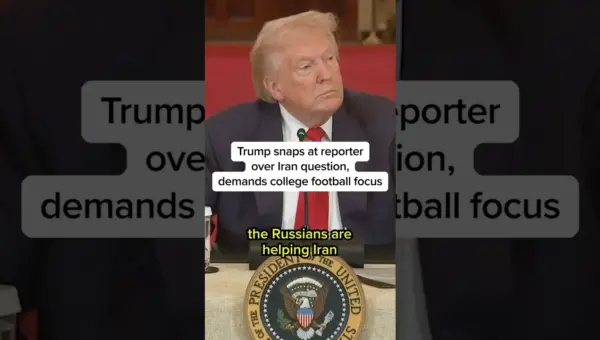
Trump Pivots to Football, Dismisses Reporter’s Iran Query
President Donald Trump publicly admonished a reporter at a White House event, dismissing a question about Russia reportedly aiding Iran in targeting the U.S. as "stupid." Trump demanded the focus remain on celebrating college football champions instead. The exchange highlights the President's communication style and his deflection of sensitive foreign policy inquiries.
Russia Aids Iran: Trump Dismisses War Crisis
Reports indicate Russia is aiding Iran in targeting US interests, yet the Trump administration appears to dismiss the severity of the situation. This analysis delves into the alleged intelligence sharing, the administration's response, and the broader geopolitical implications.