Mexico Plunges into All-Out War After ‘El Mencho,’ World’s Most Wanted Kingpin, Killed in Daring Raid
Mexico has been plunged into an unprecedented state of cartel warfare following the reported death of Nemesio Oseguera Cervantes, 'El Mencho,' the notorious leader of the Jalisco New Generation Cartel (CJNG). A daring military operation on February 22nd, potentially involving U.S. special forces, eliminated the world's most wanted drug kingpin, triggering a massive wave of retaliatory attacks by CJNG across multiple states, targeting civilians, infrastructure, and military sites.

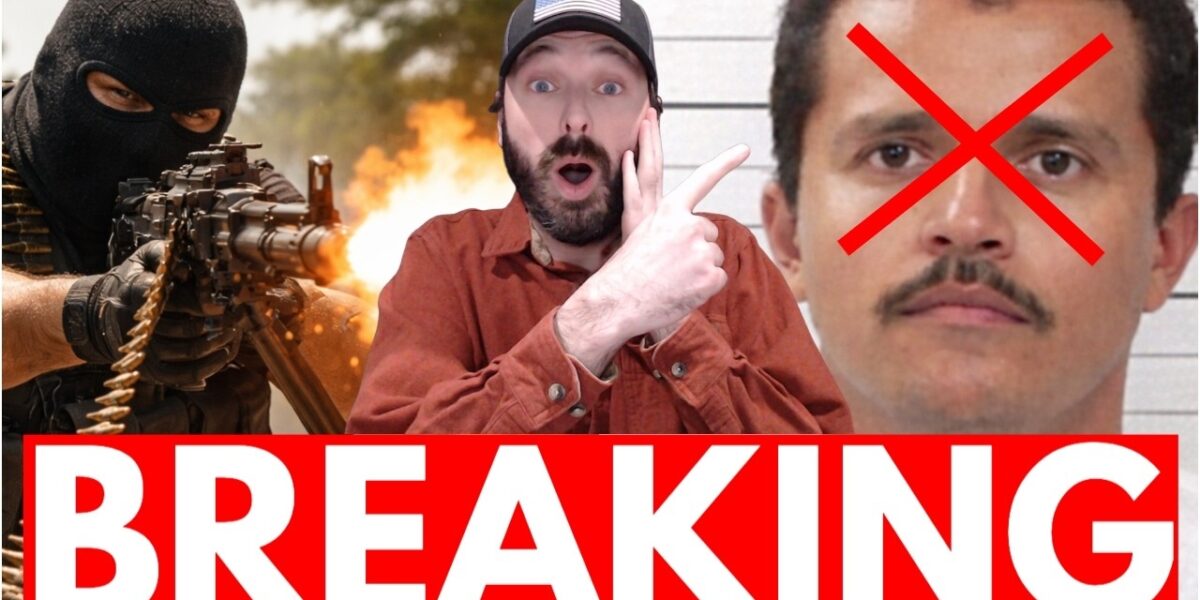
Mexico Plunges into All-Out War After ‘El Mencho,’ World’s Most Wanted Kingpin, Killed in Daring Raid
MEXICO CITY — A massive military operation in Mexico has reportedly culminated in the death of Nemesio Oseguera Cervantes, widely known as ‘El Mencho’ or ‘El Meno,’ the enigmatic and notoriously violent leader of the Jalisco New Generation Cartel (CJNG). The audacious raid, which took place on February 22nd, has plunged parts of Mexico into an unprecedented state of chaos, as cartel loyalists unleashed a wave of retaliatory attacks across multiple states, transforming cities and even tourist destinations into active war zones.
Sources from Mexican newspaper El Universal, since corroborated by multiple reports, confirmed the demise of the man often dubbed the ‘modern-day Pablo Escobar, but with way more violence, way more bloodshed.’ His death, hailed as a monumental victory against organized crime, has paradoxically triggered an immediate and terrifying escalation of violence, with CJNG members engaging in open combat against security forces and targeting civilians.
The Rise and Reign of ‘El Mencho’: Architect of a Brutal Empire
Nemesio Oseguera Cervantes, born in Michoacán, Mexico, rose from humble beginnings to become arguably the most feared drug lord of the 21st century. His journey to the helm of the CJNG is a testament to ruthless ambition and an unwavering commitment to extreme violence. Initially a police officer in Jalisco, Oseguera Cervantes eventually gravitated towards the burgeoning drug trade, beginning his criminal career as a low-level drug trafficker and enforcer for the Milenio Cartel.
Following the arrests and deaths of key Milenio leaders, El Mencho, alongside his brothers and brothers-in-law, capitalized on the power vacuum, forming what would become the Jalisco New Generation Cartel around 2010. Unlike older, more hierarchical cartels, CJNG distinguished itself through unparalleled brutality, employing sophisticated weaponry, military tactics, and public displays of torture and execution to assert dominance and intimidate rivals and authorities alike. This strategy allowed them to rapidly expand their control over lucrative drug trafficking routes, extortion rackets, and other illicit activities across Mexico and into international markets.
Under El Mencho’s leadership, CJNG grew into one of the most powerful and feared criminal organizations globally, rivalling the Sinaloa Cartel. Their operations stretched across at least 28 of Mexico’s 32 states, and their reach extended deeply into the United States, Europe, and Asia. El Mencho was specifically implicated in the trafficking of vast quantities of illicit drugs, including cocaine, methamphetamine, and the highly lethal synthetic opioid fentanyl, which has fueled an opioid crisis claiming countless lives in the United States.
The U.S. Drug Enforcement Administration (DEA) had a standing reward of up to $10 million for information leading to his capture, reflecting the immense threat he posed. His cartel was not only a major drug supplier but also a significant destabilizing force, engaging in audacious attacks on Mexican military convoys, assassinating judges, and even shooting down a military helicopter with a rocket-propelled grenade. El Mencho’s reign was characterized by a chilling blend of calculated strategy and unbridled savagery, making him a primary target for both Mexican and international law enforcement agencies for over a decade.
The Daring Operation: A Joint Effort Against a Ghost
Details surrounding the precision operation that led to El Mencho’s death remain sparse, shrouded in the secrecy typical of high-stakes military interventions against elusive cartel leaders. However, early reports indicate a sophisticated and ‘daring raid’ involving the Mexican military. Crucially, there are strong suggestions of a potential joint operation with the United States military, with speculative mentions of elite units like Delta Force being involved.
If confirmed, direct U.S. military involvement in such a sensitive ground operation within Mexico would signify a significant escalation in bilateral cooperation against organized crime, moving beyond intelligence sharing and training into active combat roles. While not unprecedented in other regions, overt US special forces operations on Mexican soil are politically sensitive and have rarely been publicly acknowledged. The transcript alluded to Delta Force ‘quietly working in Mexico’ for some time, suggesting a deeper, covert engagement that may now be coming to light.
Targeting El Mencho was an immense challenge. He was known to constantly move between safe houses, utilizing an extensive network of lookouts, encrypted communications, and heavily armed security details. His operational methods were designed to make him virtually untraceable, earning him the moniker of a ‘ghost.’ The success of this operation, therefore, speaks volumes about the intelligence gathering, planning, and execution capabilities of the forces involved.
The elimination of such a high-value target represents a significant strategic victory, potentially disrupting CJNG’s command and control structure and sending a powerful message to other cartel leaders. It fulfills, in part, promises made by leaders like former U.S. President Trump to ‘kill the drug cartel leaders,’ marking what some are calling ‘the biggest victory against the drug cartels since Pablo Escobar.’
Mexico Erupts: A Nation Under Siege
The immediate aftermath of El Mencho’s death was a rapid and terrifying descent into anarchy across several Mexican states. As news of their leader’s demise spread, CJNG loyalists launched a coordinated and brutal campaign of retaliation, aiming to sow fear, disrupt government response, and demonstrate their enduring power despite the loss of their kingpin. The violence was widespread, indiscriminate, and shockingly public.
Guadalajara and Jalisco: Ground Zero for Retaliation
The state of Jalisco, home to CJNG’s stronghold and its namesake, Guadalajara, bore the brunt of the initial onslaught. Reports flooded in of intense gunfire erupting on city streets. Videos captured civilians fleeing in terror, abandoning their vehicles as armed cartel members engaged in brutal combat with uniformed soldiers and police. Buses were torched, sending plumes of black smoke into the sky, with harrowing accounts of people narrowly escaping burning vehicles.
One of the most brazen attacks occurred at the Guadalajara International Airport. Witnesses and pilot reports described CJNG members ‘storming the airport literally on the tarmac,’ leading to widespread panic. Passengers were seen running for their lives amidst gunfire and smoke, as the cartel deliberately targeted civilians and critical infrastructure to maximize disruption and terror. The scenes were described as ‘out of a movie,’ highlighting the unprecedented nature of the coordinated assault.
Guanajuato and Puerto Vallarta: Arson, Bombings, and Tourist Targets
The violence quickly spread beyond Jalisco. In the Chula Vista neighborhood of Guanajuato, arson attacks set entire areas ablaze, leaving structures and vehicles burning. The scale of destruction indicated a well-resourced and coordinated effort by the cartel to paralyze regions under their influence.
Perhaps most alarming were the attacks in Puerto Vallarta, a popular tourist destination. Reports of ‘black smoke after bombings’ and buildings being targeted by cartel elements sent shockwaves through the international community. The deliberate targeting of tourist areas, blockades set up to ‘hunt for people,’ and warnings for Americans to ‘get to safety’ underscored the cartel’s willingness to cross previously unacknowledged lines, jeopardizing both local lives and Mexico’s vital tourism industry. Such actions aim to exert maximum pressure on the government by impacting its economic lifelines and international standing.
Targeting the State: Military Sites Under Attack
In an audacious display of defiance, the CJNG also escalated their attacks to include military sites. ‘Breaking news’ indicated that ‘military sites in Mexico are being bombed as we speak,’ marking a direct challenge to the authority and capacity of the Mexican armed forces. This move signifies a shift from mere street clashes to a full-blown confrontation, with the cartel openly declaring war on state institutions.
Footage from Tapalpa, Jalisco, showed armed men moving through fields, engaging in combat, with machine gun fire and helicopters overhead, indicative of pitched battles between cartel forces and state security. The presence of armored vehicles pressing into cartel-controlled areas further confirmed the intensity of the ongoing conflict.
The Broader Context: Mexico’s Enduring Cartel Wars
Mexico has been grappling with a devastating drug war for decades, a conflict that has claimed hundreds of thousands of lives and displaced millions. The death of El Mencho, while a significant blow to the CJNG, must be viewed within this broader, complex context. The Mexican government, under successive administrations, has struggled to contain the power and influence of cartels, which have become deeply entrenched in the country’s social, economic, and political fabric.
The ‘kingpin strategy,’ focusing on capturing or killing cartel leaders, has often yielded mixed results. While it can temporarily disrupt operations, it frequently leads to power vacuums, internal cartel fragmentation, and increased violence as rival factions or new leaders vie for control. The immediate and extreme retaliation witnessed after El Mencho’s death is a stark illustration of this phenomenon, demonstrating the CJNG’s resilience and its deep bench of loyal, violent operatives.
The cartels’ immense wealth, derived from drug trafficking, extortion, human smuggling, and other illicit activities, allows them to outgun and, in many cases, outmaneuver local law enforcement. Corruption remains a pervasive issue, further complicating efforts to dismantle these criminal enterprises. The military has increasingly been deployed to combat cartels, a role traditionally reserved for civilian police, highlighting the severity of the challenge and the erosion of civilian authority in some regions.
International Implications and the Path Forward
The eruption of violence following El Mencho’s death carries significant international implications, particularly for the United States. The flow of illicit drugs, especially fentanyl, across the US-Mexico border remains a critical concern, and any destabilization in Mexico could further complicate efforts to stem this tide. The targeting of tourist areas also raises alarms for American citizens living in or visiting Mexico, potentially impacting travel advisories and bilateral relations.
The potential involvement of U.S. special forces, if confirmed, underscores the shared security interests and the urgency of addressing the cartel threat. However, it also raises questions about sovereignty, the rules of engagement, and the long-term strategy for combating transnational organized crime. The U.S. and Mexico have a complex relationship, balancing cooperation with concerns over sovereignty and intervention.
Looking ahead, the death of El Mencho presents both an opportunity and a profound challenge. While it removes a central figure responsible for immense suffering, it also risks triggering a violent power struggle within the CJNG or between CJNG and rival cartels. A new leader may emerge, or the cartel could fragment into smaller, equally violent groups, making them even harder to track and dismantle.
For Mexico, the immediate priority is to restore order, protect civilians, and reassert state control in areas overwhelmed by cartel violence. This will require a coordinated and sustained effort from all levels of government, backed by robust intelligence and military capabilities. For the international community, continued support for Mexico’s security efforts, coupled with strategies to reduce drug demand and disrupt financial networks, will be crucial. The ‘unreal situation’ unfolding in Mexico is a sobering reminder that the war against organized crime is far from over, and victories, however significant, often come at a heavy cost.
Source: Cartel War ERUPTS With Deadly Combat – Leader KILLED (YouTube)

Related Articles

Mexico Cartel Violence Erupts After US-Aided Leader’s Death
A targeted operation against a top cartel leader, supported by US intelligence, has triggered a violent surge in Mexico. The killing of the CJNG leader has led to subordinate factions unleashing chaos, raising questions about US drug policy and the complex geopolitical landscape.

Mexico’s Cartel Chaos: El Mencho Raid Sparks Crisis
A decisive military raid on cartel leader El Mencho has plunged Mexico into chaos, triggering widespread retaliation and nationwide roadblocks. As President Claudia Sheinbaum grapples with restoring order amidst escalating cartel conflicts and the upcoming 2026 FIFA World Cup, the nation's future hangs in the balance.

Fact Check: How Fake News Fueled Panic After El Mencho’s Death
False and misleading images, including AI-generated content, circulated widely following the reported death of cartel leader 'El Mencho', fueling panic and fear in Mexico. Fact-checking revealed that viral videos of airport chaos and city-wide destruction were largely fabricated, highlighting the dangers of disinformation during crisis moments.