Megyn Kelly Rebukes Trump’s Dangerous Rhetoric
Megyn Kelly has voiced strong criticism of Donald Trump's social media habits, calling his inflammatory rhetoric "irresponsible and disgusting." She questioned his ability to lead without resorting to threats of war crimes, highlighting a growing concern over presidential communication in the digital age.

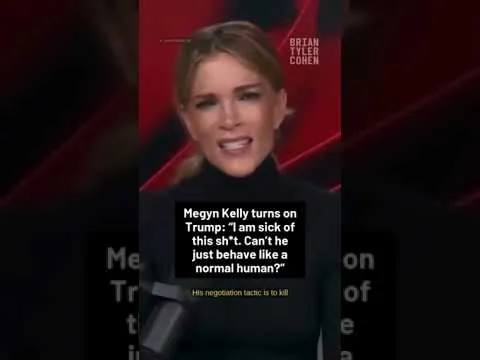
Megyn Kelly Rebukes Trump’s Dangerous Rhetoric
Megyn Kelly, a journalist who has covered Donald Trump extensively, recently voiced strong criticism of his social media habits. She expressed frustration with his online behavior, particularly his tendency towards inflammatory language. Kelly stated she is “sick of it” and questioned why he cannot simply “behave like a normal human?” This outburst came after a post by Trump that Kelly found to be unacceptable and harmful.
Kelly specifically called out a post where Trump made a threat that she described as threatening to “wipe out an entire civilization.” She argued that discussing the deaths of civilians so casually on social media is irresponsible. Kelly noted that she has spent over a decade trying to understand Trump’s unique communication style. She even suggested that her own difficult experience being on the receiving end of his commentary for nine months actually helped her grasp his social media tactics.
However, Kelly drew a line with this particular incident. She declared the post “completely irresponsible and disgusting” and stated, “This is wrong. It’s wrong.” She emphasized that regardless of any negotiation strategy, threatening to eliminate an entire country’s population to achieve a specific outcome is unacceptable. Kelly believes it is not difficult to recognize when such rhetoric crosses a line.
A Call for Dignified Leadership
Kelly voiced a wish for Trump to stop using such tactics. She questioned what it says about him and the country’s standing if he feels the need to resort to these extreme threats in negotiations. She asked, “What does that say about the the position that our country is in right now in these negotiations?” Kelly argued that a strong leader should not need to threaten war crimes to appear dignified and powerful.
She questioned Trump’s approach, asking, “What is he? Genghask Kong like what what is he trying to do?” Kelly suggested that while threats might be part of negotiations, they should not be used in a way that diminishes or demeans the United States. She concluded by referencing The Wall Street Journal, implying that such behavior is not in line with the standards expected from American leadership.
Why This Matters
Kelly’s strong words are significant because they come from someone who has often defended or attempted to explain Trump’s unconventional style. Her public frustration suggests a breaking point, even for those who have tried to understand his approach. This incident highlights the ongoing debate about presidential conduct and communication. It raises questions about the impact of a leader’s words, especially on the international stage. The use of social media for diplomacy, or what some might call anti-diplomacy, has become a defining characteristic of the Trump era.
Historical Context and Future Outlook
Throughout history, presidential communication has evolved. From formal addresses to the modern digital age, leaders’ words have always carried immense weight. However, the direct, unfiltered, and often provocative nature of social media presents new challenges. Trump’s use of platforms like Twitter (now X) has redefined presidential communication, often bypassing traditional media gatekeepers. This can lead to quicker dissemination of messages but also increases the risk of misinterpretation or unintended escalation.
Kelly’s reaction is part of a larger conversation about the appropriateness of certain language from the highest office. While supporters might see Trump’s rhetoric as a sign of strength or a shrewd negotiation tactic, critics like Kelly view it as reckless and damaging to America’s image and global standing. The future outlook suggests that leaders will continue to grapple with how to use digital platforms effectively and responsibly. The line between strong leadership and harmful provocation remains a critical point of discussion for voters, policymakers, and international observers alike.
The core issue is whether extreme threats are an effective negotiation tool or a dangerous display of instability. Kelly’s frustration points to the latter. She believes that true strength lies in dignified leadership, not in casual threats of mass destruction. This debate is likely to continue as technology shapes how leaders communicate and how their messages are received worldwide.
Source: Megyn Kelly TURNS ON Trump: “I am sick of this sh*t. Can’t he just behave like a normal human?” (YouTube)

Related Articles

Greene Demands GOP Burning; Trump Followers in Cult?
Marjorie Taylor Greene recently called for the Republican Party to be 'burned to the ground' and described Donald Trump's MAGA followers as being part of a 'cult.' These strong statements highlight deep divisions within the GOP and raise questions about the nature of political loyalty and party identity.

MAGA Stars Flee Trump as Movement Crumbles
Influential MAGA figures are publicly clashing with Donald Trump, leading to a visible fracturing of the movement. Allies like Megyn Kelly, Tucker Carlson, and Candace Owens are now facing Trump's criticism, with some even suggesting he should step down. This internal strife, coupled with Melania Trump's independent actions, signals a potential weakening of Trump's influence and raises questions about the future of the MAGA movement.

Gov. Moore Blasts GOP Silence on Trump’s Provocative Iran Posts
Maryland Governor Wes Moore urged Republican lawmakers to remember their oath to the Constitution, not President Trump, amid his provocative posts about Iran. Moore, a combat veteran, criticized the reliance on military power for regional stability and drew parallels to historical conflicts where adversaries could simply wait out U.S. involvement.