Massive Iran Blast Seen As US, Israel Intensify Strikes
President Trump shared a video of a massive explosion in Iran, believed to be a U.S. strike near Isfahan, amid escalating tensions. The U.S. and Israel continue to target Iran with strikes on weapon production sites. Experts view the situation as a "battle of wills" involving finite resources and regional diplomacy.

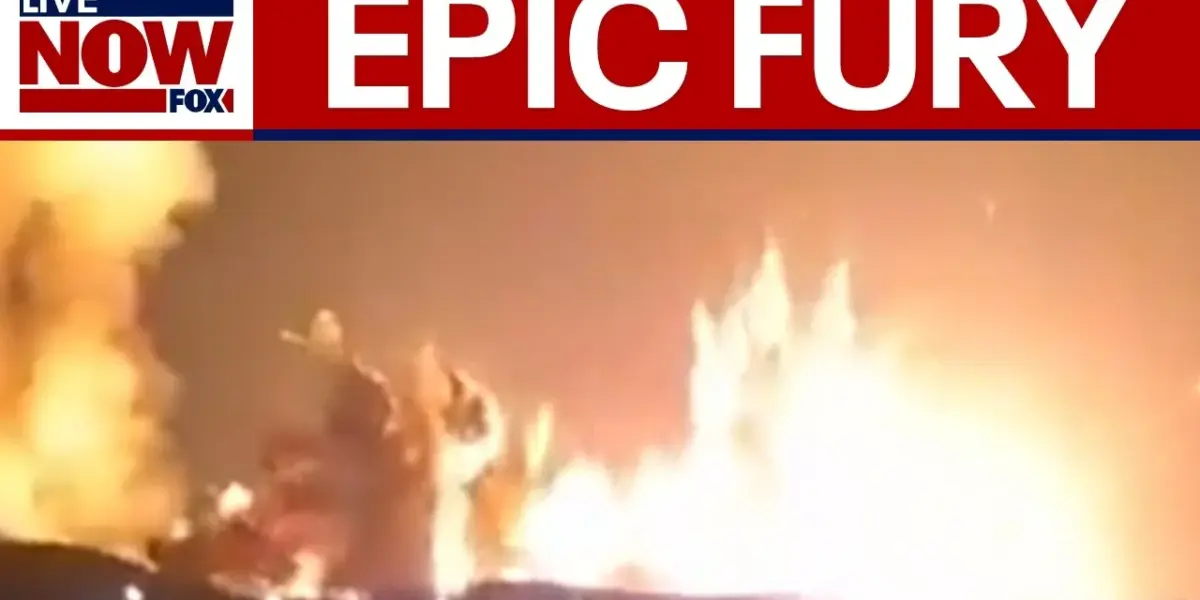
US and Israel Escalate Strikes on Iran Amid Ongoing Conflict
The United States and Israel are continuing to target Iran with a series of strikes as the conflict, dubbed Operation Epic Fury by the US, enters its second month. In a significant development, President Trump recently shared a video on Truth Social showing a massive explosion in Iran, believed to be a major strike near the city of Isfahan. The video, shared without comment by the former president, appears to show a large-scale attack. According to the Associated Press, a NASA fire tracking satellite indicated that the explosions occurred near areas known to house military positions.
Isfahan is a key city in Iran, hosting one of the three uranium enrichment sites that were previously targeted by the U.S. during a conflict with Iran in June of last year. This recent strike underscores the ongoing military pressure being applied to the Iranian regime.
Israel Defense Forces Announce New Strikes
Adding to the recent activity, the Israel Defense Forces (IDF) announced earlier this morning that Israel had completed another wave of strikes against weapon production sites in Iran overnight. An illustration provided by the IDF shows that among the targets struck was a facility used for casting and filling ballistic missile warheads intended for launch against Israel and other locations.
These coordinated actions by the U.S. and Israel signal a determined effort to degrade Iran’s military capabilities and disrupt its weapons programs.
Expert Analysis on Escalation and Negotiation
Enya Corvine, from the Foundation for Defense of Democracies, provided insights into the complex situation. She noted that President Trump has publicly announced that he is speaking with the speaker of the Iranian parliament, describing the speaker as a more reasonable negotiator. This suggests an ongoing diplomatic effort alongside military actions.
However, Corvine also highlighted President Trump’s tendency to maintain the threat of escalation. “He’ll go in and say, ‘Hey, we’ve made progress. I really want a deal. This is what peace could look like.’ But he’ll also be like, ‘And I’m ready to go up the escalation ladder if you guys aren’t aren’t ready for this,'” she explained. This dual approach of seeking a deal while maintaining military pressure is a key characteristic of the current strategy.
Corvine pointed to several developments she is watching closely: President Trump’s public engagement with the Iranian speaker of parliament, the deployment of Marines to the region, hints at potentially taking Car Island, and the significant strike on Isfahan. These factors, she believes, are central to understanding the current phase of the conflict.
A Multi-Front Conflict for Israel
Corvine elaborated on the multi-front nature of the conflict for Israel. Beyond the strikes against Iran, Israel is also engaged in operations against Hezbollah in Lebanon and is dealing with threats from other groups. “The Iranian front, the Lebanese front, and the West Bank are still very much active fronts for Israel. And all of them, of course, are connected by Iran. Iran is the head of the snake, if you will,” she stated.
She observed a shift in Iran’s strategy, noting that while initial attacks targeted military and civilian populations in Israel, recent strikes have focused on the south, where Israel has significant energy development centers and its nuclear research facility. This suggests a potential shift towards targeting Israel’s economy and infrastructure.
The U.S. response, targeting potential Iranian nuclear assets in Isfahan, aligns with this observation. Corvine explained that such strikes are often aimed at underground facilities, where Iran is known to hide its key assets. “What the US uses those big bombs for is their underground facilities. Of course, Iran is is is known for hiding some of their key assets under tons and tons and tons of cement,” she said.
A Battle of Wills and Finite Resources
Looking ahead, Corvine described the situation as a “battle of wills.” She emphasized the need to watch how long Iran can sustain its attacks on the region and Israel, and how long President Trump can maintain military pressure while managing domestic sentiment and economic impacts like increased gas prices and damage to the economy.
Beyond willpower, Corvine pointed to finite resources as a critical factor. This includes the number of missiles Iran possesses and the number of interceptors available to Israel and Gulf states. “We’re dealing with a series of finite um resources, whether it’s willpower, missiles, interceptors, and we just have to see who blinks first,” she concluded.
Gulf Arab Nations Urge Continued US Action
Adding another layer of significance, the Associated Press reported that several Gulf Arab nations, including Saudi Arabia, Kuwait, Bahrain, and the UAE, are privately urging President Trump to continue operations against Iran. These nations are directly impacted by Iranian aggression, with the UAE, Saudi Arabia, and Bahrain often finding themselves on the front lines of receiving Iranian missiles and drones.
Their determination for the U.S. to continue its actions is crucial, especially given their roles as major energy producers with strategic reserves. This unified stance from key regional players underscores the widespread concern over Iran’s actions and the desire for a stronger stance against the regime.
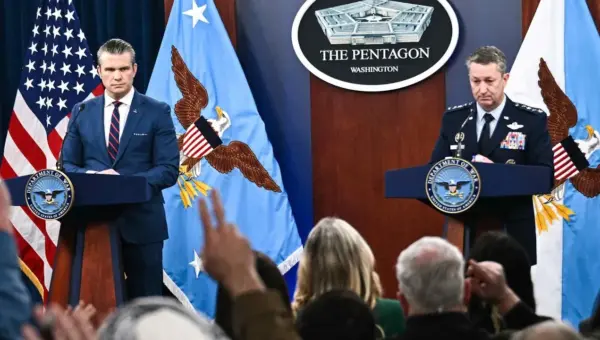
As Secretary of War Pete Hegs and General Dan Raisen Kaine were set to deliver an update on Operation Epic Fury, the situation remained tense, with diplomatic and military pressures continuing to shape the volatile regional dynamics.
Source: President Trump shares video of massive explosion in Iran (YouTube)

Related Articles

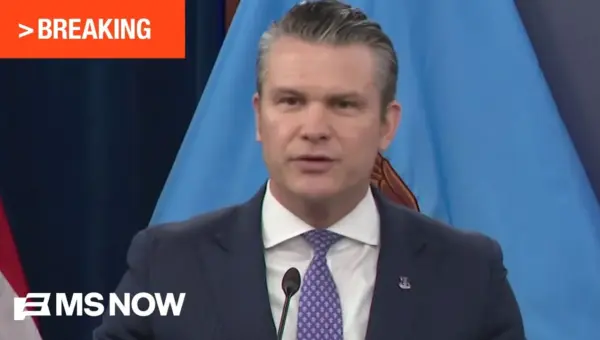
US Troops Show Resolve in “Operation Epic Fury”
Secretary Hegseth visited U.S. troops engaged in "Operation Epic Fury," witnessing their high morale, competence, and urgency. He reported that American forces are demonstrating increasing firepower and effectiveness, while Iran's capabilities are diminishing. The secretary urged Iran to negotiate a deal, warning of intensified U.S. action if they refuse.
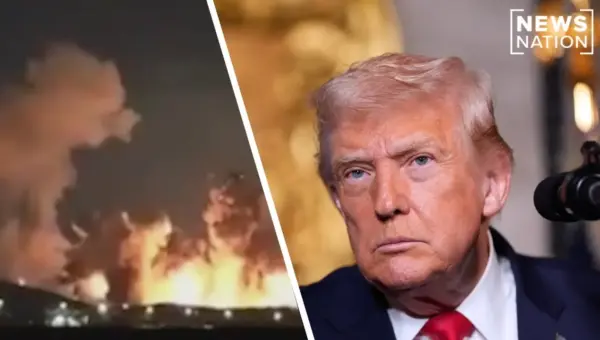
US Strikes Iran, Escalates Nuclear Fight
U.S. forces have reportedly struck a key Iranian city linked to its nuclear and missile programs, escalating tensions. President Trump's administration is increasing military pressure while also pursuing diplomatic talks, creating a complex geopolitical situation.
US Troops Show Unwavering Resolve in Fight Against Iran
U.S. troops on Operation Epic Fury exhibit remarkable unity, competence, and urgency in their mission against Iran. Facing challenges with innovation and determination, they prioritize finishing the fight for future generations. The operations aim to degrade Iran's military capabilities and prevent nuclear proliferation, signaling a decisive period ahead.