Mars’ Soil May Naturally Block Earth Life, Study Finds
New research suggests that the soil on Mars may naturally inhibit Earth life. Experiments with hardy tardigrades show that Martian regolith simulants contain compounds that slow down or stop microbial activity. This finding could be crucial for planetary protection during future human missions to Mars.

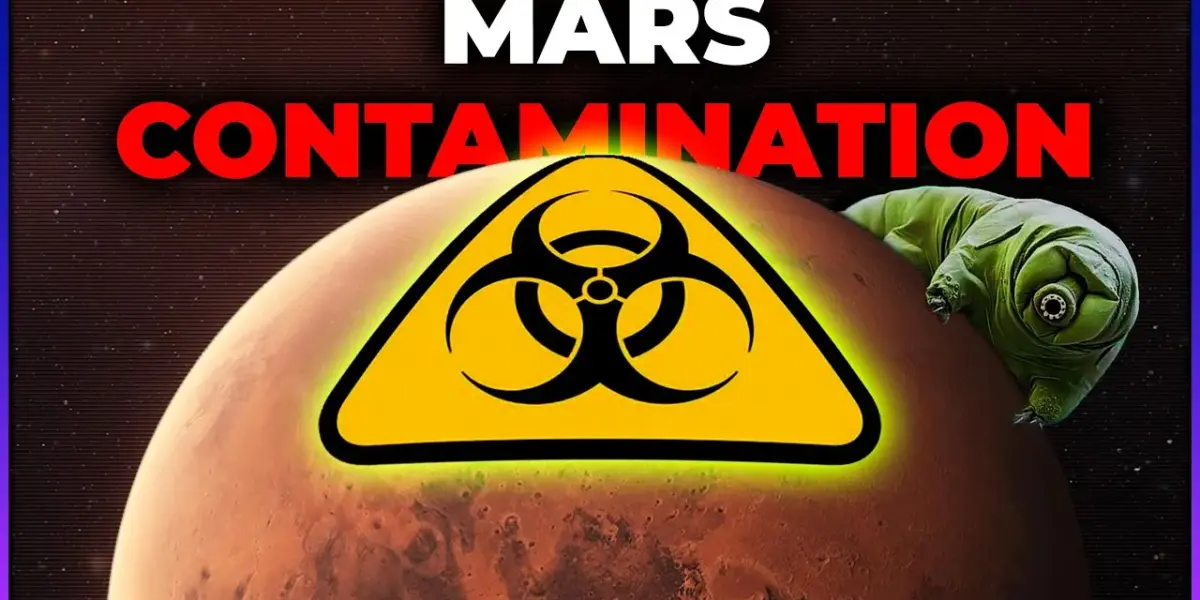
Mars’ Own Soil Might Protect It From Earth Contamination
Scientists have discovered that the soil on Mars, known as regolith, may contain natural defenses against Earth life. This finding offers hopeful news for future Mars exploration, suggesting that the Red Planet might actively resist contamination from the hardy microbes we might accidentally bring with us.
Tiny Survivors, Big Questions
Earth is teeming with life, and many of these organisms, called extremophiles, can survive in incredibly harsh conditions. When we send spacecraft to Mars, even after cleaning them, there’s a chance we might carry some of these tough travelers. The big question has always been: could these Earth microbes survive and even reproduce on Mars? This would complicate our search for native Martian life and our understanding of the planet’s history.
Tardigrades: Nature’s Ultimate Survivors
To explore this question, Dr. Karine Bakermans, a microbiology professor at Penn State University, conducted research using tardigrades. These tiny, eight-legged creatures, often called water bears, are famous for their incredible resilience. They can survive extreme temperatures, radiation, and even the vacuum of space. If any Earth life could survive on Mars, tardigrades would be strong contenders.
Simulating Martian Soil
Since we don’t yet have actual Martian soil samples on Earth, scientists create simulants. These are mixtures designed to mimic the chemical and mineral makeup of the Martian regolith, based on data from rovers and orbiters. Dr. Bakermans used two different commercially available Martian regolith simulants for her experiments.
The Experiment: Tardigrades Meet Mars Soil
Dr. Bakermans’ team collected tardigrades from the Italian Apennine Mountains and brought them back to the lab. First, they had to wake up the dormant tardigrades by hydrating them. Then, they mixed the active tardigrades with the Martian regolith simulant. They observed the tardigrades for about a week, checking their activity levels.
Surprising Results: Mars Soil Slows Them Down
The results were eye-opening. When the tardigrades were exposed to one of the regolith simulants, their activity levels dropped significantly. They became sluggish and stopped moving, indicating they were negatively affected by the soil. This was a crucial observation, suggesting that something in the Martian soil was harmful to Earth life.
Washing Away the Harm
The researchers then decided to test if the harmful effects were due to water-soluble compounds in the simulant. They washed the regolith simulant multiple times with water. When they re-tested the tardigrades with the washed simulant, the harmful effects disappeared. The tardigrades became active again, swimming and moving around as expected.
What’s in the Soil?
Martian regolith differs from Earth soil in several ways. It lacks organic material and is highly oxidized due to years of radiation. It also has a high iron content, giving Mars its red color. A key component of Martian soil, though not present in the simulants used, is perchlorate, a chemical compound that is toxic to many forms of life.
Implications for Planetary Protection
This research is vital for planetary protection, the effort to prevent the contamination of other worlds with Earth life and vice versa. If the natural Martian regolith can inhibit or harm Earth microbes, it provides an additional layer of protection. This could help ensure that our exploration doesn’t permanently alter Mars or interfere with the search for indigenous Martian life.
Future Research: A Step Closer to Understanding
Dr. Bakermans plans to continue this research. Future experiments will explore how tardigrades respond to other Martian conditions, such as low atmospheric pressure and higher levels of ionizing radiation. This will give us a more complete picture of how Mars might defend itself against Earth contaminants.
The Ongoing Search for Life
The discovery that Martian soil might have protective qualities is exciting. It underscores the importance of understanding planetary environments before we send humans. While we can’t eliminate all microbes from our spacecraft, knowing that Mars itself may offer some resistance is a significant step forward in our quest to explore the cosmos responsibly.
Source: How Mars Fights Back The Contamination from Earth (YouTube)

Related Articles


Ocean Mysteries Hint at Extraterrestrial Life
Harvard astrophysicist Avi Loeb proposes that alien life, or 'cryptoterrestrials,' might already exist on Earth, potentially hidden in our oceans. He suggests analyzing the isotopic composition of discovered materials is key to determining their origin outside our solar system. This idea challenges traditional approaches to searching for extraterrestrial life.


Young Space Enthusiast Inspires Nation’s Space Ambitions
A young boy's viral enthusiasm for the Artemis space launch has reignited public interest in space exploration. His clear explanations and astronaut praise highlight a generation inspired by the cosmos. This renewed passion could shape future space policy and international cooperation.


NASA Pivots: Mars Nuclear Probe, Moon Base Ahead
NASA is pivoting its exploration strategy, prioritizing a nuclear-powered Mars probe and accelerating plans for a moon base. The International Space Station's future is uncertain, with a shift towards commercial platforms. Meanwhile, new telescope data reveals overmassive black holes in dwarf galaxies and captures stunning images of Saturn and the Crab Nebula.