Mars Rover Finds Compelling Clues of Ancient Life
NASA's Perseverance rover has found compelling evidence of organic molecules in a Martian rock, suggesting past microbial life. Meanwhile, JWST studies the atmosphere of exoplanet Trappist-1e, and interstellar comet 3I/Atlas continues its journey through our solar system.


Mars Rover Unearths Strongest Evidence Yet for Past Life
In a monumental stride for astrobiology, NASA’s Perseverance rover has uncovered what scientists are calling the most compelling evidence to date for ancient microbial life on Mars. The discovery, made within the Jezero Crater, centers on intriguing organic molecules found within a sedimentary rock sample, offering a tantalizing glimpse into the Red Planet’s potentially life-bearing past.
Jezero Crater: A Prime Target for Life Detection
The Perseverance rover has been diligently exploring Jezero Crater since its landing in February 2021. This ancient impact basin is believed to have once hosted a lake and a river delta, making it an ideal location to search for biosignatures – evidence of past life. Billions of years ago, Mars possessed a thicker atmosphere and liquid water on its surface, conditions that could have supported life as we know it. However, a combination of solar radiation and a thinning atmosphere likely led to the planet’s transformation into the arid world we see today.
The Intriguing ‘Chiaba Falls’ Rock
The focus of this latest discovery is a rock formation nicknamed ‘Chiaba Falls.’ What initially caught the attention of the Perseverance science team were distinctive, leopard-like gray spots against the planet’s typical reddish-brown Martian soil. These unique features prompted a detailed analysis using the rover’s onboard laboratory instruments.
Unveiling Organic Signatures
Through meticulous scanning and analysis, the rover’s instruments detected specific carbon-containing molecules. Two particular compounds stood out: vivianite, an iron phosphate, and greigite, an iron sulfide. On Earth, these minerals are often found in sedimentary rocks and are frequently associated with the decay processes of microbial life. Their presence within a sedimentary rock sample, formed from ancient riverbed deposits, strengthens the hypothesis that these molecules could be the remnants of biological activity.
The NASA Confidence Scale: Level 3
While the findings are exceptionally promising, scientists are exercising caution. NASA employs a tiered confidence scale for life detection, and this discovery currently sits at Level 3. This means that while the evidence strongly suggests a biological origin, non-biological chemical processes cannot yet be definitively ruled out as the cause for the formation of these minerals. The research team, led by Dr. Anya Huroitz, found no evidence of the extreme heat or acidity typically required for these minerals to form abiotically (without life). However, the possibility of unknown geological processes cannot be entirely dismissed.
The Road Ahead: Sample Return Mission Crucial
The ultimate goal for Perseverance was always to collect core samples for a future mission to return to Earth. Here, on our home planet, these precious Martian rocks can be subjected to far more sophisticated analysis than is possible with the rover’s onboard equipment. Unfortunately, proposed budget cuts to NASA have put the crucial Mars Sample Return mission in jeopardy. If cancelled, this could mean that the full potential of this groundbreaking discovery, and many other samples collected by Perseverance, may never be fully realized. This represents a significant missed opportunity to potentially confirm the existence of extraterrestrial life.
Broader Implications for the Search for Life
The search for life beyond Earth is one of humanity’s most profound scientific endeavors. Discoveries like this fuel our curiosity and push the boundaries of our understanding of the universe. Even if these specific findings are eventually attributed to non-biological processes, they provide invaluable data about the geological and chemical conditions on ancient Mars, refining our search strategies for life on other worlds.
Looking Up: Celestial Events This Month
Beyond the Martian frontier, the night sky offers its own wonders. As astronomical autumn begins in the Northern Hemisphere, Saturn reaches opposition, appearing exceptionally bright and visible all night. Its close proximity and full illumination make it a prime target for observation. For those with telescopes, Neptune also reaches opposition, appearing nearby in the sky. Later in the month, a Supermoon on October 7th will grace the sky, followed by the Draconids meteor shower. While the bright moon might obscure fainter meteors from the Draconids, the Orionids meteor shower, peaking on October 21st, promises a better display with a new moon providing dark skies.
JWST Examines Trappist-1e Atmosphere
Meanwhile, the James Webb Space Telescope (JWST) has provided initial insights into the atmosphere of Trappist-1e, an Earth-sized exoplanet orbiting within the habitable zone of its red dwarf star. While previous observations of inner planets in the system showed little to no atmosphere, the data for Trappist-1e is complex. Early analyses suggest that a hydrogen-dominated atmosphere is unlikely. However, the data remains inconclusive regarding whether Trappist-1e possesses a nitrogen-rich atmosphere similar to Earth, or is essentially a barren rock. More observational data is needed to definitively characterize its atmosphere and assess its potential for habitability.
Interstellar Visitor: Comet 3I/Atlas
Rounding out the space news is an update on comet 3I/Atlas, an interstellar visitor discovered in July 2025. This object, which originated from another star system, is currently passing through our solar system. Observations by JWST have revealed its tail is composed primarily of carbon dioxide, with traces of water and carbon monoxide – a composition remarkably similar to comets within our own solar system, though with a higher ratio of carbon dioxide. Comet 3I/Atlas will make its closest approach to the Sun in late October 2025, passing inside the orbit of Mars. While not a threat to Earth, its swift passage means missions to study it up close are not feasible. However, orbiters around Mars and the JUICE spacecraft will attempt to gather more data before it departs our solar system forever.
Source: Strongest evidence yet for past life on Mars from Perseverance rover | Night Sky News September 2025 (YouTube)

Related Articles


Cosmic Questions Answered: A Universe Today Deep Dive
Fraser Cain of Universe Today hosted a live Q&A session on March 1st, 2026, delving into exoplanets, orbital mechanics, and the search for extraterrestrial life. The event highlighted Universe Today's commitment to making space science accessible.


Humans May Return to the Moon by 2030, Experts Predict
As humanity gears up for a return to the Moon by 2030, new technologies promise unprecedented broadcast experiences. Meanwhile, scientists ponder the survival of planets near supernovae and the intriguing possibility of 'shadow life' deep within Earth.
Asteroid Bennu Sample Reveals Life’s Building Blocks
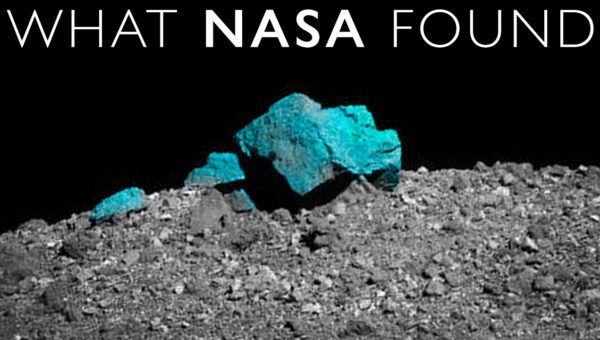
NASA's OSIRIS-REx mission returned samples from asteroid Bennu, revealing a surprising abundance of life's building blocks, including amino acids and nucleobases. This discovery offers crucial insights into the early solar system and the potential for extraterrestrial life.