Mars Microbes: Life’s Dawn, Or Humanity’s Dusk?
NASA's Perseverance rover has found intriguing mineral formations in Mars's Jezero Crater, resembling microbial life. If confirmed, this discovery could mean life is common but also suggests humanity may face a future 'Great Filter.'

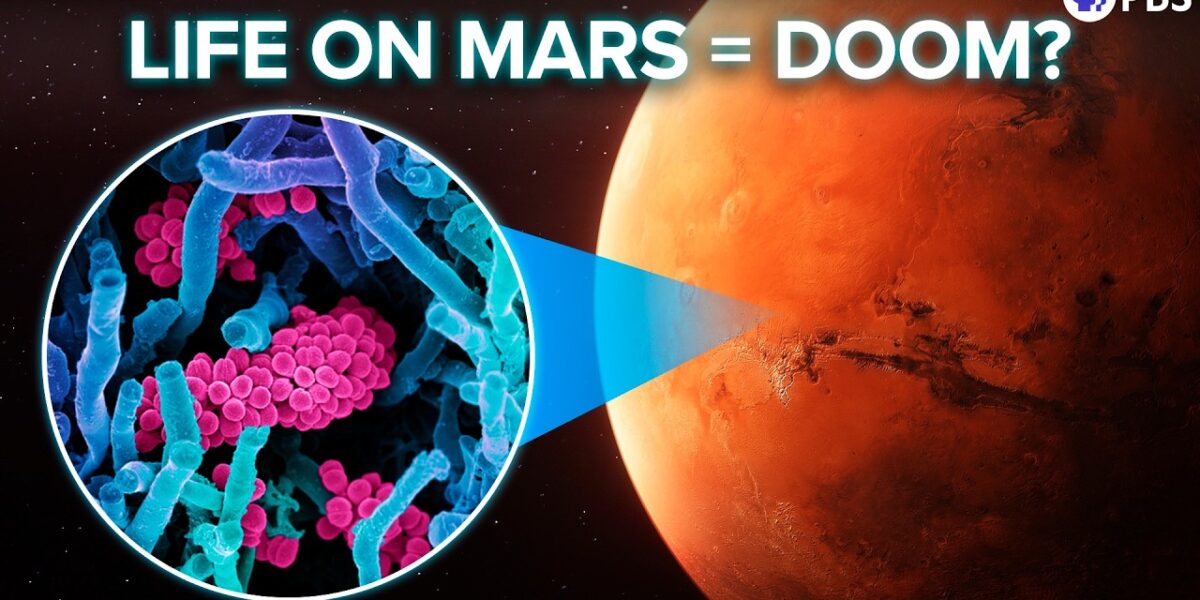
Mars Microbes: Life’s Dawn, Or Humanity’s Dusk?
The robotic emissary from Earth, NASA’s Perseverance rover, has made a discovery in the ancient Jezero Crater on Mars that could fundamentally alter our understanding of life in the universe. In a region once believed to be a lakebed fed by rivers, Perseverance has identified intricate, millimeter-scale patterns within iron-rich sedimentary rocks. These formations, dubbed ‘poppy seeds’ and ‘leopard spots,’ bear a striking resemblance to metabolic rings created by microbial colonies on Earth. The implications are profound: could these be the fossilized remnants of ancient Martian life, a biosignature unearthed after billions of years?
A Glimpse into an Ancient Martian Delta
Perseverance landed in Jezero Crater on February 18th, 2021, specifically chosen for its geological history, which strongly suggests the presence of liquid water billions of years ago. The rover has been meticulously exploring the crater floor and the remnants of its ancient river delta. Its attention was drawn to an outcrop named ‘Bright Angel,’ characterized by its unusually light color and the presence of iron-rich sedimentary rocks likely transported from surrounding regions.
It was within this outcrop that the rover’s instruments detected the peculiar ‘poppy seed’ and ‘leopard spot’ formations. Initial analysis by Perseverance, including Raman spectroscopy and X-ray fluorescence, revealed these patterns to be composed of iron phosphates and iron sulfides, most notably vivianite and greigite. Crucially, these mineral structures were found in close association with organic molecules – the carbon-based building blocks that life on Earth utilizes.
The scientific team on Earth has interpreted these findings as potentially indicative of a specific biological process: the oxidation of organic molecules by ancient microbes, which in turn reduced iron compounds in the sediment. This metabolic activity would have caused the colonies to grow and spread, leaving behind the observed mineral rings and deposits. This process mirrors how certain Earth microbes derive energy through redox reactions with minerals, creating similar geological structures as they expand.
Challenging the Uniqueness of Earth Life
While alternative, non-biological explanations for these formations exist, such as those driven by high temperatures or acidic environments, the geological context of Jezero Crater—a once warm, wet river delta—does not readily support these abiotic scenarios. The presence of specific iron sulfides like greigite could also be linked to geothermal activity, but the evidence for such conditions in this particular ancient Martian environment is not compelling.
This discovery, if confirmed as biological, would have a monumental impact on astrobiology. For decades, Earth has been the sole example of a planet harboring life. The early emergence of life on our planet, approximately 3.5 billion years ago, has led to two competing hypotheses. One suggests that life arises relatively easily given the right conditions, implying that countless other planets in our galaxy and beyond could host life. The other posits that abiogenesis – the spontaneous generation of life from non-living matter – is an extraordinarily rare event, making Earth a cosmic anomaly.
The ‘Great Filter’ and Humanity’s Future
The potential confirmation of ancient Martian life significantly bolsters the former hypothesis. If life could emerge independently on a neighboring planet like Mars, it suggests that the process is not as improbable or as sensitive to specific planetary conditions as once thought. This would imply that life is likely abundant throughout the cosmos.
However, this abundance of simple life raises a perplexing question: where are all the advanced civilizations? This is the essence of the Fermi Paradox, and one proposed resolution is the concept of the ‘Great Filter.’ This theory suggests that there are one or more extremely difficult evolutionary or technological hurdles that life must overcome to reach a stage where it can communicate or travel across interstellar distances. If primitive life is common, but advanced civilizations are rare, then the Great Filter must lie *ahead* of us, in our future, rather than behind us in our past.
The discovery of life on Mars, especially if it arose independently and early in Martian history, reduces the probability that abiogenesis itself is the Great Filter. It implies that the initial spark of life is not the primary barrier. This, in turn, suggests that the filter is more likely to be a subsequent challenge – perhaps the development of complex multicellular life, intelligence, or the ability to navigate the perils of advanced technology without self-destruction. The more we confirm that life arises easily, the more we must confront the sobering possibility that the most significant existential threats lie in our own future, a future that many civilizations may not survive.
Historical Context and Future Prospects
This is not the first time potential biosignatures have been reported beyond Earth. In recent years, tentative detections of molecules like dimethyl sulfide in the atmosphere of exoplanet K2-18b and phosphine in Venus’s atmosphere have sparked excitement, only to be met with subsequent uncertainty or plausible abiotic explanations. Even a Martian meteorite found on Earth, ALH84001, yielded claims of fossilized microbes that ultimately remained speculative.
What makes the Perseverance findings particularly compelling is the apparent lack of an obvious abiotic explanation that fits the geological context. While further analysis and, critically, the return of physical samples to Earth are necessary for definitive confirmation, the current data is more robust than many previous candidates.
The samples collected by Perseverance are currently stored in its cache on Mars, awaiting a future mission to retrieve them and bring them back to Earth for in-depth laboratory analysis. Although the Mars Sample Return mission has faced recent budget uncertainties, its success is paramount to definitively answering whether life ever existed on the Red Planet. The confirmation of extinct Martian life would not only solve a profound scientific mystery but also serve as a powerful unifying moment for humanity, potentially inspiring a renewed collective effort to explore the cosmos and understand our place within it.
Whether this discovery heralds a universe teeming with life, or serves as a stark warning about the challenges that lie ahead for intelligent species, the quest to understand our cosmic neighbors has never been more critical.
Source: Why Life on Mars Will DOOM Humanity (YouTube)

Related Articles


Humans May Return to the Moon by 2030, Experts Predict
As humanity gears up for a return to the Moon by 2030, new technologies promise unprecedented broadcast experiences. Meanwhile, scientists ponder the survival of planets near supernovae and the intriguing possibility of 'shadow life' deep within Earth.
Asteroid Bennu Sample Reveals Life’s Building Blocks
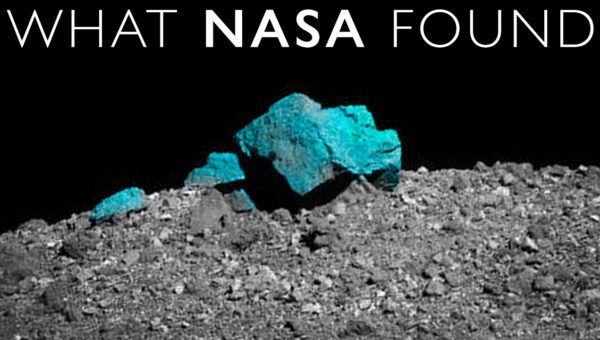
NASA's OSIRIS-REx mission returned samples from asteroid Bennu, revealing a surprising abundance of life's building blocks, including amino acids and nucleobases. This discovery offers crucial insights into the early solar system and the potential for extraterrestrial life.

Europa’s Ocean: A New Twist on Habitability
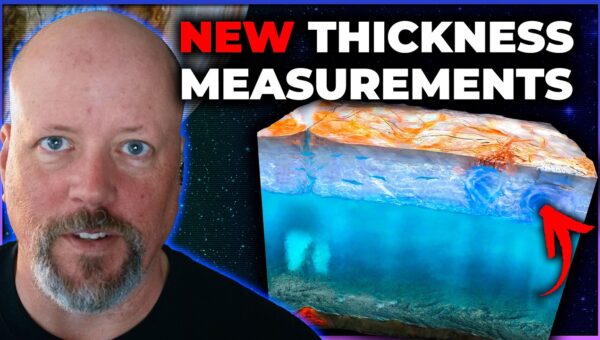
New research suggests Europa's ocean may be less habitable than thought due to mineral transport challenges, while the detection of ammonia offers a counterpoint. Meanwhile, SpaceX plans a million satellites, Artemis 2 faces delays, and AI assists Mars rovers.