Markets Mixed Amid Fed Uncertainty and Geopolitical Tensions
Stock markets traded mixed as OpenAI secured $100 billion in funding, while geopolitical tensions and concerns over private credit liquidity emerged. Investors are closely watching the Federal Reserve's interest rate path amidst a complex economic landscape.

Markets Navigate Crosscurrents of Fed Policy, Geopolitical Risk, and Corporate Earnings
Stock markets experienced a mixed trading session as investors grappled with a complex interplay of factors, including the Federal Reserve’s interest rate outlook, escalating geopolitical tensions in the Middle East, and significant corporate developments. While some sectors showed resilience, others faced headwinds, reflecting a cautious sentiment among market participants.
OpenAI Secures Landmark Funding Round
A significant development driving some market optimism was OpenAI’s announcement of securing initial commitments for a substantial $100 billion funding round. This massive capital infusion is expected to fuel the artificial intelligence giant’s continued expansion and technological advancements. Key investors reportedly include Amazon, potentially contributing up to $50 billion, and Nvidia, with a $30 billion commitment. SoftBank is also reportedly in discussions to invest $30 billion in three separate $10 billion installments. While much of this funding may have been anticipated, the formalization of such a large round signals strong confidence in OpenAI’s future growth trajectory and its demand for critical resources like advanced semiconductor chips.
Corporate News and Sector Performance
Beyond the AI funding news, several other corporate announcements captured investor attention:
- Meta Platforms is reportedly reviving plans for a smartwatch, potentially entering a market dominated by Apple. This move comes as Meta’s augmented reality glasses gain traction and Apple itself shows interest in the AR/VR space.
- Ford is doubling down on its strategy to compete in the electric vehicle (EV) market, with a particular focus on challenging Chinese manufacturers.
- Netflix has reportedly sent a letter to ByteDance, alleging the generation of numerous AI-created videos featuring copyrighted content. This highlights the growing concerns around intellectual property rights in the age of generative AI.
- DoorDash reported strong growth in its delivery services, though its stock saw a modest gain of approximately 3%, pulling back from higher levels. The stock bounced near the $163 support level, with the next key resistance anticipated around $192.
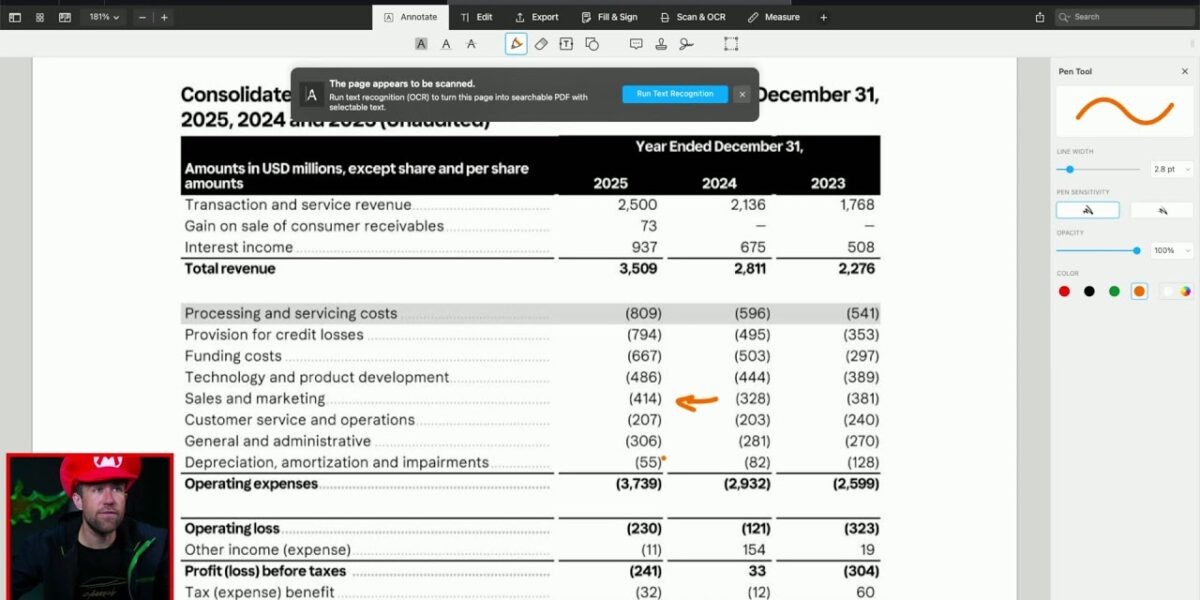
- Carvana experienced a significant sell-off, dropping as much as 6% during the trading day and falling as much as 22% in after-hours trading at one point. The company faces scrutiny over its business model, which some analysts believe functions largely as a circular financing operation, enabling insiders to sell stock and profit from financing receivables.
Economic Data and Trade Deficit Concerns
On the economic front, the latest trade data revealed a widening goods and services trade gap, culminating in an annual deficit of $911 billion. This figure, while substantial and among the largest since 1960, showed little change despite previous tariff implementations. The analysis suggests that American consumers are bearing the brunt of tariff costs, rendering trade deficit reduction efforts less impactful than anticipated.
Geopolitical Tensions and Oil Prices
Escalating geopolitical tensions, particularly concerning Iran, contributed to market uncertainty. Reports indicated a significant buildup of air power in the Middle East, the largest since the 2003 invasion. Oil prices saw an uptick, with Brent crude crossing $71 a barrel, a notable increase from levels around $58-$59 just a few months prior. This rise reflects concerns over potential supply disruptions stemming from Middle Eastern instability.
Private Credit Market Scrutiny
A growing area of concern for investors is the private credit market. Blue Owl Capital announced it would restrict withdrawals from one of its retail-focused private credit funds, shifting from quarterly redemptions to capital returns via periodic distributions. This move echoes historical liquidity crunches, drawing parallels to the 2007 subprime mortgage crisis when BNP Paribas froze redemptions on funds exposed to mortgage-backed securities. The situation highlights potential risks for retail investors entering the fast-paced private credit sector, particularly as some private credit vehicles trade at significant discounts to their net asset value.
Market Impact and Investor Outlook
What Investors Should Know:
- AI Dominance: The substantial funding for OpenAI underscores the continued dominance and investment potential in the artificial intelligence sector.
- Interest Rate Uncertainty: Market sentiment remains sensitive to the Federal Reserve’s stance on interest rates. A disconnect between market expectations for rate cuts and the Fed’s potential inclination to hold rates steady due to strong job data could create volatility.
- Geopolitical Risk Premium: The situation in the Middle East is likely to keep a geopolitical risk premium embedded in oil prices and could influence broader market sentiment.
- Private Credit Risks: The liquidity issues emerging in private credit funds serve as a warning for investors about the potential lack of redemption flexibility and valuation challenges in less liquid asset classes.
- Corporate Fundamentals: Investors should closely monitor corporate earnings and balance sheets, particularly for companies with significant debt burdens or models facing structural challenges, such as Carvana and potentially Walmart in the long term.
Sector and Index Performance
Key indices like the Nasdaq 100 (QQQ) showed relative stability, holding around their Volume Weighted Average Price (VWAP). However, individual stock movements indicated sector-specific pressures. Microsoft, a bellwether technology stock, experienced a notable decline, falling below the $400 level, which the speaker identified as a short-term bearish indicator. AMD also showed weakness, losing its $200 level. The potential breach of the $595 level for the S&P 500 could signal a further descent towards the $577 mark and its 200-day moving average.
Long-Term Implications
The current market environment suggests a period of consolidation and heightened selectivity. While AI continues to be a major growth driver, broader market performance may be constrained by the Fed’s monetary policy path and persistent geopolitical risks. Investors looking beyond the immediate volatility might consider companies with robust balance sheets, sustainable business models, and clear competitive advantages. The scrutiny on private credit also suggests a potential shift towards more transparent and liquid investment avenues, or at least a greater demand for due diligence in alternative asset classes.
Source: Stocks Mixed on Fed, Iran, and Rates (YouTube)

Related Articles


US Regime Change Efforts: A History of Tactical Wins, Strategic Losses
A comprehensive review of U.S. interventions reveals a consistent pattern: while the United States is adept at tactically removing foreign governments, achieving strategic success—the establishment of stable, legitimate political orders—has proven exceedingly difficult. Historical analysis points to unintended consequences and long-term instability as common outcomes.


Thousands Mourn Khamenei, Chant ‘Death to America’ in Iran
Thousands gathered in Yazd, Iran, to mourn Supreme Leader Ayatollah Ali Khamenei following reported U.S. and Israeli strikes. The mourning ceremony was marked by chants of "Death to America," highlighting deep-seated anti-American sentiment amid geopolitical tensions.

Nvidia Earnings Signal AI Revolution’s Next Phase
Nvidia's latest earnings report reveals accelerating revenue growth and profitability, signaling a new phase in the AI revolution driven by sophisticated AI agents. The company's strong performance underscores the growing demand for computational power as AI transitions into a core digital infrastructure component.