Market Whiplash: Ceasefire Hopes Fade, Strait Closure Sparks Fear
Global markets experienced sharp fluctuations as news of a ceasefire in the Middle East initially boosted stocks and lowered oil prices. However, reports of the Strait of Hormuz closing again quickly reversed these gains, highlighting persistent geopolitical uncertainty. Experts warn that disruptions to this vital shipping lane could keep oil and gas prices elevated and impact global travel.


Market Seesaws on Ceasefire News, Then Reopens
Global stock markets initially surged on news of a potential ceasefire, with oil prices dropping sharply. However, this optimism was short-lived. The Associated Press reported that the Strait of Hormuz was closed again, citing Iranian state media. This closure is reportedly a response to Israeli strikes in Lebanon, throwing the market into a state of what financial journalist Ron Insana described as “whiplash.” For weeks, financial markets have been heavily influenced by daily headlines related to the ongoing conflict.
Strait of Hormuz Closure Hits Oil and Goods
The Strait of Hormuz is a vital waterway for global trade, particularly for oil and fertilizer. If there are permanent or semi-permanent disruptions to the flow of these goods, oil prices are expected to rebound. While they may not reach the recent highs of nearly $120 a barrel, they are likely to stay above current levels. Prices around $95 a barrel are still $40 higher than they were in January. This directly impacts gasoline prices for consumers, keeping them around $4 a gallon. Farmers in the U.S. and worldwide also face challenges accessing essential fertilizer, impacting food production.
Expert Insights on Market Volatility
Ron Insana explained that markets are reacting strongly to every piece of news, whether positive or negative. “Markets are having outsized moves and outsized reactions to all these different bits of news that we’ve seen lately,” he stated. This headline-driven volatility means that the market’s direction heavily depends on whether a ceasefire holds.
First-Hand Reports on Strait Activity
Laurie Anne LaRocco, president of LaRocco Consulting, shared insights from her sources. She spoke with Kepler, a firm that tracks vessels globally. According to Kepler, only two specific vessels traversed the Strait of Hormuz recently, with no other legitimate vessel activity reported. This lack of normal traffic highlights the critical stage many countries are in regarding vital commodities. “There is no activity in terms of legitimate vessels going up and down that strait,” LaRocco noted.
Unprecedented Proposal: A Joint Toll Booth?
A report mentioned that former President Trump suggested a potential resolution: a joint toll booth system at the Strait of Hormuz between the U.S. and Iran. Insana found this idea difficult to process, questioning the swift shift from conflict to partnership. “My brain is having trouble processing the idea of we’re going to blow up your civilization in one day, and the next day being partners?” he remarked. LaRocco offered a more diplomatic phrasing, calling it a “joint venture partnership.”
Economic Impact of a Strait Toll
If a toll were permanently established at the Strait of Hormuz, it would add about $1 per barrel to the cost of oil passing through. This could amount to $1.9 to $2 million per ship. Such a toll would increase the price of crude oil and any other products shipped through the strait. Insana pointed out that a joint venture for a natural waterway like this would be unprecedented. Tolls are typically found on man-made passages like the Suez or Panama Canals, not natural ones. Furthermore, if Iran were to collect a toll, it could generate at least $71 billion annually. This revenue could potentially fund military expansion, adding another layer of geopolitical concern.
Consumer Impact: Travel and Gas Prices
LaRocco discussed the best-case scenario: the Strait reopens and things normalize, leading to lower gas prices. However, she cautioned that the impact on consumers might vary. While gasoline prices might decrease, travel costs could see a longer-term increase. She highlighted that Europe’s jet fuel inventories are exceptionally low. It can take anywhere from two to seven weeks for jet fuel to reach Europe. This shortage is already causing airlines like Ryanair to warn about potential flight cuts. Consumers should consider these travel implications for their future plans.
Looking Ahead: Geopolitical Risk Premium
The market’s reaction to the Strait of Hormuz situation underscores the ongoing geopolitical risk premium baked into commodity prices. As long as tensions persist and vital shipping lanes remain uncertain, consumers and businesses will likely face continued volatility. The market will be closely watching any further developments regarding the Strait’s status and the broader regional conflict. The potential for renewed disruptions means that the price at the pump and the cost of global travel could remain unpredictable.
Source: 'Whiplash': Stock market reacts to ceasefire news but uncertainty persists (YouTube)

Related Articles
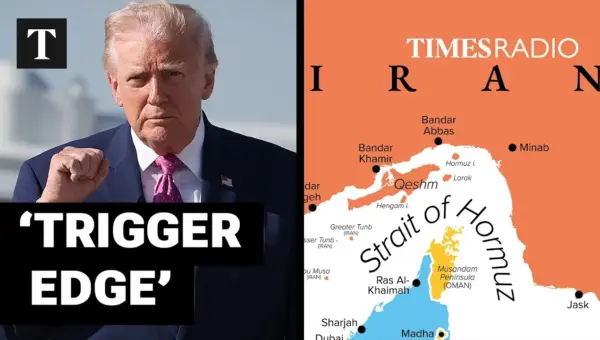
US Blockades Iranian Ports, Strait of Hormuz Access Maintained
The US Navy has begun blockading Iranian ports, aiming to increase economic pressure while allowing international vessels continued access through the Strait of Hormuz. Analysts express concerns about potential escalation risks despite the move being seen as a step back from broader threats.
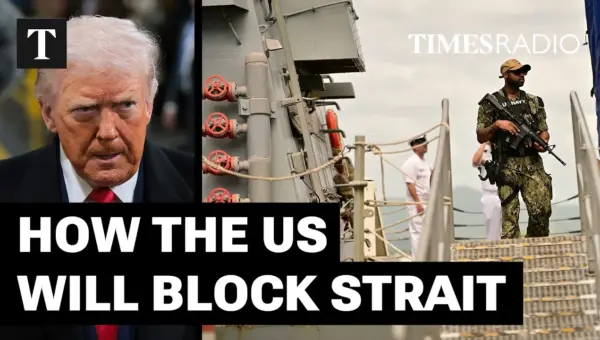
US Blockades Iran Ports, Fueling Oil Price Fears
The US Navy is reportedly moving to blockade Iranian ports, sparking fears of rising global oil prices. While the US aims to stop ships leaving Iran, the action raises concerns about regional stability and potential escalation. Experts warn that this could disrupt oil supplies and lead to further price hikes.
Hungary Ousts Orbán, Shifting EU Power Balance
Hungary has elected Peter Magyar, ousting longtime leader Viktor Orbán. This shift could reshape Hungary's role in the EU, moving away from Orbán's confrontational stance towards greater cooperation. Voters sought change, less corruption, and improved economic prospects.