Market Fears Spark Rotation: Oil, Credit, AI Spending Concerns
Markets are experiencing a major rotation driven by geopolitical fears, concerns over private credit, and AI spending. While oil shocks are not seen as a long-term threat, investors are closely watching for contagion risks from private markets impacting banks and the broader stock market.

Market Fears Spark Rotation: Oil, Credit, AI Spending Concerns
Investors are navigating a complex market landscape, marked by a significant rotation driven by three primary concerns: geopolitical instability, the health of private credit and equity markets, and the trajectory of Artificial Intelligence (AI) spending. While these factors create uncertainty, understanding their impact can help investors manage risk.
Geopolitical Risks Take Center Stage
Geopolitical events are currently the most prominent worry for the market. While the specific details of these concerns are not elaborated upon in the provided context, their impact on global markets is significant. The immediate reaction from the market suggests these events are a primary driver of current investor sentiment and market movements.
Private Credit and Equity Face Scrutiny
The private credit and private equity sectors are facing heightened investor attention. Last month, many funds in these areas either maintained or increased withdrawal limits. Major players like BlackRock, Blackstone, and Morgan Stanley reported substantial figures related to these funds, with BlackRock managing $33 billion and Blackstone overseeing $82 billion. This situation raises concerns about potential liquidity issues and the stability of these markets.
The risk here is about a negative feedback loop, where needing to sell one asset to meet redemptions forces prices down, which in turn devalues the original asset. This mirrors the spiraling effects seen in 2008.
This dynamic creates a potential for a negative feedback loop. When investors request their money back, fund managers may be forced to sell assets at unfavorable prices to meet these demands. This selling pressure can further drive down asset values, leading to larger losses and potentially triggering more redemption requests. This cycle, if unchecked, could resemble the market turmoil experienced in 2008.
Potential for Contagion and Bank Exposure
While private credit and equity are often seen as investments for wealthier individuals, there are concerns about potential contagion. Banks, due to their significant exposure through lending activities, could be impacted. This could lead to banks selling off equities to raise cash, potentially affecting the broader stock market, at least in the short term.
AI Spending: A More Understandable Concern
In contrast to geopolitical events and private credit, AI spending is viewed as a more transparent and understandable concern. Investors can analyze company-by-company spending and dollar amounts. This clarity allows for a more direct assessment of the impact on individual businesses and the sector as a whole, making it a less unpredictable risk factor.
Oil Shock and Market Divergence
An oil shock, while potentially significant, is currently not showing signs of being a long-term trend. Despite headlines suggesting it could be the greatest oil shock in history, it represents a smaller percentage of overall consumption compared to the past, partly due to advancements like the “fracking miracle.”
Several market indicators suggest this oil movement may be short-lived. For instance, uranium prices and energy stocks have not mirrored the rise in oil. Furthermore, oil yields have remained flat. The U.S. stock market has shown some panic, but this is not being confirmed in other markets like gold or bond yields. Gold prices, in particular, are not seeing a typical “flight to safety” trend, despite some futures trading activity contributing to its decline.
What Investors Should Know
The current market environment calls for careful consideration of risk. Geopolitical events and the stability of private credit markets present the most significant uncertainties. While AI spending offers more clarity, its long-term impact is still unfolding.
Investors should pay attention to how banks manage their exposure to private credit. The potential for short-term market disruptions due to banks needing to raise cash is a factor to monitor. The divergence in market signals regarding the oil shock suggests it may not be a sustained threat, but ongoing observation is necessary.
Company Spotlights: Carpenter Technology and Other Sectors
Amidst these market concerns, certain companies are highlighted for their fundamental strengths. Carpenter Technology, a provider of materials for jet engines and aerospace, is noted for its solid fundamentals and revenue. Another company, mentioned humorously as a “New York Times pick,” is performing well due to strong consumer demand for its products, particularly in household goods like kitchen towels, and is even offering a special dividend. This suggests that even in a cautious market, companies with strong revenue streams and consumer appeal can thrive.
The performance of companies like these indicates that consumer spending, particularly for essential or comforting household items, remains resilient. This resilience can be a positive sign for the broader economy, even as larger economic forces create market volatility.
Source: ROTATION OF FEAR: The three biggest market concerns (YouTube)

Related Articles
Iran Missile Strikes Injure US Troops, Raise War Concerns
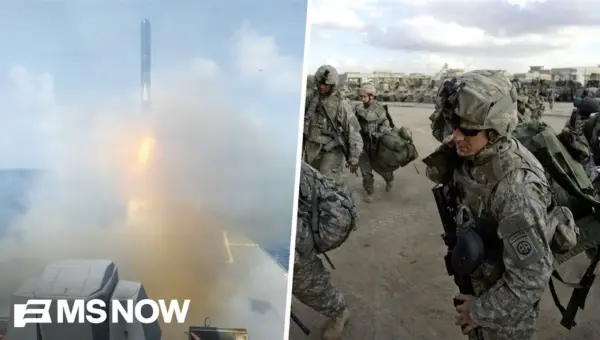
Iranian missile strikes have injured U.S. service members, escalating tensions as the conflict nears one month. The attacks are raising concerns about the effectiveness of U.S. military strategy and the depletion of crucial missile stockpiles. Global oil prices have surged, impacting economies worldwide.


Strait of Hormuz Blockade: Insurance Costs Soar, Ships Stuck
The Strait of Hormuz remains largely blocked despite Iran's claims of openness, with soaring insurance costs acting as a major deterrent for ships. Skyrocketing premiums, from less than 1% to potentially 7.5% of a vessel's value, make transit financially unviable for many. This situation impacts global oil prices and the broader economy, highlighting the complex interplay of geopolitical tensions, insurance markets, and international trade.

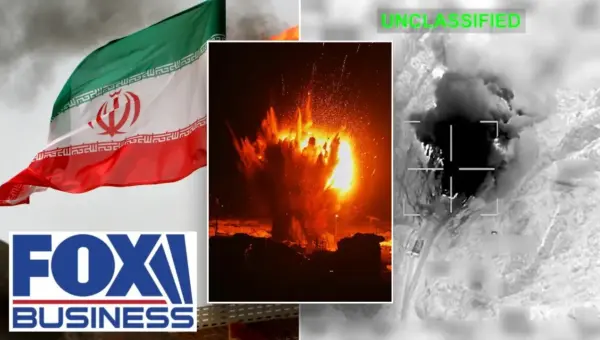
Iran Tensions Send Oil Prices Soaring; Farmers Seek Relief
Escalating tensions with Iran are driving oil prices higher, while U.S. troop deployments to the Middle East increase. Meanwhile, American farmers are receiving relief from rising costs through regulatory changes and support measures, as devastating wildfires impact Nebraska's cattle industry.