Marines’ Hovercraft: Iran Invasion’s Secret Weapon
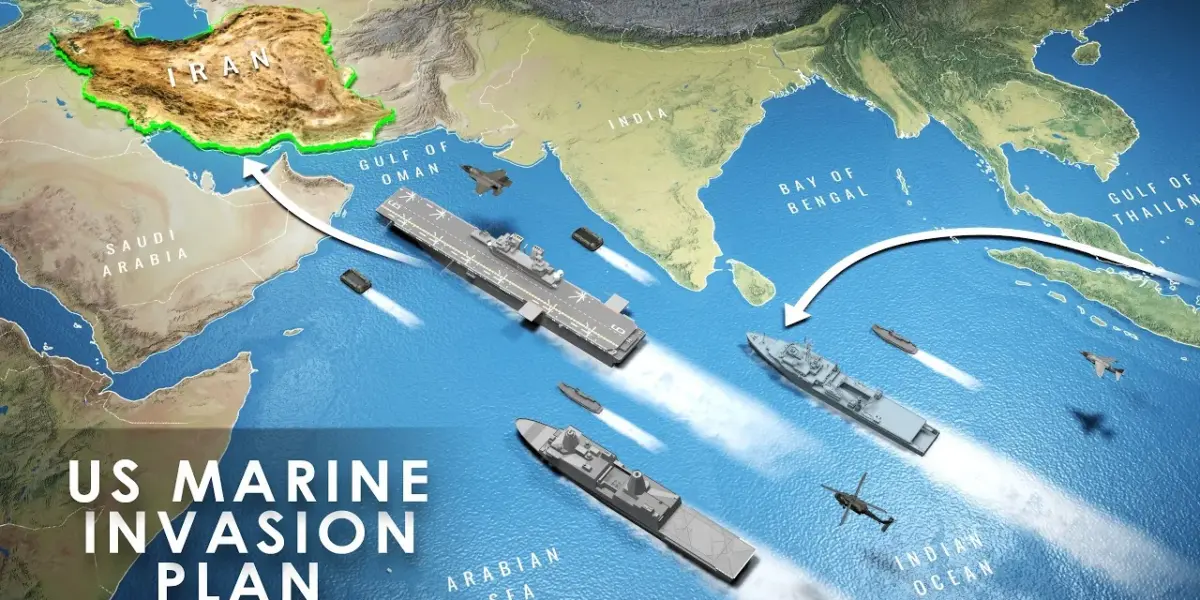
Big aircraft carriers can't handle Iran's coastal defenses. U.S. Marines use specialized amphibious ships and hovercraft to clear the Strait of Hormuz. These vessels bring troops and heavy equipment ashore, securing territory and creating safe zones.

Marines’ Hovercraft: Iran Invasion’s Secret Weapon
The United States Navy has a powerful fleet, but when it comes to a potential conflict in the Strait of Hormuz, big aircraft carriers can’t do the job alone. This narrow waterway is a critical path for global oil, and Iran has developed defenses to make it a dangerous trap. To overcome these challenges, the U.S. relies on specialized amphibious assault ships and the Marines they carry.
The Strait of Hormuz: A Dangerous Bottleneck
The Strait of Hormuz is only about 39 kilometers (21 nautical miles) wide at its narrowest point. This forces huge oil tankers to sail very close to Iran’s coast. Iran uses this geography to its advantage with a layered defense. This includes naval mines, fast attack boats, hidden coastal missiles, and drones. Traditional Navy ships are built for deep water and can be too slow to react to these close-range threats.
Amphibious Ships: Mobile Bases for Coastal Warfare
Amphibious assault ships, like the USS America, are designed specifically for fighting near coastlines. These ships are essentially floating bases, around 45,000 tons, built for coastal operations. They carry advanced aircraft like the F-35B stealth fighter, which can land vertically and provide precision strikes. They also carry helicopters like the Osprey and Super Stallion for troop transport and attack helicopters like the Viper and Venom, which are perfect for fighting off swarms of fast boats.
What the Marines Do: Clearing the Path
Marines are essential for clearing the land areas near the coast. A Marine Expeditionary Unit brings about 2,200 to 2,500 personnel. Their job is to take over key islands and coastal areas. This action disables Iran’s radar and missile sites, effectively blinding their defenses. Before the Navy can even start clearing mines in the strait, the Marines must secure the shorelines. This protects vulnerable Navy ships from being attacked.
Turning the Tables: Establishing Safe Zones
Once Marines capture an island, they set up their own defenses. They deploy mobile anti-ship and air defense systems. This creates a protective area for international shipping lanes. If a merchant ship is attacked, Marine teams can use small boats and helicopters to board the ship, secure it, and prevent hijackings.
Why Not Just Use a Big Aircraft Carrier?
While giant aircraft carriers have immense air power, they cannot capture and hold territory. They can destroy targets from far away, but they can’t occupy cities or protect civilians on the ground. Winning a conflict requires soldiers to control land and keep the peace. Amphibious warships bridge the gap between sea power and ground control.
Hovercraft: The Game-Changers
The real innovation in amphibious assaults is the hovercraft, like the Landing Craft Air Cushion (LCAC). These craft can travel over water, beaches, mud, and even ice, reaching about 70-80% of the world’s shorelines. This is a huge increase from older landing craft, which could only access about 17% of shorelines. Hovercraft can carry heavy equipment, like an M1 Abrams tank, or multiple armored vehicles and troops. They can travel at speeds over 40 knots, much faster than traditional boats, and can launch assaults from farther offshore. This makes them harder for enemy defenses to track and hit.
Defending the Ships: Layers of Protection
Even with all these capabilities, large ships like the Wasp class are still vulnerable. Simple drones can pose a threat. To counter this, these ships have multiple layers of defense. They are equipped with missile launchers like the RIM-116 Rolling Airframe Missile and RIM-7 Sea Sparrow. They also have machine guns, including the Mark 38 and M2 Browning, positioned to defend against fast boats and drones. For very close threats, they have Close-In Weapon Systems (CRAM) that can autonomously engage incoming missiles.
The Combined Strength: Sea to Land Control
Amphibious forces combine ground troops, tanks, helicopters, and advanced aircraft. This integrated approach helps suppress enemy resistance and maintain momentum. Hovercraft add flexibility by bypassing natural obstacles and delivering heavy vehicles to unexpected locations. Once ashore, these forces provide sustained operations with naval gunfire and air support. They secure captured areas and protect civilians. This ability to turn sea power into lasting ground control is what amphibious warships bring to the fight.
Source: US Marines Strategy to Invade Iran in Amphibious Ships | Explain (YouTube)

Related Articles
US Air Power Strikes Iran, Warns on Strait of Hormuz
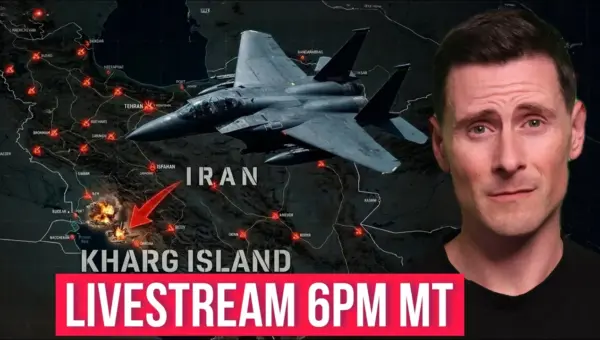
The U.S. military has conducted air strikes on Kharg Island, Iran, targeting military assets. This action follows President Trump's ultimatum for Iran to reopen the Strait of Hormuz. The U.S. warns of further infrastructure action if Iran fails to comply.
Iran and US Trade Blows as Tensions Spike
The U.S. and Iran are engaged in a dangerous exchange of strikes, with a critical deadline set by President Trump looming over the Strait of Hormuz. Both nations, along with Israel, are escalating military actions, while diplomatic channels remain open but strained.


Nuclear Threats Loom: US-Iran Conflict Risks Global Catastrophe
Renewed discussions about nuclear options and escalating rhetoric between the US and Iran signal a dangerous path. Experts warn of potential global catastrophe as military strategies and diplomatic efforts falter, leaving the world in a precarious state.