Mandelson Files Expose PM’s Risky Appointment Amid Epstein Links
New documents reveal Prime Minister Keir Starmer was warned about reputational risks before appointing Peter Mandelson as US ambassador, despite his links to Jeffrey Epstein. The files expose internal concerns and a potentially rushed process, raising questions about Starmer's judgment and the government's handling of the affair.

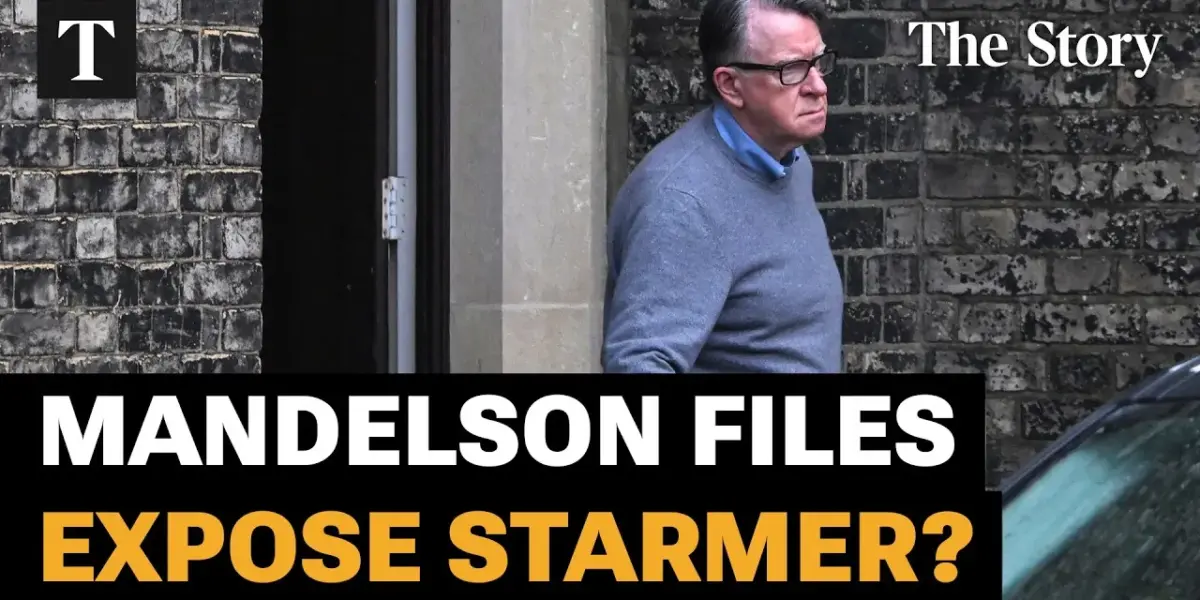
Mandelson Files Reveal Warnings Ignored in Ambassador Appointment
New documents released this week have cast a harsh spotlight on Prime Minister Keir Starmer’s decision to appoint Peter Mandelson as the UK’s ambassador to the US, revealing that significant concerns about reputational risk were raised and seemingly overlooked. The initial batch of files, made public on Wednesday afternoon, suggests that warnings about Mandelson’s past associations, particularly his relationship with convicted sex offender Jeffrey Epstein, were known to Number 10 before the appointment was finalized. This development marks the latest chapter in a tumultuous period for Mandelson, who has faced resignation from the Labour Party, dismissal from his government role, and arrest on suspicion of misconduct in public office.
The Epstein Connection and Mounting Concerns
The controversy surrounding Peter Mandelson’s links to Jeffrey Epstein escalated following the release of documents by the US House Oversight Committee in September. These documents included messages and photographs suggesting a closer relationship than previously acknowledged, with one message from Mandelson referring to Epstein as his “best pal.” Initially, Prime Minister Starmer maintained full confidence in Mandelson, stating that due process had been followed. However, the situation became untenable after Mandelson’s interview with The Sun hinted at further damaging revelations, leading to his swift dismissal.
Further allegations emerged suggesting Mandelson may have shared sensitive government information with Epstein while serving as Business Secretary in 2009. These claims became a tipping point for many Members of Parliament, prompting a motion, carefully worded by Conservative MPs, to demand the release of all correspondence related to Mandelson’s appointment. Despite initial government attempts to dilute the request, a compromise, partly brokered by Angela Rayner, led to a parliamentary mutiny and ultimately forced the disclosure of the documents this week.
Inside the Due Diligence Report
Aubrey Allegretti, Chief Political Correspondent at The Times, described the frantic process of sifting through the newly released documents. “We trolled through it all pretty quickly in about 25 minutes,” Allegretti stated, highlighting the journalistic scramble to identify key revelations. The most significant document, a three-page due diligence report compiled by the Cabinet Office’s propriety and ethics teams, was central to understanding the pre-appointment vetting process.
This report, which aggregated publicly available information, was presented to Keir Starmer to outline the background of the prospective ambassador. The documents revealed a 2019 JP Morgan report that flagged Epstein’s “particularly close relationship with Lord Peter Mandelson, a senior member of the British government.” The report noted that Mandelson had stayed at Epstein’s Manhattan townhouse while Epstein was in jail for sex trafficking minors in June 2009, and that in 2014, he had agreed to be a founding citizen of an ocean conservation group funded by Epstein and founded by Ghislaine Maxwell.
Internal Warnings and a Rushed Appointment
The files indicate that internal alarm bells were ringing within the government regarding Mandelson’s appointment. Sources suggest two factions: one supporting the appointment, including Chief of Staff Morgan McSweeney, who is described as a protégé of Mandelson’s and acted as a go-between; and another, more senior group, raising serious reservations. Among those expressing concerns was Jonathan Powell, former Chief of Staff to Tony Blair, who was brought back by Starmer as his National Security Adviser. Powell reportedly found the appointment process “unusual and weirdly rushed,” according to notes from a call with the Prime Minister’s General Counsel.
Philip Barton, then the Permanent Secretary at the Foreign Office, also reportedly had reservations. Compounding these concerns, the documents suggest that Mandelson was granted access to sensitive government information before he had obtained the necessary security clearance. This has led to accusations that due process was not followed, contradicting Prime Minister Starmer’s earlier statements in the House of Commons.
“The prime minister has tried to make this about Peter Mandelson’s lies. What this shows is that it is Keir Starmer himself who has lied repeatedly since the very start to the whole country about what he knew when and how.”
The Payoff and Starmer’s Judgment Under Scrutiny
The handling of Mandelson’s departure from his post was also marked by chaos. Behind-the-scenes calls aimed to establish facts as more information emerged, seemingly catching Number 10 off guard. Mandelson’s primary concern upon returning to the UK was to do so with “maximum dignity and minimum media intrusion.” Oliver Robbins, the Permanent Secretary at the Foreign Office, oversaw authorization for a payoff to Mandelson, who initially sought the remainder of his £550,000 salary. Ultimately, he received £75,000. The government’s justification for the payment was to avoid a potentially protracted and costly employment tribunal.
The central question remains: why did Prime Minister Starmer proceed with such a risky appointment? Some suggest Mandelson’s established connections within political and business circles, including potential ties to Donald Trump’s orbit, were seen as advantageous. Starmer may have gambled on Mandelson’s ability to leverage these relationships and his business acumen for the UK’s benefit, particularly in the context of post-Brexit trade deals.
However, this decision has been heavily criticized. Labour MPs are privately questioning how assurances from Mandelson, even if obtained, could mitigate the known risks. A memo within the released documents explicitly warned the Prime Minister that the political appointment “poses a reputational risk that could damage him personally” and that “if anything goes wrong you could be more exposed as the individual is more connected to you personally.” The repeated mentions of “reputational risk” in the documents underscore that Starmer was aware of the potential personal fallout.
Future Revelations and Political Fallout
The current release is only the first tranche of what is expected to be thousands of pages of documents. Unseen communications, including specific questions posed to Mandelson by Starmer’s Chief of Staff regarding his relationship with Epstein and Ghislaine Maxwell, are yet to be published. These ongoing disclosures could further embarrass the government and intensify scrutiny on Starmer’s judgment.
While some Labour MPs believe the recent revelations were largely anticipated and lack a definitive “smoking gun,” a smaller group sees this as a significant blow to Starmer’s leadership. The political landscape remains tense, with many Labour MPs waiting for the outcomes of the May elections before making any decisive moves against the Prime Minister. The ongoing scandal, coupled with other policy U-turns and perceived inconsistencies, has eroded trust among Labour MPs, raising existential questions about Starmer’s ability to lead the party to future electoral success.
Peter Mandelson has consistently denied any criminal wrongdoing or financial motivation. The US Department of Justice has cautioned that the mere release of documents does not validate the claims within them. As more information surfaces, the political ramifications for Prime Minister Starmer and his government are likely to continue unfolding.
Source: Peter Mandelson Epstein Links: What the New Documents Reveal (YouTube)

Related Articles


Epstein Survivors Sue DOJ, Google Over Data Leak
Survivors of Jeffrey Epstein have filed a class-action lawsuit against the U.S. Justice Department and Google, alleging the improper release of private information. The suit claims that despite the DOJ's efforts to retract the data, survivors' personal details remain accessible online, causing renewed trauma and threats to their safety. This legal action seeks accountability and aims to prevent future data disclosures.

Labour’s Policies Vindicated, Ed Miliband Leads From Within
Labour's current policies are increasingly seen as vindicated by events, with Ed Miliband's economic and industrial vision guiding the party's direction. Meanwhile, speculation mounts over Sadiq Khan's potential move to a Westminster peerage and cabinet role, possibly as a response to anticipated poor local election results for Labour in London. The geopolitical landscape, particularly the conflict in the Middle East, also continues to shape the government's agenda.


UK’s Starmer Risks US Ties, Courts Iran Threat
British Prime Minister Keir Starmer's stance on Iran is creating a rift with the U.S., raising concerns about national security and appeasing specific groups. The former PM warns of escalating anti-Semitism and calls for stronger conservative leadership, while reflecting on the monarchy and the challenges facing Prince Harry and Meghan Markle.