MAGA Stooge Panics on LIVE TV: War Claims Exposed
A heated live TV debate exposed the disconnect between claims of war victory and on-the-ground realities. The discussion also delved into economic impacts, political fallout from special elections, and a contentious dispute over funding for TSA and ICE.

MAGA Stooge Panics on LIVE TV: War Claims Exposed
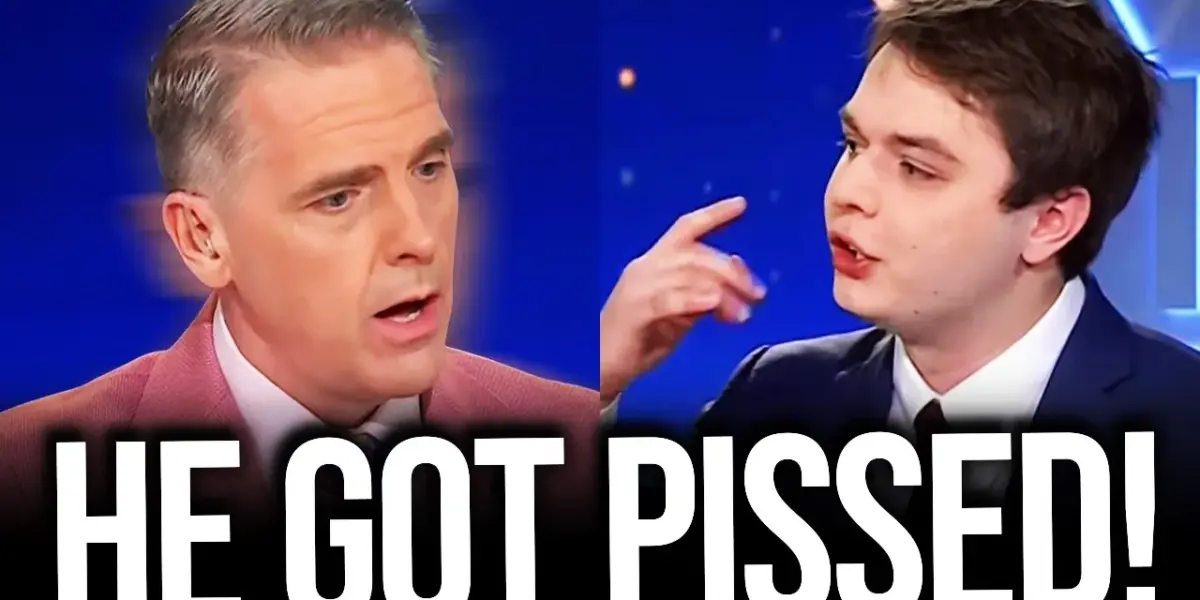
A recent live television debate devolved into heated exchanges, exposing deep divisions and questioning official narratives surrounding a major conflict. The core of the disagreement centered on a simple question: Has the war been won? One side, represented by former Virginia Attorney General Ken Cuccinelli, insisted on a victory, pointing to the devastation of the opposing military. However, the other side, represented by host Adam Mockler, pushed back, highlighting the ongoing conflict and the disconnect between the declared victory and the reality on the ground.
Defining Victory in War
The debate quickly became a semantic battle over the definition of winning. Cuccinelli argued that destroying an enemy’s military capabilities, including their missile systems, constituted a win. He stated, “I agree that we have devastated… if not consider a condition of winning destroying their military capabilities, their missile capabilities.” This perspective suggests that achieving specific military objectives is enough to declare victory, even if fighting continues.
Mockler, however, challenged this definition. He pointed out the ongoing bombing and troop movements, asking, “If that’s true, why can’t the straightforward movies be opened if their military is destroyed?” His argument implies that a true victory would mean a complete cessation of hostilities and a return to normal operations, not just a weakened enemy.
“We haven’t. Wait, what? Wait. If that’s true, why can’t the straight of Hormuz be open if their military is destroyed?”
The Reality on the Ground vs. Political Rhetoric
The discussion revealed a stark contrast between political rhetoric and the observable situation. Mockler criticized the administration’s shifting narratives, stating, “There are two separate conversations that are happening when we’re doing these debates. There’s a conversation that you guys are having, which is just whatever the administration says on any given day. One day we’ve won, the next day there’s negotiations, the next day we’ve won again. But there’s the actual on the ground reality.”
He cited tangible evidence of continued conflict and escalating costs: mobilizing thousands of troops, requesting billions of dollars for the war, and the fact that the enemy’s leadership has been replaced by a more radical successor. These points directly contradicted the idea of a decisive victory.
Historical Context: Iran and Regional Stability
The conversation also touched upon the long-standing issues with Iran’s regional influence and its nuclear program. Mockler referenced former Defense Secretary James Mattis, who expressed concern about Iran potentially claiming control of strategic waterways if victory were declared prematurely. Mattis’s assessment suggested a complex geopolitical situation where a simple military victory might not resolve underlying tensions.
The debate also brought up the historical context of US policy towards Iran, noting that multiple administrations have viewed the Iranian regime as a threat. However, the effectiveness and consequences of these policies, particularly concerning Iran’s capabilities with drones and its support for regional proxies, were questioned. The idea of an international coalition to secure vital shipping lanes, like the Strait of Hormuz, was proposed as a way forward, though Mockler pointed out that previous attempts to form such coalitions under the Trump administration had faltered.
Economic Concerns and Political Fallout
Beyond the immediate conflict, the discussion broadened to include economic impacts and their influence on domestic politics. Mockler linked the war to rising gas prices and the national debt. He highlighted that Americans were feeling the pinch of higher costs for everyday necessities, such as gasoline, and that the war effort was adding trillions to the national debt. This economic strain, he argued, was a key factor in voters’ decisions, as seen in a recent special election loss for Republicans in a district historically aligned with Trump.
The special election results were presented as evidence that voters are prioritizing economic concerns over foreign policy pronouncements. The opponent’s focus on affordability, including issues like gas prices, housing, and rent, resonated more strongly than the incumbent’s alignment with the president. This suggests a trend where domestic economic anxieties can overshadow foreign policy narratives, especially when the latter appears disconnected from everyday realities.
The ICE and TSA Controversy
A significant portion of the debate shifted to a domestic political standoff involving the Transportation Security Administration (TSA) and Immigration and Customs Enforcement (ICE). A disagreement arose over funding these agencies, with Democrats proposing to fund all of the Department of Homeland Security except for ICE, while Republicans and the President appeared to be pushing for a broader funding package that included ICE.
The core issue was the role of ICE agents at airports and the potential for them to assist TSA screeners during peak times. Democrats expressed concerns about the training and role of ICE agents in such a capacity, particularly in light of past incidents. They also pointed to a federal statute prohibiting armed federal law enforcement from being armed near polling places, drawing a parallel to discussions about ICE’s presence at airports and its potential implications for civil liberties.
The political maneuvering around this funding dispute was framed as a form of brinksmanship. Both sides accused the other of playing political games and inflicting pain on the American public by prolonging the situation. The use of procedural tactics, such as reconciliation, was discussed as a potential way to break the deadlock, but disagreements persisted on the best path forward and who was ultimately blocking progress.
The Steve Bannon Angle
Adding another layer to the ICE debate was a controversial statement by Steve Bannon. Bannon suggested that the deployment of ICE agents at airports could serve as a “test run” for their involvement in future elections, specifically mentioning the 2026 midterms. He proposed having ICE agents at polling places to potentially check IDs.
This suggestion was met with strong criticism from Mockler and others, who pointed out that federal law, dating back to the Reconstruction era, prohibits federal law enforcement from being armed near polling places. The implication was that Bannon’s comments were not only inflammatory but also legally questionable and potentially aimed at intimidating voters. The exchange highlighted how political figures can use current events to promote broader, more controversial agendas.
Why This Matters
This debate is crucial because it lays bare the challenges of clear communication and honest assessment in times of conflict and political division. When leaders offer conflicting narratives about war outcomes, it erodes public trust and makes informed decision-making difficult. The disconnect between declared victories and ongoing struggles raises questions about strategic goals and the true cost of military engagement.
Furthermore, the intertwining of foreign policy and domestic economic concerns is a significant trend. Voters are increasingly evaluating political leaders based on how their decisions impact their wallets and daily lives. The economic consequences of wars, such as rising prices and increased national debt, can have a profound effect on electoral outcomes, as suggested by the special election results. The political battles over agency funding, like the TSA and ICE dispute, also underscore how domestic policy can become entangled with larger political strategies, sometimes at the expense of practical solutions for the public.
Implications and Future Outlook
The conflict’s unclear status and the political rhetoric surrounding it suggest a prolonged period of uncertainty. The debate over defining victory highlights the need for clearer objectives and more transparent reporting from political leaders. As the economic impact of such conflicts continues to be felt, voters may become even more attuned to the financial costs, potentially shifting political landscapes further.
The contentious debate over ICE and TSA funding also points to ongoing political polarization. The use of such disputes for political theater and the willingness of some figures to push controversial ideas, like Bannon’s suggestion about ICE at polling places, indicate a challenging future for constructive political discourse. The ability to find common ground on essential government functions may become increasingly difficult, potentially leading to more disruptions and a continued focus on partisan wins over public service.
The conversation also serves as a reminder of the importance of critical thinking and media literacy. Viewers are encouraged to look beyond simple declarations and examine the evidence presented, considering the motivations and potential biases of those involved in political debates. The heated nature of the exchange, including Cuccinelli’s apparent frustration, underscores the sensitivity and high stakes of these discussions.
Source: I Made a MAGA Stooge PANIC on LIVE TV… (YouTube)

Related Articles
G7 Leaders Clash Over Trump’s Iran Policy Amidst Global Crisis
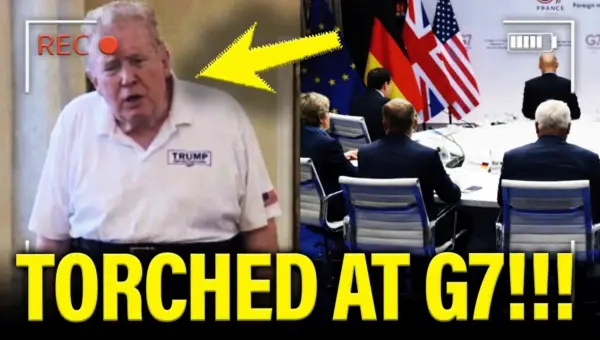
World leaders at a G7 meeting voiced sharp criticism of Donald Trump's Iran policy, citing concerns over the Strait of Hormuz and a looming global recession. Disagreements emerged regarding strategy and accusations of misinformation, highlighting deep divisions.
Trump’s Oil Market Influence Wanes Amidst Global Instability
Former President Donald Trump's attempts to influence oil markets have reportedly failed, raising concerns about his diminishing credibility. Analysts compare his approach to "the boy who cried wolf," suggesting a loss of trust among market participants. The discussion also touched upon the use of personal devices for government communication and the vetting of political candidates amidst controversial remarks.
Trump’s War Talk Distracts as World Burns
As global conflicts escalate and economic pressures mount, Donald Trump's focus on past grievances and symbolic wins overshadows pressing issues. His rhetoric, including questionable claims about ending wars and strategic use of terminology to bypass Congress, raises concerns about leadership and national priorities.