MAGA Retreat Exposes Deep Divide Amidst War and Economic Woes
While the nation faces war and economic turmoil, MAGA Republicans convened at Trump's Doral resort, sparking criticism over priorities. Speaker Johnson's rhetoric on war and peace, coupled with divisive statements, highlights a widening political chasm. A congressional candidate offers policy solutions amidst this backdrop.

MAGA Retreat Exposes Deep Divide Amidst War and Economic Woes
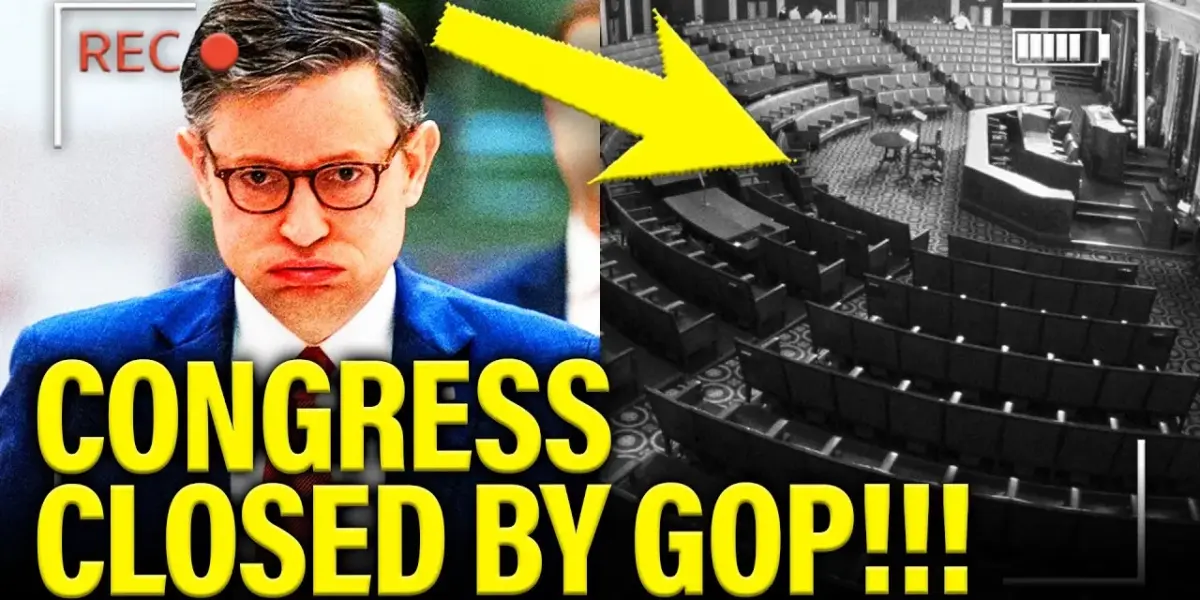
In a stark display of political priorities, a significant faction of MAGA Republicans, including House Speaker Mike Johnson, recently convened at Donald Trump’s Doral resort in Miami. This gathering, dubbed a “MAGA Republican retreat,” occurred while the nation grapples with escalating international conflict and a volatile economy, raising pointed questions about leadership and responsibility.
A War on Iran and a House in Recess
The context for this retreat is a contentious military operation, described by some as an “operation” and by others as an “unlawful war” on Iran. The transcript highlights concerns that American service members are losing their lives amidst this conflict, which is also cited as a contributing factor to a significant oil shock and a tanking economy. Despite these pressing issues, the House of Representatives, under the influence of MAGA Republicans, has effectively ceased functioning. The decision to convene at a luxury resort rather than address legislative matters has drawn sharp criticism.
“The American people need to understand what the hell is happening with this war on Iran, this unlawful war where American soldiers, American service members are losing their lives, where our economy is tanking, where it’s the largest oil shock in world history.”
Rhetoric vs. Reality: War is Peace?
Adding to the controversy, Speaker Mike Johnson articulated a controversial viewpoint prior to the retreat, suggesting that war is, in fact, about peace. He stated, “There’s a misconception that Operation Epic Fury is in any way a diversion from Republican demands for peace. It’s the opposite.” Johnson also asserted that while Congress has a constitutional right to oversight, true strength lies in not exercising it in certain situations, particularly when it might “undercut our own national security.” This stance, which appears to equate war with peace and abstaining from oversight with strength, has been met with bewilderment and strong opposition.
“War is about peace is what Maga Mike Johnson wanted everybody to know before going to Doral.”
The transcript juxtaposes Johnson’s statements with the reality of rising gas prices, a significant concern for the American public. The irony is not lost on observers that the retreat is taking place near Trump’s Doral resort, a location associated with surging fuel costs.
Ideological Extremism on Display
The retreat was not just a backdrop for discussions on national security and economic policy; it also served as a platform for controversial and divisive rhetoric. Congressman Andy Ogles reportedly posted, “Muslims don’t belong in American society. Pluralism is a lie.” This statement, alongside other sentiments expressed at the gathering, highlights a segment of the MAGA movement that is openly exclusionary and challenges fundamental democratic values.
Furthermore, Donald Trump himself weighed in on international affairs with a post concerning the Iranian national women’s soccer team, advocating for asylum while simultaneously, as the transcript points out, the U.S. has been repatriating Iranians. This perceived inconsistency underscores a pattern of using specific issues for what is described as “bizarre propaganda distraction.”
A Candidate’s Perspective: A Crisis of Cost, Corruption, and Constitution
Jack Schlashberg, a candidate for Congress in New York’s 12th district, offered a critical perspective on the situation. He argues that the Republican retreat exemplifies a broader failure of Congress to serve the American people. Schlashberg frames the current moment as a “three-part crisis: a cost crisis, a corruption crisis, and a constitutional crisis.” He criticizes the economic policies that lead to rising prices and unaffordability, particularly in areas like New York City, where housing costs are skyrocketing.
Schlashberg also points to what he terms a “corruption crisis,” citing the Trump administration’s alleged financial gains and the controversial trademarking of “Trump 250” for personal profit. He contrasts this with his own campaign’s grassroots funding model, emphasizing a commitment to rejecting corporate PAC money and relying on small-dollar donations from everyday citizens.
“We need to get people in Congress who are going to shake things up. New generation with new energy, new creativity, and new ideas.”
Policy Proposals for the People
In response to the perceived crises, Schlashberg has outlined specific policy proposals. His “housing fairness plan” includes a “standard renters deduction” to allow renters to deduct rent from federal income taxes, similar to mortgage interest deductions. For public safety, his “ricochet rule” aims to penalize states that export illegal firearms into New York and use those funds to create a task force for enforcing gun laws.
Additionally, he champions “Jack’s fast-track plan” to double funding for the nonprofit security grant program, which assists houses of worship with security upgrades. These policies are presented as direct solutions to the immediate concerns of his constituents, contrasting with the actions of those gathered at the Doral retreat.
Why This Matters
The events surrounding the MAGA Republican retreat highlight a profound disconnect between the legislative priorities of a significant portion of the Republican party and the pressing issues facing the nation. The decision to convene at a luxury resort during a period of international conflict and economic instability raises serious questions about leadership’s focus and commitment to public service. The rhetoric employed at the retreat, particularly concerning issues of immigration and national identity, signals a deepening ideological divide within the country. Furthermore, the juxtaposition of these political gatherings with the economic hardships faced by ordinary Americans, such as rising inflation and housing costs, underscores the urgency for effective governance and responsive policy-making.
Implications, Trends, and Future Outlook
This incident is indicative of a broader trend where political gatherings, often framed as strategic retreats, can appear to prioritize partisan messaging and donor engagement over substantive legislative action. The focus on Trump’s personal brand and business dealings, even during national crises, suggests a continued intertwining of personal financial interests with political power. The candidate’s critique of corruption and the reliance on dark money in politics points to an ongoing struggle for transparency and accountability in governance. The future outlook suggests a continued battle for the soul of the Republican party and a heightened awareness among voters of the need for representatives who prioritize constituent needs over political spectacle. The emphasis on grassroots movements and alternative funding models for campaigns may become increasingly important in challenging established political norms.
Historical Context and Background
The current political climate echoes historical periods where partisan divisions intensified during times of war and economic uncertainty. The constitutional role of Congress in declaring war and exercising oversight has been a recurring theme throughout American history, often tested during moments of perceived national threat. The tension between executive action and legislative checks and balances is a fundamental aspect of the U.S. system of government. The current emphasis on populist appeal and the direct connection between political figures and their base, bypassing traditional media and legislative processes, is a more recent phenomenon, amplified by social media and a fragmented news landscape. The critique of “corruption” and “special interests” has also been a consistent undercurrent in American political discourse, often surging during periods of perceived inequality and elite detachment.
Source: MAGA Mike SHUTS DOWN Congress DURING WAR…LEAVES DC!!! (YouTube)

Related Articles

GOP Faces Voter Anger Over Economy Ahead of Trump Rally
House Republicans are meeting amid growing voter anger over the economy, with former President Trump set to address the party. Analysts suggest economic anxieties could benefit Democrats, especially as polls show dissatisfaction with rising costs and market volatility.

Rapper-Turned-Mayor Becomes Nepal’s New Prime Minister
Rapper and former mayor Balendra 'Balen' Shah is set to become Nepal's new Prime Minister following a significant electoral victory. He faces pressing challenges including job creation, infrastructure development, and navigating complex geopolitical relations with India and China.

Oil Price Shock: Trump’s War Gambit Fuels Red State Pain
As Middle Eastern conflict escalates, surging oil prices disproportionately impact red states, raising questions about Donald Trump's foreign policy and its domestic economic fallout. The analysis explores the 'short-term pain' narrative and its historical context.