Macron Rejects Trump’s War Talk, Defends Diplomacy
French President Emmanuel Macron has sharply criticized Donald Trump's stance on Iran and NATO, advocating for diplomacy over military action in the Strait of Hormuz. Macron warned that a forceful approach would be unrealistic and could escalate regional conflict. The comments highlight a growing divergence in worldviews and France's continued push for European strategic autonomy.

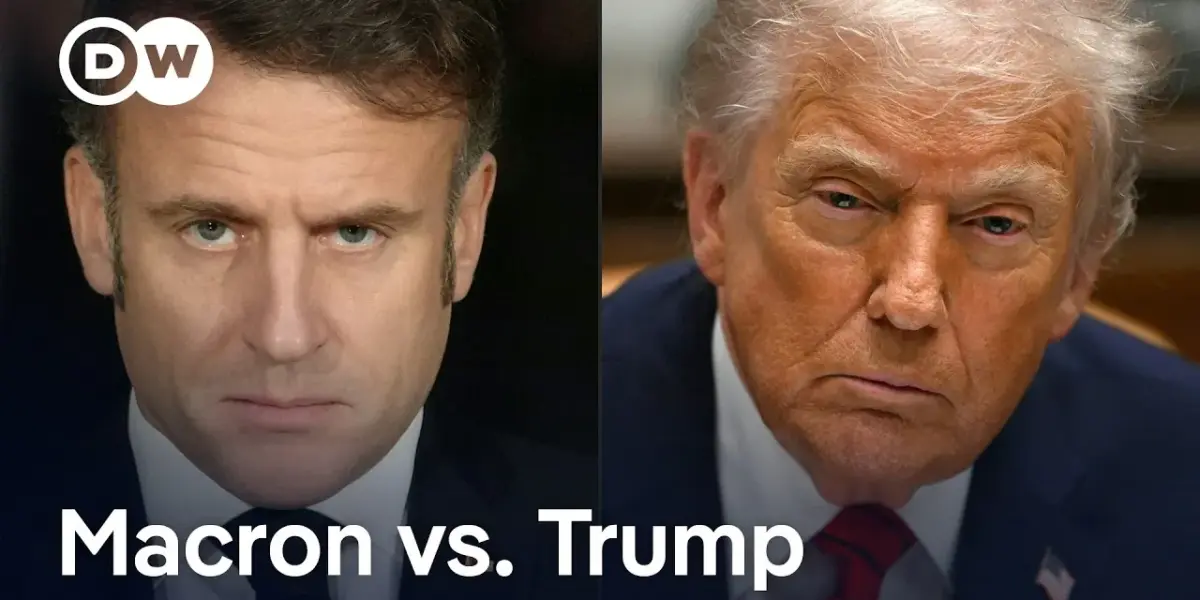
Macron Rejects Trump’s War Talk, Defends Diplomacy
French President Emmanuel Macron has strongly pushed back against U.S. President Donald Trump’s approach to Iran and his criticisms of NATO. The comments came after the U.S. asked allies to help secure the Strait of Hormuz and questioned their commitment to the NATO alliance. Speaking during a trip to South Korea, Macron called for a diplomatic solution, stating that military action to reopen the Strait of Hormuz would be unrealistic and could dangerously worsen the conflict.
France Rejects Military Action in Hormuz
Macron directly addressed the idea of using force to secure the vital waterway. “There are those who advocate for the idea of liberating the Strait of Hormuz by force through a military operation,” he said, referring to the U.S. position. “I say occasionally because it has varied. It’s never the option we have chosen and we consider it unrealistic.” He explained that such an effort would take too long and put anyone crossing the strait at risk from Iran’s Revolutionary Guard, which has significant resources and missiles.
Diplomacy Over Force: A Different Worldview
Political analyst Hinsen explained the significance of Macron’s stance. “This is significant because you know these are two people and two countries that have been allies for a long time,” Hinsen said. “However, the American President Donald Trump believes that a true ally is going to be behind them and will have their backs at any point.” Hinsen noted that France places a high value on diplomacy. Macron’s decision to distance himself from Trump’s approach is not a break with the U.S., but rather a strong statement supporting a diplomatic path. “He’s only reaffirming the necessity of a diplomatic solution,” Hinsen added.
The difference in approach stems from fundamentally different worldviews. “President Emmanuel Macron has a vision that is very classical traditional which says that it is important to discuss things even with your enemy,” Hinsen explained. This contrasts with Trump’s more confrontational style. “On the other hand, the president is a very radical but also a very straight to the point kind of person so he believes that actually talking is not useful what works is guns is actually a sort of conflict, open conflict, and that’s how he’s going to have the answer.” Macron believes that even with a country like Iran, keeping channels for negotiation open is crucial.
Risks of Escalation and Economic Impact
France sees significant risks in a military attempt to reopen the Strait of Hormuz. The primary concern is escalation. “The major risk is actually escalation because we’re talking about here a war that has spread to the countries in the region very quickly,” Hinsen stated. France has important diplomatic and defense ties with several countries in the region, including Qatar, Jordan, Lebanon, and the UAE. There is a fear that any conflict in the Strait of Hormuz could worsen the existing instability.
Another fear is that such actions could make the Iranian regime more desperate and radical. This could have a severe impact on the global economy. Hinsen also pointed to the recent actions of Houthi rebels in Yemen, who are allied with Iran. These rebels could threaten shipping in the Red Sea, adding another layer of risk to regional stability and global trade.
NATO Under Pressure from Trump
Macron’s comments also addressed Trump’s criticism of NATO, which he called a “paper tiger.” This term, historically used to describe perceived weakness, raises questions about the alliance’s credibility, especially if the U.S. seems willing to act alone. “This puts NATO in a position that is very tough because it’s being questioned by its core member,” Hinsen observed. The U.S. is vital to NATO’s existence, and Trump’s rhetoric suggests a different vision for the alliance than that held by European leaders.
Hinsen explained the historical context of the term “paper tiger,” noting it was used by Mao Zedong. Trump’s use of it for both allies and adversaries highlights his unique approach to international relations. The potential for the U.S. to withdraw its support could mean the end of the post-World War II order that NATO represents.
France’s Push for Strategic Autonomy
Macron’s current stance aligns with France’s long-standing pursuit of “strategic autonomy.” This concept, championed by former President Charles de Gaulle in the 1960s, emphasizes Europe’s need to defend itself independently. “It never meant breaking with the USA, severing ties with the USA, not being allies with the USA, but it meant being independent,” Hinsen clarified. The goal is for Europe to have its own defense capabilities and military strength.
While France has been a leader in this push, the broader question remains whether Europe as a whole can act independently in a crisis. “It is true that it is aspirational because Europe has depended on the USA for decades,” Hinsen admitted. After World War II, European nations focused on economic recovery and reconstruction, relying on the U.S. for defense. However, this reliance has created a vulnerability.
Europe’s Path to Independence
Hinsen believes that Europe must develop its own defense strategy to avoid becoming a pawn in global power struggles involving the U.S., China, and Russia. “If Europe doesn’t actually have its own independent strategy, military strategy, but specifically defense, then it’s just going to become a prey of the big powers.” While acknowledging the difficulty due to decades of dependence on the U.S., Hinsen stressed the growing will within France and other European countries to build a stronger, independent defense capability. This move towards self-reliance is seen as essential for Europe’s future security in a challenging world.
Source: Macron hits back at Trump over Iran war and NATO | DW News (YouTube)

Related Articles


Israelis Mark Passover Amid War, Iran Strikes Cloud Holiday
Israelis commenced their Passover Seder amidst a significant escalation with Iran, facing air raid sirens and seeking shelter during the holiday feast. While the government cites national security, many citizens express war fatigue and anger over the ongoing conflict's disruption to normal life and traditions.
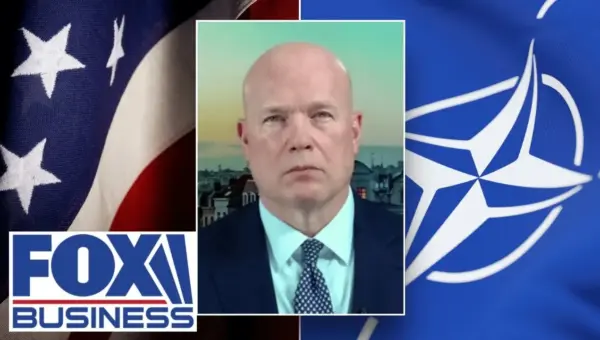
US Urges Allies to Secure Oil Routes, Rethinks NATO Role
The U.S. is shifting responsibility for securing the Strait of Hormuz oil passage to allied nations heavily reliant on the trade. Ambassador to NATO Matthew Whitaker emphasized that while the U.S. has achieved energy independence, allies must now step up. The future of the NATO alliance is also under review, with the U.S. seeking a more balanced partnership.
US Escalates Middle East Conflict Toward Total War
The U.S. is increasingly targeting civilian infrastructure in Iran, a move that signals a dangerous shift towards 'total war.' This approach blurs the lines between military and civilian targets, echoing historical conflicts with devastating consequences. The long-term implications for regional stability and ethical warfare are significant.