Macron Declares Russia’s Failure as Ukraine War Enters Fifth Year
As the war in Ukraine enters its fifth year, French President Emmanuel Macron declared Russia's strategic defeat, highlighting significant human and military costs for Moscow. Meanwhile, the US has lodged a protest with Ukraine over a drone strike on Russian oil infrastructure, revealing a rare point of friction between the allies.

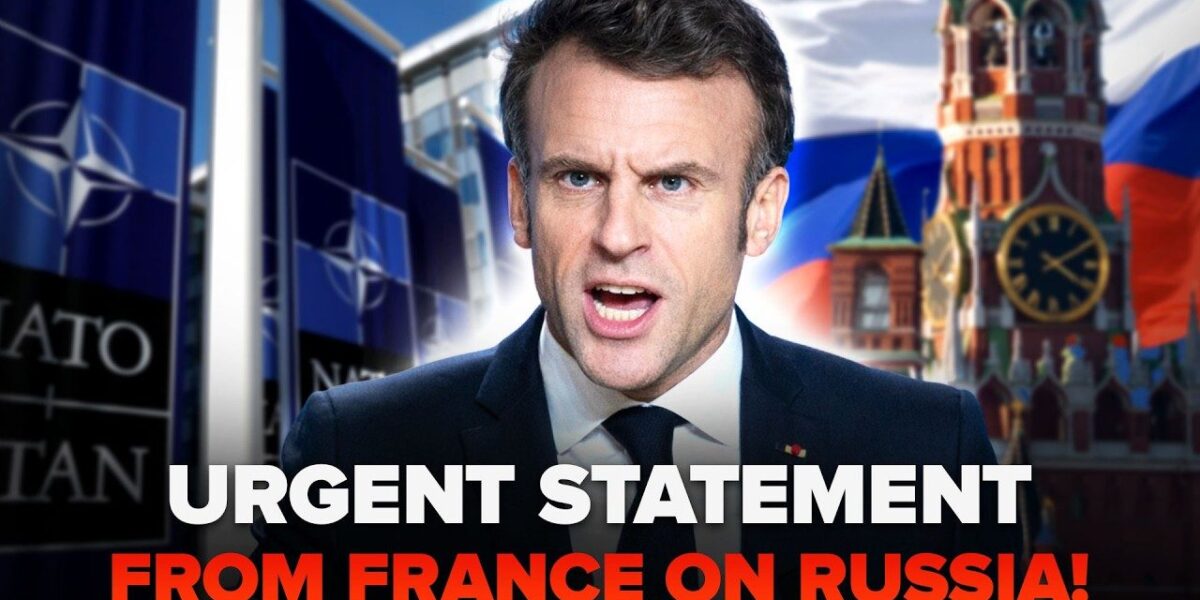
US Protests Ukraine Drone Strike on Russian Oil Hub
In a rare point of friction, the United States has issued a formal diplomatic protest to Ukraine following a Ukrainian drone strike that hit Russian oil infrastructure near the Black Sea port of Novorossiysk. The strike damaged a component of the Caspian Pipeline Consortium (CPC) system, a vital export route for Kazakh oil in which U.S. companies hold significant commercial stakes. Washington signaled concern that attacks affecting infrastructure tied to American economic interests should be avoided, even as Ukraine continues to target Russian energy assets more broadly. This incident highlights the complex global energy flows surrounding Russia’s Black Sea export network and the growing sensitivity of strikes that intersect with third-country commercial interests. It also exposes an asymmetry in the conflict, as Russian attacks have repeatedly damaged facilities in Ukraine connected to Western companies and supply chains without eliciting comparable diplomatic protests from Moscow.
Macron Asserts Russia’s Strategic Defeat
French President Emmanuel Macron has declared that Russia has already suffered a strategic defeat as the war in Ukraine enters its fifth year, with no indication that Moscow is achieving its original objectives. Macron described the invasion as a brutal attempt to destroy Ukrainian sovereignty that has, instead, strengthened NATO, unified Europe, and exposed the limitations of Russian power. He stated that Moscow has paid an enormous human and military price while failing to break Ukrainian resistance. The French leader emphasized that Ukraine stands on the front line of European security and that continued support for Kyiv remains essential for both Ukraine’s survival and the continent’s stability. He pointed to over 170 billion euros in European assistance, new long-term financing, and continued weapons deliveries, including air defense systems and military training. Macron also warned Moscow against assuming Western fatigue as the conflict devolves into a prolonged war of attrition.
“Four years ago, Europe awoke to the sound of Russian bombs falling on Ukraine. Four years of a war of conquest chosen by Russia in brutal disregard for international law, sovereignty, and human life… Russia promised to seize Ukraine in a matter of days. Instead, it has taken only a fraction of territory at the cost of enormous losses. More than a million soldiers killed or wounded. This war has become a military, economic, and strategic failure for Russia.”
Czech Foreign Minister Addresses Lavrov at UN
Czech Foreign Minister Jan Lipavský directly confronted Russian Foreign Minister Sergey Lavrov at the UN General Assembly, stating that Moscow’s plan for Ukraine has failed. Lipavský asserted that no major power can win against the reality of time, emphasizing that while Russia may temporarily control territory and narratives through propaganda, it cannot control the course of history. He stressed that the true measure of power lies not in starting wars but in ending them, adding that Russia’s strategy has become an endless campaign without a realistic outcome. These remarks underscore the international condemnation of Russia’s actions and the perception of a strategic stalemate.
Trump’s State of the Union Sparks Congressional Clash
The reaction to President Donald Trump’s State of the Union address has revealed a sharp division in Washington regarding Russia and Ukraine. While Republican leaders celebrated the speech, Democrats expressed concern that the President was easing pressure on the Kremlin and failing to clearly identify Russia as the aggressor. This, they argued, weakens Ukraine and unsettles American allies. Trump’s address focused primarily on domestic successes and economic claims, projecting confidence but offering little clarity on his administration’s strategy against Moscow’s war. The ensuing congressional reaction exposed a deeper fracture in U.S. policy, with Ukraine increasingly caught in the political struggle in Washington.
One Democratic lawmaker stated, “I was very disappointed that President Trump did not take this opportunity to recognize that Russia is the aggressor in Ukraine… he should be increasing pressure.”
Kremlin Signals Continued Conflict, Long Confrontation with West
Russia has given clear signals that it is not changing its course in Ukraine. The Kremlin maintains that the so-called military operation will continue until Moscow’s objectives are achieved, with presidential spokesman Dmitry Peskov reiterating that Russia has yet to reach its goals and sees no reason to halt the campaign. This statement reflects a broader shift in Russian messaging, framing the war not as a limited operation but as a long confrontation with the West. Russian authorities have also increased security measures around officials, citing growing threats linked to the war. At the diplomatic level, Moscow continues to present negotiations as secondary to battlefield dynamics, maintaining maximalist demands while simultaneously signaling readiness for talks—a dual approach interpreted by analysts as an attempt to prolong the war and shift blame onto Ukraine and the West.
European Leaders Engage China Amid Growing Frustration
European leaders are attempting to engage China with a more unified voice while seeking leverage over Moscow to end the war in Ukraine. German Chancellor Friedrich Merz’s visit to Beijing, following similar trips by French President Macron and British Prime Minister, underscores the recognition that major global crises cannot be addressed without Beijing’s involvement. However, frustration with China is growing across Europe due to its close economic and diplomatic ties with Moscow and its failure to use its influence to pressure the Kremlin. Despite China’s neutral stance, trade with Russia continues, mitigating the impact of Western sanctions. This comes as Europe itself faces increasing economic exposure to China, with a surge in Chinese exports pressuring European industry and widening trade imbalances.
Merz’s mission is twofold: to push for fairer economic conditions for European companies and to test China’s willingness to use its leverage over Moscow.
Hungary’s Orban Government’s Anti-Ukraine Rhetoric
Hungarian Prime Minister Viktor Orbán’s government has amplified narratives portraying Ukraine as the aggressor and the European Union as a force pushing Hungary toward war. This messaging has become central to Orbán’s domestic political strategy, framing Kyiv and Brussels as external actors threatening Hungarian sovereignty and prosperity. Government-funded billboards depict Ukrainian President Volodymyr Zelenskyy alongside European Commission President Ursula von der Leyen with the slogan, “Our message to Brussels: we won’t pay.” The campaign suggests Ukraine and the EU are conspiring to draw Hungary into the conflict and drain its resources. Orbán has framed the war as an economic burden imposed by Brussels, warning voters that a pro-Ukrainian government in Budapest would send Hungarian money, weapons, and even soldiers into the war.
This rhetoric has drawn sharp domestic backlash. Budapest’s liberal mayor called the government’s anti-Ukrainian messaging a “shame,” arguing that Hungary’s national interest lies in a strong, independent Ukraine capable of stopping Russian aggression. Ukraine’s ambassador to Hungary, Fedir Shandur, stated that support for Kyiv is a shared global responsibility because Russia’s war undermines international security and the principle of sovereignty.
Hungary’s stance has also intensified tensions within the European Union, as the bloc requires unanimity for sanctions and major financial packages, allowing Budapest to delay or block decisions concerning Ukraine. EU diplomats have confirmed that Hungary has again obstructed progress on new sanctions and financing for Ukraine tied to the war anniversary. Orbán has increasingly portrayed the EU, rather than Russia, as Hungary’s main geopolitical threat and accused Brussels of preparing Europe for war with Moscow. Despite the government campaign, public demonstrations in Budapest marking the invasion anniversary showed visible pro-Ukraine sentiment, with Hungarians and Ukrainian refugees marching together.
Source: 💥Putin didn't expect this! MACRON issued an EMERGENCY order. SENSATIONAL turnaround in weeks (YouTube)

Related Articles

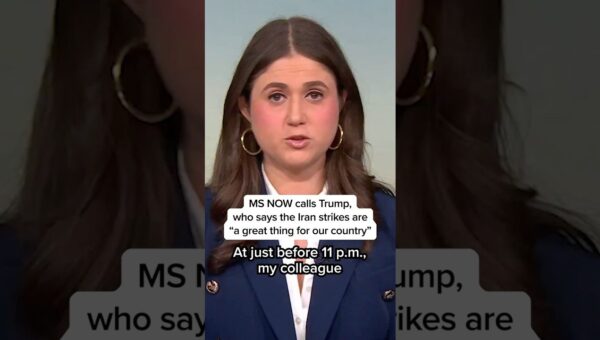
Trump Hails Iran Strikes as ‘Great Thing for Our Country’
President Donald Trump described the recent strikes in Iran that killed the country's supreme leader as "a great thing for our country." In a call with MS NOW, Trump also called celebrations in both Iran and the U.S. "fantastic."

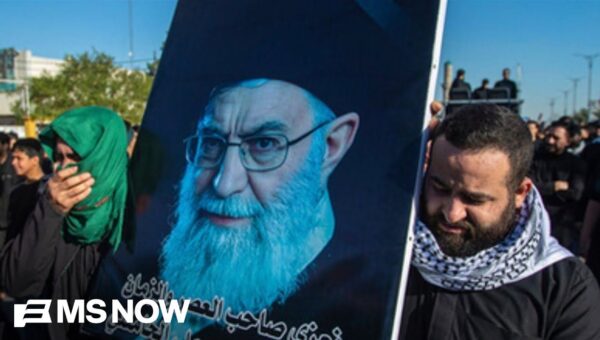
US Regime Change Efforts: A History of Tactical Wins, Strategic Losses
A comprehensive review of U.S. interventions reveals a consistent pattern: while the United States is adept at tactically removing foreign governments, achieving strategic success—the establishment of stable, legitimate political orders—has proven exceedingly difficult. Historical analysis points to unintended consequences and long-term instability as common outcomes.
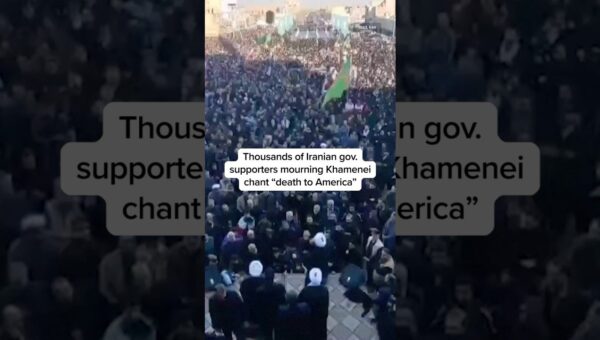
Thousands Mourn Khamenei, Chant ‘Death to America’ in Iran
Thousands gathered in Yazd, Iran, to mourn Supreme Leader Ayatollah Ali Khamenei following reported U.S. and Israeli strikes. The mourning ceremony was marked by chants of "Death to America," highlighting deep-seated anti-American sentiment amid geopolitical tensions.