Lupita Nyong’o Fights for Fibroid Awareness and Research Funding
Actress Lupita Nyong'o and Senator Angela Also Brooks are championing the "uFight" bill to increase funding and access for uterine fibroid research and treatment. Nyong'o shared her personal struggle with the condition, highlighting the lack of advancements and the need for broader reproductive health conversations beyond abortion. The bipartisan effort aims to address a health crisis affecting millions of women.

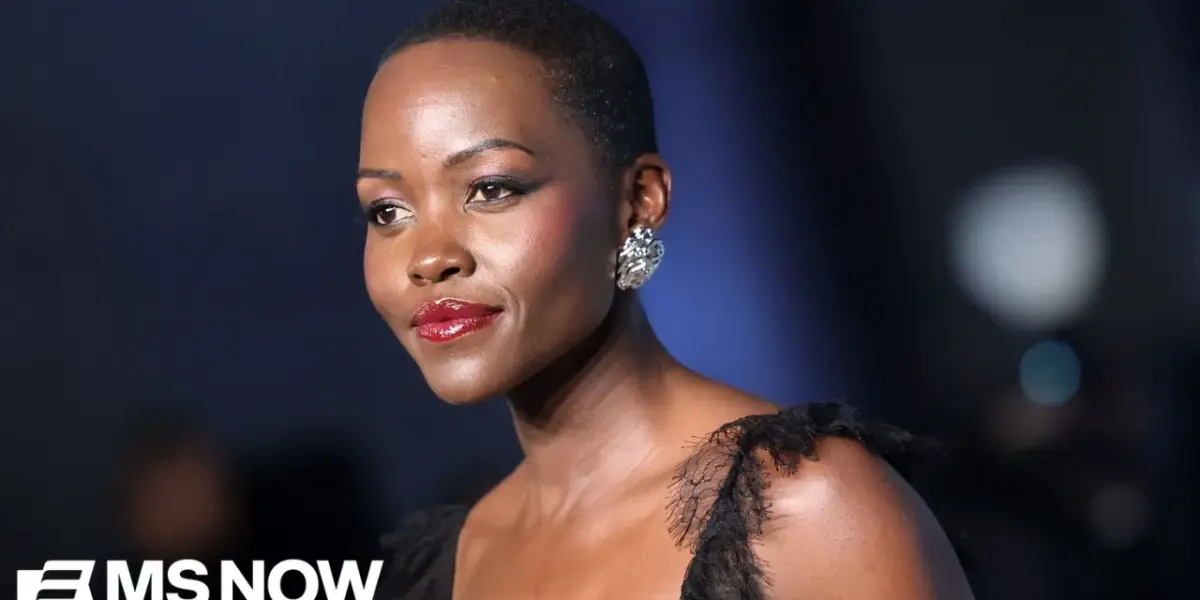
Lupita Nyong’o Champions Uterine Fibroid Awareness and Legislative Action
On International Women’s Day and during Women’s History Month, Academy Award-winning actress Lupita Nyong’o has lent her powerful voice to a critical women’s health issue: uterine fibroids. Nyong’o, who has personally experienced the challenges of this condition, is partnering with Senator Angela Also Brooks to advocate for the Uterine Fibroid Intervention and Gynecological Health Treatment Act, also known as the “uFight” bill. This proposed legislation aims to significantly expand access to early screening, detection, and intervention methods for uterine fibroids, a condition affecting a vast majority of women.
A Personal Journey Through Pain and Limited Options
Lupita Nyong’o shared her personal journey with uterine fibroids, revealing that she was diagnosed in 2014, the same year she won an Oscar. At the time, she was experiencing significant reproductive health challenges privately while maintaining a public persona. “I didn’t know much about fibroids, and so when I asked my doctor what caused them, I was surprised to learn that they didn’t really have an answer,” Nyong’o recalled. The options presented were stark: surgery or living with the pain.
Nyong’o opted for a myomectomy, a procedure to remove fibroids without removing reproductive organs. “A myomectomy is basically an open c-section where they cut through your muscle tissue, and they take out the fibroids,” she explained. Despite the surgery, she was informed that there was little she could do to prevent their return. “It’s just a matter of time until these fibroids come back.” This revelation, coupled with the statistic that up to 80% of women will develop fibroids by age 50, left her stunned by the lack of medical understanding and advancement.
A decade later, Nyong’o found herself facing the same issue, with her fibroids doubling in number to over 50. “While my numbers have changed, the options that I was offered have not,” she stated, expressing her frustration. “I was still told that I could either live with the pain or get the surgery again. And that’s when I felt quite enraged, because how is it that majority of women in this country are experiencing this issue, and yet there are no advancements?” This personal struggle fueled her determination to become part of the solution.
Advocating for Broader Reproductive Health Conversations
Nyong’o emphasized the need for a more comprehensive discussion about women’s reproductive health, moving beyond the singular focus on abortion. “There’s so much more to reproductive health than just abortions. I mean, from the menstrual cycle that affects a woman, menopause, there’s so much that we need to know. There are so many gaps in the research,” she asserted. She highlighted that women were not even included in medical research until 1993, a fact that contributes to the current knowledge gaps.
“We cannot politicize this. This is not a Democratic-Republican issue. This is a health crisis and it affects anyone, no matter what your politics,” Nyong’o urged, calling for a separation of health issues from political agendas. She stressed that women constitute the majority of the population, and their health needs deserve priority.
The “uFight” Bill and Bipartisan Support
Senator Angela Also Brooks echoed Nyong’o’s sentiments, underscoring the seriousness with which the issue is being addressed in the Senate. “What we know now is that as you’ve heard, close to 80% of all American women by their 50th birthday will have a condition that causes tremendous pain. And we only assign 0.03% of all federal funding to study a condition that affects so many women,” Senator Also Brooks stated, highlighting the stark disparity between the prevalence of the condition and the allocated research funding.
The senator expressed gratitude for the bipartisan co-sponsorship of the “uFight” bill by Senator Cynthia Lummis of Wyoming, demonstrating that this is not a partisan issue. “This is an issue not only about women as well. This affects families. When we talk about fertility, we talk about the pain and suffering that occurs. It is something that we cannot normalize,” she added. The bill seeks to increase federal funding for fibroid research, improve screening and detection methods, and enable the Secretary of Health and Human Services to allocate additional research dollars towards fibroid studies. A companion bill has also been introduced in the House by Congresswoman Shontel Brown.
Addressing the Gaps in Research and Funding
Senator Also Brooks pointed out the “chaos and undermining that the National Institute of Health and their medical research system and apparatus in the U.S. has been under attack,” suggesting a need for sustained focus on critical health research regardless of political climate. She emphasized that despite numerous pressing issues, the needs of American people, particularly their healthcare, must remain a top priority.
The senator reiterated the importance of legislative action: “We have to pass the legislation to increase the funding. And then we also will be working on the private side.” She added, “We have to make sure that we are still addressing the needs of all American people. And that means our healthcare is at the top of the list.” The collaborative effort between Nyong’o and Senator Also Brooks, along with bipartisan support, aims to bring much-needed attention and resources to uterine fibroid research and treatment.
What’s Next: Continued Advocacy and Public Engagement
The fight for better uterine fibroid care is ongoing. Lupita Nyong’o and Senator Also Brooks are committed to pushing the “uFight” bill through Congress to secure increased federal funding and improve access to screening and intervention. Public engagement remains crucial, with opportunities to donate to fibroid research and spread awareness. As representation of women in legislative bodies increases, the hope is for a sustained focus on women’s health issues, ensuring that conditions like uterine fibroids receive the attention and resources they urgently require. The push for answers regarding the causes, prevention, and treatment of fibroids continues, aiming to end the normalization of pain for millions of women.
Source: ‘We cannot politicize this health crisis’: Lupita Nyong'o urges lawmakers to push fibroid awareness (YouTube)

Related Articles

Always Campaign Fights Fibroid Stigma, Amplifies Women’s Voices
Always has launched a new national campaign to raise awareness about uterine fibroids, a condition affecting millions of women. The initiative aims to destigmatize heavy bleeding and encourage open conversations, supported by celebrity testimonials from figures like Lupita Nyong'o and Venus Williams.


Listen to Your Body: A Heart Attack Survivor’s Story
A patient's life was saved thanks to her primary care physician's vigilance and her own willingness to seek medical help. This story highlights the diverse symptoms of heart attacks, particularly in women, and the importance of not dismissing subtle bodily signals.


Kharg Island: Trump’s Secret Weapon to Cripple Iran’s Economy?
Kharg Island, Iran's primary oil export hub, could be a key target for U.S. pressure, potentially crippling the nation's economy. Despite historical considerations and immense strategic value, seizing the island presents significant military risks and the possibility of sabotage by a desperate Iranian regime.