Lunar Trailblazer’s Demise: A Software Glitch and a Cosmic Oversight
A devastating software error, involving a mismatch in coordinate systems, caused the Lunar Trailblazer spacecraft to point its solar arrays away from the Sun, leading to a power failure and mission loss shortly after its February 2025 launch. The anomaly review report highlighted a critical oversight in ground testing.


Lunar Trailblazer’s Demise: A Software Glitch and a Cosmic Oversight
On February 27th, 2025, the Lunar Trailblazer spacecraft embarked on a critical mission to map water resources on the Moon. Sharing a ride atop a SpaceX Falcon 9 rocket with the Intuitive Machines Athena lander, the mission began with the promise of unlocking vital lunar secrets. However, mere hours after separating from its launch vehicle, Lunar Trailblazer encountered catastrophic issues. Within 24 hours, communication was lost, and the spacecraft met its end due to a critical power failure. Now, over a year later, the cause of this abrupt and tragic mission failure has been revealed: a remarkably simple, yet devastating, software error.
The Root of the Failure: A Coordinate Catastrophe
Through a Freedom of Information Act request, journalists from NPR obtained the anomaly review report. This document illuminated a massive software flaw within Lunar Trailblazer’s flight control system. The primary function of the spacecraft’s software was to meticulously orient its solar arrays, ensuring they continuously tracked the Sun to maintain a constant power supply. However, a fundamental miscalculation in the software’s coordinate system led to a disastrous outcome. The hardware’s coordinate frame was incompatible with the one used by the flight software. Instead of pointing towards the life-giving Sun, the solar arrays were directed precisely away from it, plunging the spacecraft into a power deficit from which it could not recover.
A Cascade of Errors and a Question of Oversight
While the solar array orientation error is highlighted as the most egregious and arguably the ‘dumbest’ of the issues, the report indicated that other problems contributed to the spacecraft’s demise. The primary responsibility for the spacecraft and its software has been placed on Lockheed Martin, the contractor that developed Lunar Trailblazer. A particularly startling revelation from the report is the apparent lack of ground testing for the solar array deployment and orientation systems. In the high-stakes environment of space exploration, where every component and every line of code is scrutinized, such a fundamental oversight raises serious questions about the rigorousness of the development and testing protocols.
Echoes of a Similar Folly: The Janis Spacecraft
Remarkably, this exact same software bug was reportedly present on the Janis spacecraft, a mission that was ultimately scrubbed before launch. This parallel suggests a systemic issue that, had it been identified earlier, could have saved Lunar Trailblazer. One can only speculate about the butterfly effect of launch schedules. If Janis had launched on its original timeline, it’s highly probable that this critical solar array bug would have been discovered and rectified. This would have, in turn, prevented the same error from making its way into the Lunar Trailblazer mission. However, the ideal scenario, as the report implicitly suggests, is that such fundamental issues should be caught and resolved during ground-based testing, long before a spacecraft even reaches the launchpad, let alone the vacuum of space.
The Importance of Water and the Future of Lunar Exploration
Lunar Trailblazer’s mission was not merely an academic exercise; it was a crucial step in understanding and potentially utilizing the Moon’s water resources. Water ice, particularly in the permanently shadowed craters near the lunar poles, is considered a vital resource for future human activities on the Moon. It can be used for drinking water, for breathable air, and, most significantly, as a source of rocket propellant. The ability to ‘live off the land’ by extracting and processing lunar resources is a cornerstone of sustainable lunar exploration and the eventual establishment of long-term bases. Missions like Lunar Trailblazer are essential precursors, providing the detailed maps needed to identify the most accessible and abundant water deposits.
Lessons Learned and the Path Forward
The loss of Lunar Trailblazer is a stark reminder of the inherent challenges and unforgiving nature of space exploration. Even with advanced technology and rigorous planning, unforeseen errors can lead to mission failure. The detailed post-mortem analysis, however, is invaluable. It provides critical data for improving future spacecraft design, software development, and testing procedures. NASA and its contractors must learn from these costly mistakes to ensure that future missions, whether bound for the Moon, Mars, or beyond, are equipped with more robust and thoroughly tested systems. The quest for lunar water continues, and while this particular trailblazer has been lost, the knowledge gained from its failure will, hopefully, pave the way for future successes, bringing humanity closer to becoming a multi-planetary species.
Source: The Incredibly Dumb Bug That Killed Lunar Trailblazer (YouTube)

Related Articles

NASA’s Evolving SLS Rocket Hints at New Upper Stage
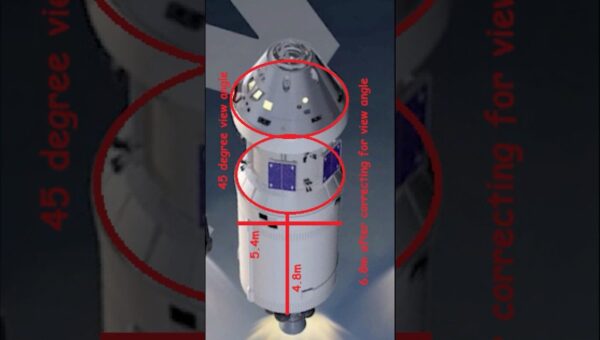
NASA's Artemis program may be adopting a new upper stage for its Space Launch System (SLS) rocket, potentially utilizing the commercially available Centaur V. An updated infographic reveals design changes and hints at evolving mission strategies, including advanced lunar lander operations.


NASA Revises Artemis Moon Landing Goal to 2028
NASA is revising its Artemis program, targeting a 2028 lunar landing amidst a new space race with China. The plan includes preparatory missions in 2027 and focuses on exploring lunar poles for resources. International collaboration remains key, though funding questions persist.

NASA Overhauls Artemis for Faster Lunar Missions
NASA has announced a significant redesign of its Artemis lunar program, prioritizing faster mission cadences and altering the objectives of early flights. Artemis 3 will become a low Earth orbit test mission, while future lunar landings are pushed to later dates. This strategic shift aims to increase launch frequency and cost-effectiveness.