Lunar New Year’s Treachery: How Festive Traditions Became a Dangerous Battlefield for Dissent in Xi Jinping’s China
Amidst heightened censorship, China's Lunar New Year celebrations transformed into a dangerous landscape for coded dissent, with citizens employing wordplay, satire, and cultural references to subtly critique the leadership. This surge in veiled protest, exemplified by a viral online post, politically charged couplets, and an abruptly canceled TV gala, has triggered intense paranoia within the Xi Jinping regime, leading to unprecedented security measures and swift crackdowns. The festive period, further shadowed by unsettling celestial omens and symbolic warnings, has become a high-stakes battleground reflecting deep public anxieties and the enduring struggle for expression under authoritarian rule.

Lunar New Year’s Treachery: How Festive Traditions Became a Dangerous Battlefield for Dissent in Xi Jinping’s China
The Lunar New Year, a period traditionally steeped in family reunion, cultural celebration, and hope for prosperity, has transformed into an unexpected and perilous arena for political expression in China. Under the iron grip of President Xi Jinping, the festive season has become a canvas for coded dissent, wordplay, and veiled criticism, pushing the boundaries of censorship and revealing deep-seated public discontent. This burgeoning phenomenon has, in turn, fueled an intense paranoia within the ruling Communist Party, leading to unprecedented security measures and swift, severe crackdowns on perceived subversion, even when cloaked in seemingly innocuous cultural garb.
What began as subtle acts of linguistic defiance has escalated into a high-stakes game of cat and mouse between a watchful state and a populace increasingly adept at camouflaging its frustrations. From viral online posts questioning leadership to abruptly cancelled television galas, the Year of the Horse, in particular, has ignited a politically charged atmosphere where every symbol, every word, and every celestial omen is scrutinized for hidden meaning, reflecting a society grappling with internal decay and external pressures.
The Subversive Power of Language: Coded Dissent in a Censored State
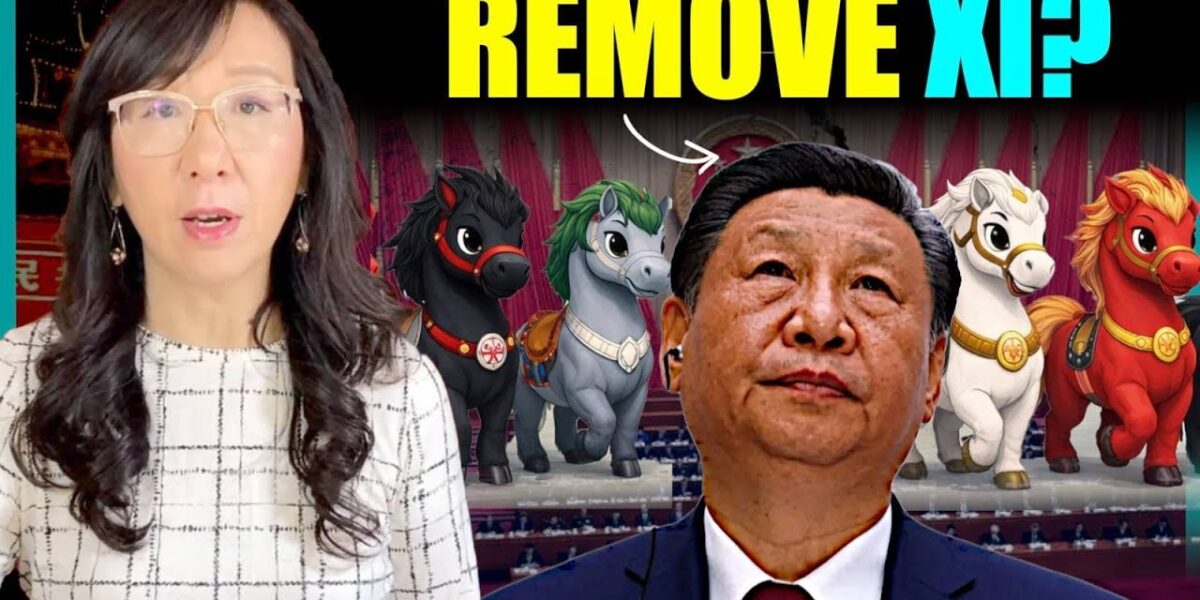
In a nation where overt criticism of the leadership is met with severe repercussions, Chinese citizens have long perfected the art of euphemism and wordplay to express their true sentiments. The Lunar New Year period provided fertile ground for this linguistic rebellion, leveraging the very sounds and traditions of the celebration against the ruling elite. At the heart of this phenomenon lies a simple homophone that sent shivers down the spine of the party apparatus: Chu Xi (除夕), meaning New Year’s Eve, sounds almost identical to Chu Xi (除习), which translates to “Remove Xi.” This phonetic coincidence became a rallying cry, a whispered wish for change that resonated across the nation.
The impact of this homophone was immediately evident in online discourse. On Lunar New Year’s Eve, a provocative question appeared on a Chinese social media platform: “If killing were not a crime in China, who should be the first to die?” The post exploded, garnering over 100,000 replies. While few dared to name anyone directly, the overwhelming consensus, often expressed through thinly veiled references, pointed unmistakably to the nation’s leader, Xi Jinping. Some replies were chillingly direct, simply stating “New Year’s Eve,” a clear nod to the “Remove Xi” homophone. This unprecedented online outpouring underscored the depth of public frustration and the ingenuity employed to circumvent censorship.
Beyond the digital realm, traditional customs were reappropriated for subversive messaging. Spring Festival couplets, typically adorned with wishes for prosperity and good fortune, became vehicles for satirical protest. One viral couplet read, “Get rid of the problem, the whole nation celebrates,” paired with “Remove the bad habit, spring returns to the land.” On the surface, these were standard New Year blessings. However, discerning netizens understood the coded message: “remove Ma (problem),” a reference to historical struggles, and “remove the bad Xi,” signaling a desire for new leadership. Only then, the implied message suggested, would the nation truly know peace and renewal.
Even public service slogans were reinterpreted. A street sign urging citizens to “Say goodbye to backward habits, shake hands with civilization” was widely read as “Say goodbye to backward Xi Jinping, shake hands with civilization.” These seemingly innocuous phrases, when filtered through the lens of public discontent, transformed into potent political statements, demonstrating the pervasive nature of this coded communication.
The ingenuity extended to popular culture. A viral song titled “Step on the Horse to Welcome Spring” became an unexpected anthem of defiance. The lyrics repeatedly featured the phrase “tama,” which literally means “step on the horse” and sounded festive in the Year of the Horse. Yet, in Mandarin, “tama” is phonetically almost identical to a common, vulgar swear word. The clip of young singers cheerfully repeating this phrase in bright red outfits on what appeared to be a New Year concert stage went viral, with netizens joking about finally being able to “swear on national TV.” This deliberate ambiguity allowed for a collective release of frustration, dressed up as holiday cheer.
Adding another layer to this cultural rebellion was a Chinese New Year greeting card featuring a deer instead of the customary horse. This seemingly odd design was a direct reference to the classic Chinese idiom, “calling a deer a horse” (指鹿为马), which describes the act of deliberately misrepresenting facts and forcing lies to be accepted as truth through power. Originating from an ancient tale of a corrupt eunuch, the idiom served as a pointed critique of official narratives and the perceived dishonesty of the authorities, showcasing the depth of historical and cultural literacy employed in these acts of dissent.
Perhaps the most visually striking and unsettling instance of coded satire involved a 13-year-old girl from Fujian province. Selected as one of the national “new era good youth,” she instantly went viral, not for her achievements, but for her striking resemblance to President Xi Jinping. The joke gained a sharper edge from the fact that Fujian was where Xi Jinping spent a significant portion of his early political career, and the young lady was the sole representative from that province. This seemingly innocent coincidence became a powerful, if unspoken, critique of the cult of personality surrounding Xi, turning a recognition of youth excellence into an uncomfortable mirror for the nation’s leader.
Xi Jinping’s Paranoia and the State’s Grip Tightens
The proliferation of these coded messages and the palpable undercurrent of public dissatisfaction did not go unnoticed by the authorities. President Xi Jinping, reportedly deeply superstitious, viewed the homophonic “Remove Xi” and other subtle criticisms not as mere jokes, but as ominous curses and harbingers of disaster. The state’s response was swift, severe, and widespread, transforming the festive season into a period of heightened alert and unprecedented control.
Beijing, the nation’s capital, felt the full weight of this paranoia. On New Year’s Eve, the city was placed under its highest alert level, with checkpoints every few steps, patrols at every turn, and armed security guarding overpasses, utility poles, and even public restrooms. Plainclothes officers, posing as tourists, flooded the streets. The atmosphere was described as freezing cold, yet smelling “like battle.” The mobilization extended beyond Beijing to neighboring regions like Hebei and Tianjin, turning the festive period into a massive security operation.
Adding to the extraordinary measures, Xi Jinping allegedly wrapped up the official New Year reception two days early, and on New Year’s Eve itself, he and other top leaders were reportedly evacuated from the capital. Meanwhile, municipal party and government officials were ordered to stay on duty, working through the entire night, with no time off. This comprehensive lockdown reflected a leadership deeply unnerved by the symbolic power of the holiday and the potential for unrest.
The most direct affront to traditional New Year celebrations was a total ban on fireworks and firecrackers, including electronic ones. For centuries, fireworks have been an integral part of Lunar New Year, believed to ward off evil spirits and usher in good fortune. Banning them was seen as a direct assault on tradition and a symbol of the regime’s control over every aspect of public life. However, the ban met with widespread defiance. Videos flooded social media showing people rushing to the streets to light fireworks across the country, often in direct proximity to police stations. In some instances, exhausted and furious grassroots officials, who had been forced to forgo their own family reunions to patrol, simply stood by, or even joined in the celebrations, highlighting internal cracks within the enforcement apparatus.
The Hunan Gala: A Political Earthquake on Live TV
The most dramatic and politically sensitive event of the Lunar New Year period was the abrupt and unexplained cancellation of Hunan Television’s New Year gala. Broadcast live on Ding, China’s equivalent of TikTok, the provincial-level gala unexpectedly achieved massive popularity, peaking at around 8 million concurrent viewers and reportedly reaching 40 million total views. However, just 47 minutes into its scheduled four-hour runtime, the show was cut off mid-broadcast. There was no host wrap-up, no closing credits, no on-screen explanation, and no technical error message. Replays were swiftly removed from all major platforms, making it nearly impossible to find the full broadcast.
The sudden termination of the gala sent shockwaves through the Chinese public, raising immediate questions about what could have possibly been so sensitive as to warrant such an extreme measure. Within China’s tightly controlled media landscape, a provincial New Year gala is never merely an entertainment program; it is a meticulously planned political project. Planning begins months in advance, involving multiple layers of approval from the TV station’s internal review, the provincial party propaganda department, provincial broadcasting authorities, national regulators, and extensive security and cyberspace risk assessments. For a program that had passed through such rigorous scrutiny to be pulled mid-broadcast indicated that the order could only have come from the very top.
Echoes of Shen Yun and Cultural Reclamation
One of the primary reasons for the gala’s abrupt cancellation, as circulating clips and analyses suggested, was its deep immersion in traditional Chinese cultural elements, devoid of overt political slogans or praise for the Communist Party. Female dancers appeared as celestial maidens scattering flowers, while male dancers portrayed deities embodying primal energy. This aesthetic immediately drew comparisons to Shen Yun Performing Arts, the New York-based Chinese performing arts group that Beijing has strenuously tried to suppress globally. Shen Yun’s stated mission is to revive traditional Chinese culture destroyed under CCP rule, with its tagline “See China Before Communism” being a direct challenge to Beijing’s narrative. The Hunan gala’s opening act, “Eternal Glory of Yongle,” directly recreated scenes from a mural in the Yongle palace, depicting celestial beings paying homage to a primordial heavenly lord, a concept heavily inspired by Shen Yun’s artistic vision.
The gala’s emphasis on gods, deities, traditional Hanfu costumes, flying beauties, legends, and folklore, without any ritual affirmations of loyalty to the Party, was itself a major political faux pas. In a system where every public platform is expected to serve as a propaganda tool, the absence of political messaging was interpreted as an act of defiance, a subtle reclamation of cultural identity outside the Party’s ideological framework.
Ominous Program Titles and Voiceovers
Further fueling the alarm were the program titles themselves, which, when viewed collectively, painted a stark and unsettling picture of contemporary China. Titles like “Mountains, Rivers and the Moon Return to Light,” “Eternal Glory of Yongle,” “The Long Night Finally Ends,” “Ambush in the Dark,” “Where Does the Road Lead,” and “The Long Night in the Dark Zone” resonated deeply with public anxieties. They were widely interpreted as allegories for China’s current dark reality, uncertainty, and a longing for an end to prolonged turmoil under the current regime.
The screen freezing on a line from one of the segments – “The long night finally burns away and the land and the moon will see light” – was particularly chilling. This line, combined with the segment’s voiceover, became the most politically explosive element. The voiceover, accompanying battle scenes from ancient times to modern conflicts, opened with: “I come through a crack in time and space, standing amid the fires of war, gazing deep into the heart of history. I have witnessed light rise again and again from the darkest nights.” It continued with stark phrases like, “Listen, metal is breathing. Enemies are enemies on all sides. Death hidden in the dark. Beneath the armor is living flesh. The defeated excel into emptiness. Listen to this. Internal decay. External threats. How many bleak nights have there been?”
These phrases, particularly “internal decay” and “external threats,” are precisely the anxieties currently plaguing the CCP. The narrative of a “long night” and “light rising from darkness” was widely read as a coded reference to China’s current political crisis, a society trapped in darkness, yearning for a new dawn.
The “White Feather” Provocation: A Call to Generals?
The most incendiary line in the voiceover, however, was: “At first light, our generals strike. Like meteors, white feathered arrows are slotted at the waist.” This seemingly poetic imagery became an open provocation. In Chinese political slang, “white feather” (白羽) is a long-standing euphemism for Xi Jinping. This is because the traditional character for Xi (习) is composed of two radicals: 白 (bái, meaning white) and 羽 (yǔ, meaning feather). When “white feather” appeared in a war poem, at a moment of extreme political tension, it was not seen as a poetic coincidence but a direct allusion to the President.
Coupling this with “our generals strike” created an explosive subtext. In the context of recent purges within the People’s Liberation Army (PLA), where two senior military commanders were dramatically removed, and rumors of resistance, defiance, and even potential rebellion were spreading within the officer corps, this line was read as a symbolic rallying cry for generals to act against Xi Jinping. The phrase “at the waist” further intensified the insult. It suggested that “white feather” (Xi Jinping) was not above the generals but something they carried, controlled, or could even discard, symbolically demoting him from supreme commander to a mere accessory. In a political culture obsessed with hierarchy and reverence, this was an act of profound subversion and humiliation.
The fact that such a politically charged script, steeped in historical allegory and coded criticism, passed through multiple layers of state censorship and made it to live broadcast, only to be abruptly shut down, indicates an extraordinary lapse in control and the immense political risk taken by the producers. The aftermath was swift: central government investigation teams were reportedly dispatched to Hunan TV, with personnel already being removed and locked up for investigation. The incident served as a stark reminder of the regime’s zero-tolerance policy for any perceived challenge to its authority, however subtle.
Foreboding Omens: Mascots and Celestial Warnings
Beyond the direct acts of dissent and the state’s reaction, the Lunar New Year period was also marked by a widespread fascination with omens and portents, reflecting a deep-seated public anxiety about the nation’s future. Even official symbols were not immune to unsettling interpretations.
For the upcoming 2026 CCTV Spring Festival Gala, four horse mascots were unveiled, meant to symbolize vigor and unstoppable progress. However, netizens quickly observed a striking color match – white, red, black, and gray – to the Four Horsemen of the Apocalypse described in the biblical Book of Revelation. Combined with linguistic coincidences that made the names of the four horses sound like “dead horses” in Chinese, these mascots sparked uneasy and ominous associations, seen by many as reflecting deeper public dissatisfaction and a sense of impending doom.
Adding to this atmosphere of foreboding were rare celestial events coinciding with the Lunar New Year. The year marked a rare celestial coincidence that returns only once every 60 years, with two major astronomical events appearing back-to-back. On Lunar New Year’s Day, an annual solar eclipse occurred, where the moon, slightly further from Earth, created a blazing “ring of fire” in the sky. In traditional Chinese cosmology, a solar eclipse at the start of a Fire Horse year is seen as yin and yang overturning, a sign that order is disturbed and authority is challenged. Ancient texts explicitly warned that such an event “foretells turmoil at the top and shocks to the ruling order.”
Just two weeks later, on the Lantern Festival, a total lunar eclipse, a “blood moon,” was set to light up the sky. When the moon turns deep red as it passes fully into Earth’s shadow, it symbolically echoes the word “red” in the old phrase “firehorse and red sheep years.” A blood moon on the Lantern Festival, a day representing light, reunion, and wholeness, was interpreted as an ominous sign pointing to hidden conflicts that could no longer stay concealed and would be forced into the open. These celestial phenomena, far from being mere superstition, were widely viewed as historical metaphors, reflecting deep anxieties about dynastic change and political instability.
Further reinforcing this sense of unease were unusual atmospheric phenomena: reports of seven suns sighted in Harbin and a solar halo observed in Beijing. In traditional Chinese belief, both are considered potent omens for dynastic changes, adding to the pervasive feeling that significant shifts were on the horizon.
A Nation in Code: The Future of Dissent in China
The Lunar New Year celebrations in China revealed a fascinating and perilous dynamic: a populace increasingly ingenious in its methods of coded dissent, and a regime increasingly paranoid and heavy-handed in its attempts to suppress it. The ability of ordinary citizens to repurpose festive traditions, linguistic nuances, and even celestial events into vehicles for political commentary underscores the resilience of human expression in the face of totalitarian control.
While the state’s crackdown on the Hunan gala and other expressions of dissent was swift and severe, the sheer volume and creativity of the resistance suggest a deep well of public dissatisfaction that cannot be easily extinguished. The use of humor, satire, and traditional wisdom allows for a collective venting of anger, often bypassing explicit censorship and reaching a wide audience. The defiance of the fireworks ban, even in the presence of authorities, hints at the limits of state control and the potential for grassroots resistance to simmer beneath the surface.
As China navigates a period of internal decay and external threats, the political weaponization of cultural events and linguistic subtleties will likely continue. The Lunar New Year, once a beacon of unity, has become a mirror reflecting the profound tensions within Chinese society, where every greeting, every song, and every symbol carries a hidden political charge, signaling an uncertain future for Xi Jinping’s rule and the nation as a whole.
Source: Why Lunar New Year Celebration Became Political Dangerous in China (YouTube)

Related Articles
Taiwan’s Nuclear Dilemma: Deterrence or Disaster?
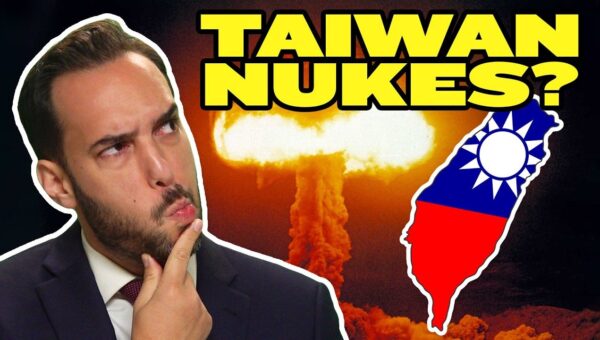
As China expands its nuclear arsenal and military presence, the question of whether Taiwan should possess nuclear weapons or host U.S. nuclear arms gains urgency. The debate weighs the potential for deterrence against the risks of escalation, drawing parallels to Ukraine's disarmament and Taiwan's own past nuclear ambitions.

Germany Navigates Tricky US-China Balancing Act
Germany faces a complex geopolitical challenge, needing to balance its alliance with the US and its economic ties with China. Experts suggest a 'smart approach' focusing on diversification and strategic autonomy, rather than a forced choice, is the most viable path forward.
Protesters Topple Ayatollah Monument in Southern Iran
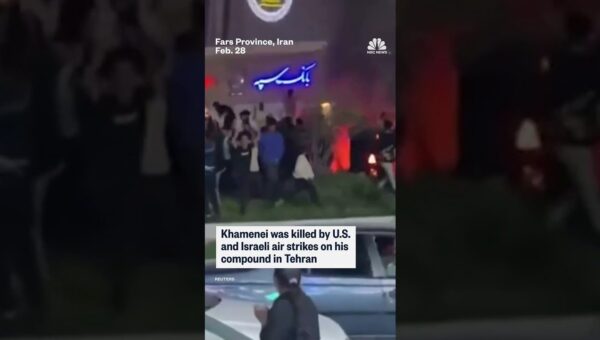
A crowd in southern Iran has toppled a monument dedicated to an Ayatollah, a significant act of defiance against the ruling religious establishment. This incident occurs amid ongoing nationwide protests fueled by economic hardship and political repression. The act symbolizes a rejection of the regime's authority and ideology.