Lunar New Year’s Silent Storm: Decoding the CCP’s Internal Power Struggles Amidst Surging Rumors
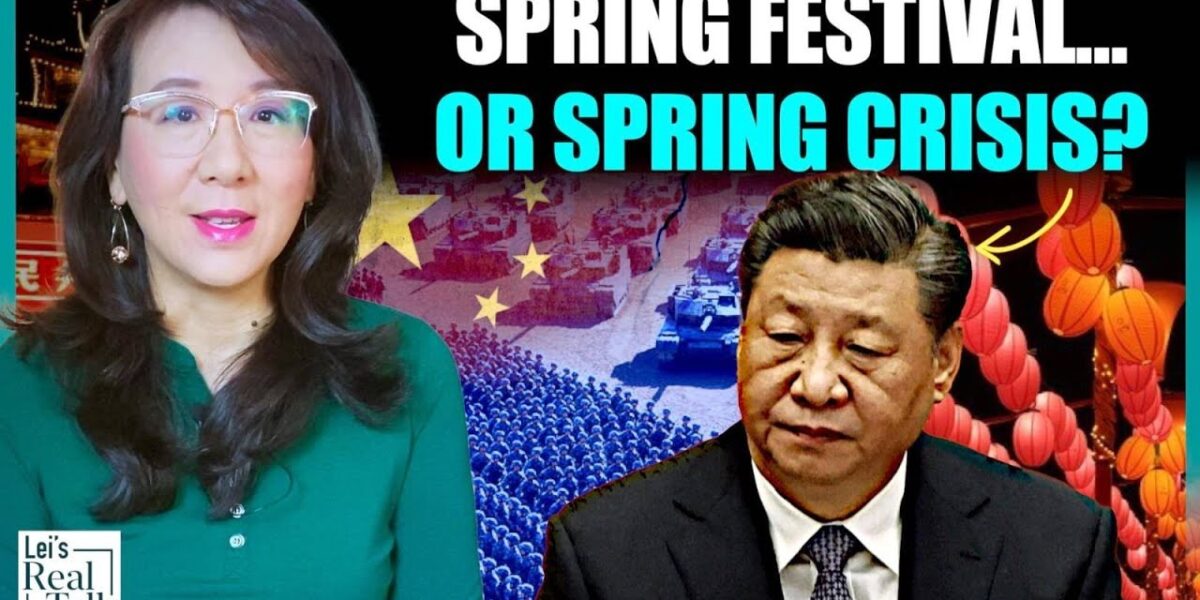
A strangely subdued Lunar New Year in China was marked by a surge of online rumors hinting at an internal power struggle within the Chinese Communist Party, particularly involving President Xi Jinping and military leader General Zhang Youxia. These unverified claims, amplified by foreign media and coded signals in state propaganda, reveal underlying tensions and an active information war beneath the surface of official calm, offering a rare glimpse into the opaque world of Beijing's elite politics.

Lunar New Year’s Silent Storm: Decoding the CCP’s Internal Power Struggles Amidst Surging Rumors
The Lunar New Year, traditionally a vibrant tapestry of family reunions, boisterous celebrations, and hopeful beginnings, cast a strangely muted shadow across China recently. Instead of the usual cacophony of greetings and bustling streets, an unusual quiet descended, punctuated less by communal cheer and more by a surge of fireworks – perhaps a release valve for underlying tensions – and, crucially, a torrent of unverified rumors flooding the internet. This unsettling atmosphere has drawn the attention of observers worldwide, pointing to a potential inflection point within the tightly controlled echelons of the Chinese Communist Party (CCP).
Beneath the veneer of festive calm, an intense information war appears to be unfolding, with whispers of internal strife, particularly concerning President Xi Jinping and a senior military figure, General Zhang Youxia. These viral claims, dramatically leaked online and amplified by foreign media, alongside subtly coded signals embedded within state propaganda, offer a rare, albeit fragmented, glimpse into what many believe is an active power struggle in Beijing. Understanding these strange signs – distinguishing reality from disinformation – is paramount to comprehending the current trajectory of one of the world’s most influential nations.
The Unsettled Festivities: A Departure from Tradition
The Lunar New Year, or Spring Festival, is China’s most important holiday, a time when hundreds of millions travel to their hometowns for family gatherings, elaborate meals, and traditional rituals. It’s a period synonymous with collective joy, renewal, and the enthusiastic exchange of auspicious greetings. However, reports from the recent holiday period painted a different picture. The customary effervescence seemed subdued, holiday greetings were notably quieted, and urban centers, typically bustling with shoppers and revelers, appeared unusually empty.
While some of this quietude could be attributed to lingering economic anxieties or shifts in social behavior post-pandemic, the confluence of these observations with a parallel surge in online speculation suggested something deeper. The increased volume of fireworks, often used to ward off evil spirits and signify celebration, could also be interpreted as a cathartic release of pent-up frustrations or a symbolic assertion of life amidst a perceived undercurrent of uncertainty. In a society where overt dissent is swiftly suppressed, such subtle shifts in public mood and behavior, when coupled with the proliferation of rumors, become significant indicators of underlying unrest or apprehension.
A Whisper Campaign Takes Hold: The Anatomy of Rumors in a Controlled Environment
In a nation where information is meticulously curated and disseminated by the state, the emergence of widespread rumors, particularly those concerning the highest echelons of power, is a potent phenomenon. The internet, despite the formidable ‘Great Firewall,’ becomes a conduit for these whispers, bypassing official narratives and reaching a public hungry for unfiltered insights.
The recent Lunar New Year saw a deluge of such claims. These rumors, often originating from anonymous sources on platforms outside China’s direct control (like X, formerly Twitter, or encrypted messaging apps), quickly gain traction among the Chinese diaspora and then seep back into the mainland through various means, including VPNs and word-of-mouth. Their content often revolves around highly sensitive topics: alleged purges, factional infighting, health issues of top leaders, or even coup attempts. The sheer volume and consistency of these rumors during a period of national introspection made them particularly noteworthy, signaling a potential crisis of confidence or an active campaign to sow discord.
The Central Figures: Xi Jinping and Zhang Youxia
At the heart of the recent speculative storm were two formidable figures: President Xi Jinping, the undisputed leader of China and General Secretary of the CCP, and General Zhang Youxia, a highly influential military official serving as a Vice Chairman of the Central Military Commission (CMC).
Xi Jinping’s Unprecedented Grip on Power
Xi Jinping’s ascent to an unprecedented third term as president and party chief solidified his position as arguably the most powerful Chinese leader since Mao Zedong. His tenure has been marked by an aggressive anti-corruption campaign that, while ostensibly targeting graft, has also been widely seen as a tool to sideline political rivals and consolidate personal power. He has abolished term limits, enshrined his ideological contributions (‘Xi Jinping Thought’) into the party constitution, and overseen a significant centralization of authority across all sectors of Chinese society, from the economy to the military.
This consolidation, while projecting an image of strength and stability, also creates a high-stakes environment where any perceived challenge or sign of weakness can trigger intense speculation. The absence of a clear succession plan and the elimination of internal checks and balances mean that any internal dissent or factional tension becomes inherently destabilizing, fueling a fertile ground for rumors.
General Zhang Youxia: A Military Pillar and Potential Nexus
General Zhang Youxia’s prominence in the recent rumors is particularly significant. As a Vice Chairman of the CMC, he is one of the highest-ranking military officers in China, directly subordinate only to Xi Jinping, who chairs the commission. Zhang’s background is deeply rooted in the People’s Liberation Army (PLA); he is a ‘princeling,’ meaning his father, Zhang Zongxun, was a revolutionary general who fought alongside Xi Jinping’s father, Xi Zhongxun. This shared ‘red pedigree’ initially suggested a strong bond of loyalty and trust between Xi and Zhang, crucial in a system where personal connections often underpin political alliances.
Zhang Youxia has been a consistent presence at Xi’s side during key military events and has played a vital role in Xi’s ambitious military modernization and reform efforts. His position makes him privy to the most sensitive military and security information. Therefore, any rumors linking him to a power struggle, or even suggesting his disfavor or removal, would imply a significant crack in Xi’s inner circle, potentially signaling a challenge from within the military establishment – a scenario that would be profoundly destabilizing for the CCP regime.
Anatomy of an Information War: The Battle for Narrative Control
The ‘information war’ described in the transcript is a complex phenomenon, waged on multiple fronts and with various objectives. In an authoritarian state like China, control over information is not merely a policy; it is a fundamental pillar of regime stability. Yet, even the most robust censorship apparatus can be challenged, especially during times of perceived internal fragility.
The CCP’s Iron Grip on Information
The Chinese Communist Party employs a sophisticated and pervasive system of information control, often dubbed the ‘Great Firewall.’ This system involves:
- Extensive Censorship: Filtering and blocking access to foreign websites, social media platforms, and certain keywords.
- State Media Dominance: Official newspapers, television, and online portals consistently disseminate the party line, shaping public opinion and portraying a unified, stable leadership.
- Propaganda Campaigns: Orchestrated efforts to promote specific narratives, celebrate party achievements, and demonize perceived threats, both internal and external.
- Surveillance and Enforcement: Monitoring online discourse, punishing ‘rumor-mongers,’ and ensuring compliance with information regulations.
This control aims to prevent the spread of dissenting views, maintain social harmony (as defined by the party), and project an image of an infallible and united leadership. However, this very control can inadvertently create an environment where unofficial information, no matter how outlandish, gains credibility precisely because it exists outside the official narrative.
Cracks in the Firewall: Online Leaks and the Diaspora
Despite the formidable firewall, information leaks and rumors find ways to propagate. ‘Dramatic online leaks’ often manifest in several forms:
- Anonymous Posts on Overseas Platforms: Individuals with access to sensitive information, or those simply wishing to spread speculation, utilize platforms like X (formerly Twitter), Telegram, or other encrypted messaging apps that are blocked within mainland China.
- Chinese Diaspora and Exiled Figures: Overseas Chinese communities and political exiles often act as conduits, interpreting and amplifying information that surfaces, sometimes with their own agendas.
- VPNs and Circumvention Tools: Many Chinese citizens employ Virtual Private Networks (VPNs) and other tools to bypass the Great Firewall, accessing uncensored news and discussions.
These leaks often lack definitive proof, relying on cryptic hints, alleged insider knowledge, or a selective interpretation of events. Their power lies in their ability to resonate with existing anxieties or suspicions within the populace, particularly when official channels remain opaque or unresponsive to public concerns.
Coded Signals and Subtleties in State Propaganda
Perhaps the most intriguing aspect of the information war is the existence of ‘coded signals’ within state propaganda itself. In a system where every word, image, and omission in official media is meticulously vetted, subtle changes can carry profound meaning for those skilled in reading between the lines. These signals might include:
- Unusual Omissions: A prominent figure suddenly absent from official reports or photographs where they would normally be present.
- Emphasis Shifts: A sudden change in the focus of propaganda, perhaps subtly criticizing a particular policy direction or praising a different faction.
- Symbolic Language: The use of historical allegories or seemingly innocuous phrases that, to an informed insider, convey a deeper political message.
- Order of Appearance: The sequencing of leaders’ names in official reports or their placement in group photos can indicate shifts in hierarchy or influence.
Such subtle cues are often interpreted by political analysts, diplomats, and even ordinary citizens within China who have learned to decode the nuanced language of officialdom. The very act of searching for these signals underscores the lack of transparent political discourse within the CCP, forcing observers to become amateur Kremlinologists (or ‘Zhongnanhai-ologists’).
Foreign Media as Amplifiers and Analysts
Foreign media plays a dual role in this information ecosystem. On one hand, it acts as an amplifier, reporting on the rumors circulating online and providing analysis that would be impossible within China. This coverage often legitimizes the existence of the rumors, even if it cannot verify their veracity, thereby bringing them to a wider international audience and, indirectly, back to Chinese citizens seeking alternative news sources.
On the other hand, foreign media outlets face immense challenges in verifying information from within China’s closed political system. They rely on anonymous sources, satellite imagery, public records, and the careful interpretation of official statements. The difficulty of obtaining confirmation means that much of the reporting on internal CCP power struggles remains speculative, based on informed analysis rather than definitive proof. This inherent uncertainty contributes to the ‘information war,’ as different narratives compete for credibility.
The Stakes: What a Power Struggle Means for China and the World
The very existence of widespread rumors about a power struggle, regardless of their ultimate truth, carries significant implications for China and, by extension, the global community. Internal stability within the CCP is paramount to its ability to govern and project power internationally.
Historical Precedents and Xi’s Consolidation
The CCP has a long history of intense internal power struggles, from the purges of the Mao era to the more recent downfall of figures like Bo Xilai. These struggles are often opaque, brutal, and highly destabilizing. Xi Jinping’s anti-corruption campaign, which has disciplined millions of officials, including many high-ranking ‘tigers,’ has effectively purged potential rivals and instilled a culture of fear, making open dissent extremely risky.
However, this consolidation also means that the stakes of any challenge are incredibly high. A successful challenge to Xi would represent a seismic shift, while an unsuccessful one would likely lead to further purges and an even tighter grip on power. The rumors, therefore, reflect a fundamental tension between the desire for centralized authority and the potential for internal fissures to emerge under such intense pressure.
The Military Dimension: Loyalty and Control
The military’s role in Chinese politics is critical. The PLA is the armed wing of the CCP, not the state, and its loyalty to the party (and increasingly, to its supreme leader) is non-negotiable. General Zhang Youxia’s position at the heart of the CMC underscores the importance of the military’s unwavering support for Xi. Any indication of disloyalty or factionalism within the military leadership would be a grave concern for Xi, as it could undermine his ultimate authority and the party’s control over the instruments of coercion.
Xi has undertaken extensive military reforms to professionalize the PLA and ensure its absolute loyalty to him. However, the military is a complex institution with its own internal dynamics and interests. Rumors involving a top general suggest that even this vital pillar of support might not be entirely monolithic.
Broader Implications: Stability, Policy, and Global Relations
A genuine power struggle within the CCP would have profound implications:
- Internal Stability: It could lead to political instability, uncertainty, and a potential crackdown on dissent, both within the party and among the populace.
- Policy Direction: A change in leadership or a significant challenge to Xi’s authority could alter China’s domestic and foreign policy trajectories, impacting everything from economic strategy to international relations.
- Economic Impact: Political uncertainty can deter investment, lead to capital flight, and exacerbate existing economic challenges, such as a struggling property sector and youth unemployment.
- International Relations: A weakened or distracted leadership might become more inward-looking or, conversely, more aggressive externally to project strength. It could also create opportunities or challenges for other global powers.
Discerning Truth from Fiction: A Continuous Challenge
In the murky world of Chinese elite politics, distinguishing what is ‘likely real’ from ‘disinformation’ is an ongoing and complex challenge. The CCP’s opacity ensures that definitive proof is rarely available to outsiders. However, the very existence and prevalence of these rumors, particularly during a sensitive period like the Lunar New Year, are themselves significant facts.
They reveal:
- Underlying Tensions: The rumors act as a barometer for internal anxieties and potential fault lines within the party, even if the specific claims are false.
- Information Vacuum: The official silence and lack of transparency create a vacuum that rumors inevitably fill, reflecting a public desire for information about their leaders.
- Strategic Disinformation: It’s plausible that some rumors are deliberately seeded by various actors – internal factions, external adversaries, or even individuals with personal grievances – to achieve specific political objectives.
Therefore, while one must exercise extreme caution in accepting the specifics of any rumor, the phenomenon of the rumors themselves, the figures they implicate, and the timing of their surge, offer invaluable insights into the psychological and political landscape of contemporary China. They suggest that despite Xi Jinping’s iron grip, the CCP is not immune to the internal dynamics of power, ambition, and potential discord.
Conclusion: A Glimpse into Beijing’s Inner Sanctum
The quiet Lunar New Year, the flood of online rumors, and the whispers of a power struggle involving Xi Jinping and Zhang Youxia collectively paint a picture of a Chinese Communist Party navigating a period of heightened internal tension. While the precise nature and veracity of these claims remain shrouded in secrecy, their widespread dissemination and the subtle signals emanating from state media underscore the reality of an ongoing information war. This struggle for narrative control is not merely about gossip; it reflects deeper anxieties about leadership stability, policy direction, and the future trajectory of China.
As observers continue to parse these enigmatic signs, one truth remains clear: even in the world’s most controlled political system, the currents of power, ambition, and information flow relentlessly, offering fleeting, yet crucial, glimpses into the inner sanctum of Beijing’s elite.
Source: New Year Drama: Inside the Rumors and Power Struggles Shaking the CCP (YouTube)

Related Articles
Xi’s Reign of Terror: Are CCP Officials Really Dying?
Rumors swirl about Xi Jinping orchestrating deadly purges of CCP officials, with unverified reports of executions and suicides surfacing. A critical analysis reveals the challenges of discerning truth from fiction in China's opaque political system.
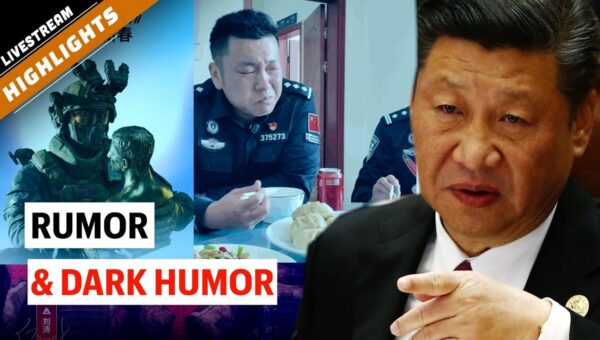
China’s Info War: Rumors, Ads Hint at Deep Political Strife
Unusual rumors of executions and a provocative game advertisement hint at a brewing information war within China. State media's own subtly critical reports further suggest deep political undercurrents and potential dissent.
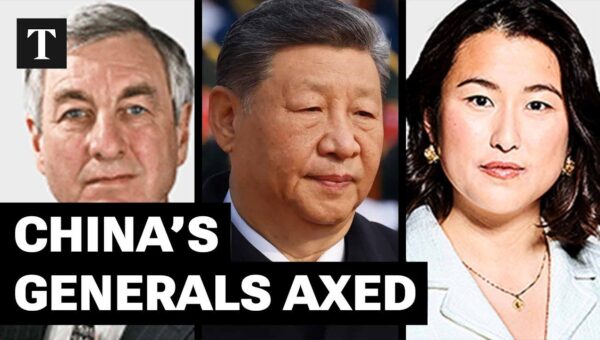
Xi’s Military Purge Sparks Questions of Paranoia and Weakness
President Xi Jinping's extensive purge of top military commanders has triggered debates about his paranoia and the PLA's readiness. Analysts question if these dismissals signal a consolidation of power or reveal deep-seated corruption and incompetence within China's armed forces, with significant implications for regional stability, particularly concerning Taiwan.