Lucid Air: Brilliant Engineering Marred by Glitches
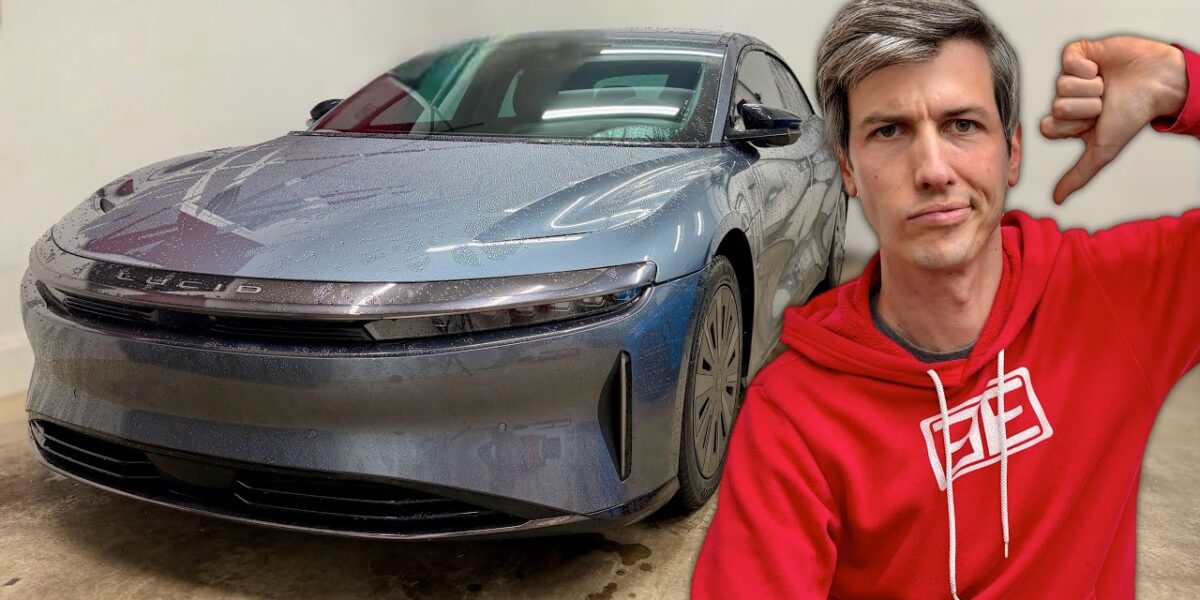
Despite its brilliant engineering, the Lucid Air Touring is plagued by a persistent stream of software glitches and hardware issues. From non-functional frunks to audio failures and frustrating profile management, the ownership experience is far from seamless. This review delves into the myriad problems that mar an otherwise promising electric luxury sedan.

Lucid Air: Brilliant Engineering Marred by Glitches
The Lucid Air has long been heralded as a marvel of automotive engineering. With its exceptional efficiency, blistering acceleration, and innovative packaging, it represents the cutting edge of electric vehicle technology. However, for one owner, the reality of living with a brand-new 2025 Lucid Air Touring has been a stark contrast to the initial promise, revealing a frustrating array of hardware and software issues that significantly detract from the ownership experience.
Hardware Headaches and Initial Disappointments
Upon taking delivery of the Lucid Air Touring, the owner encountered several hardware problems that should have been caught during factory inspection or showroom preparation. The frunk, a signature feature, initially failed to open on the first attempt every single time, requiring a second try. While a service visit resolved this by realigning a striker, it highlighted an immediate quality control lapse. Further service was needed to address issues with the powertrain coolant pumps, which were not reaching their target speeds and required replacement of two drive unit coolant pumps. A broken left fan button and a failed D10 assembly also necessitated repairs. Even seemingly minor aspects, like the charging door, required excessive force to open, and the cup holders exhibited an astonishing 8.8 to 8.9 pounds of force needed to remove an empty can – a far cry from the near-zero effort in a Toyota Corolla.
Software Sores: A Constant Source of Frustration
The most significant and pervasive issues plaguing this Lucid Air lie within its software. For the first three months of ownership, every entry into the car was met with an “unable to install update” pop-up, despite the system claiming to be up-to-date. This glitch required a service visit to rectify. Audio problems have been recurrent, with instances of turn signal audio failing to play and complete sound system outages occurring at least five times, rendering the entire audio system silent for entire drives. Apple CarPlay integration has proven particularly troublesome, frequently switching between connected phones and user profiles. This often necessitates a full factory reset, a time-consuming process that erases all custom settings. The phone key functionality has also been unreliable, with the car displaying a connected phone while simultaneously indicating no key is detected, forcing the owner to rely on the backup key card. A particularly bizarre incident involved the heated seat in the rear automatically activating multiple times during a three-hour drive, causing discomfort to a dog, with no discernible user input.
Design Choices That Defy Logic
Beyond outright bugs, certain software design choices have left the owner questioning the development team’s priorities. Swapping driver profiles, a common occurrence on road trips, inexplicably cancels active navigation, forcing the tedious task of re-entering destination details. The reverse mirror tilt feature, designed to aid in parking, is limited to only the right mirror, which tilts so far down it becomes useless, staring directly at the ground. Furthermore, the car’s display insists on showing estimated range in miles, even when the user has selected battery percentage as their preferred metric, a discrepancy Lucid representatives could not adequately explain. Voice command functionality, a staple in modern vehicles, is described as largely useless, often misinterpreting commands or directing the user to incorrect locations, even when specific city and state information is provided. The attempt to use voice command to open the glove box resulted in a response that it couldn’t perform the action, despite the existence of a touchscreen button for it.
The Biggest Annoyance: Profile Switching Woes
The single most frustrating aspect of owning this Lucid Air is the inability to change driver profiles while the vehicle is in motion. This is particularly problematic in a household where multiple drivers regularly use the car. While Lucid offers automatic profile switching via phone key or a facial scanner behind the steering wheel, both systems have their flaws. The phone key system struggles to differentiate between two users entering the car simultaneously, leading to an unpredictable profile selection. The facial scanner, a hardware issue, is rendered useless for taller drivers like the owner because the steering wheel, when adjusted to their preferred height, completely obstructs the scanner. This forces manual profile selection, which is inconvenient. The real problem arises when a driver forgets to switch profiles before setting off. Attempting to change profiles while driving is impossible due to the touchscreen interface and the risk of distracted driving. Even when a profile switch is initiated, it doesn’t always load all settings correctly, leading to a mixed configuration of driver preferences (e.g., seat adjusted but steering wheel not) and the inability to rectify it until the vehicle is parked. Lucid cites legal concerns about seat position changes as the reason for this restriction, but the owner argues that allowing steering and mirror adjustments, or at least providing clearer warnings and options, would be a significant improvement.
Value Proposition and Target Buyer
The Lucid Air Touring, with its premium positioning, commands a significant price tag. While precise pricing and trim levels for the 2025 model were not fully detailed in the provided transcript, the owner emphasizes that this is the most expensive vehicle they have ever purchased. The core appeal of the Lucid Air lies in its advanced technology, impressive performance figures (0-60 mph times are typically in the low 3-second range for the Touring, with horsepower around 620 hp and torque exceeding 500 lb-ft, and an EPA-estimated range of up to 425 miles for the Touring), and luxurious design. However, the persistent and widespread software glitches, coupled with the hardware issues, severely undermine its value proposition. For a vehicle at this price point, such fundamental flaws are unacceptable. The target buyer is likely someone seeking the pinnacle of EV technology, performance, and range, willing to pay a premium for innovation. Yet, based on this owner’s experience, the current software maturity and build quality issues make it a difficult recommendation for anyone prioritizing reliability and a seamless user experience. While software updates hold the promise of improvement, the fact that these issues persist nearly four years after the car’s initial release is concerning.
Verdict
The Lucid Air is a car with immense potential, built upon a foundation of brilliant engineering. It boasts impressive range, exhilarating performance, and a stunning design. However, the ownership experience, as detailed by this owner, is severely hampered by a relentless barrage of software bugs and frustrating hardware quirks. From unreliable software updates and audio failures to problematic connectivity and illogical design choices, the Lucid Air currently falls short of the premium experience it aims to deliver. Until Lucid can consistently resolve these issues and ensure a polished, reliable software experience, the dream car may remain a frustrating reality for its owners.
Source: Owning A Lucid Has Been Super Disappointing (YouTube)

Related Articles


Audi TT Lives On: Electric Successor Confirmed
Audi has confirmed an all-electric successor to the iconic TT is coming, based on the platform intended for the electric Porsche Cayman. Set for a potential 2027 launch, this move secures the TT's lineage in an electrified future.

Polestar 4: A Cool EV With A Catch
The Polestar 4 offers a compelling blend of striking design, a luxurious interior, and advanced technology, positioning itself as a stylish alternative in the EV market. While its unique styling and performance are noteworthy, potential buyers should consider its compromises in rear visibility and charging speeds.


Subaru Uncharted EV: A Compact Electric Adventure
Subaru introduces the 2026 Uncharted, a new compact electric crossover sharing its platform with Toyota. Offering up to 308 miles of range and impressive off-road capability, it aims to attract traditional Subaru buyers to the EV market.