Longevity Doctor’s Claims Scrutinized Amidst Controversy
An investigation into Dr. Peter Attia's health claims and associations reveals concerns regarding his connections to Jeffrey Epstein, the scientific basis for his VO2 max recommendations, and his aggressive stance on cholesterol-lowering drugs. The article examines the evidence and expert opinions that challenge some of Attia's prominent assertions.

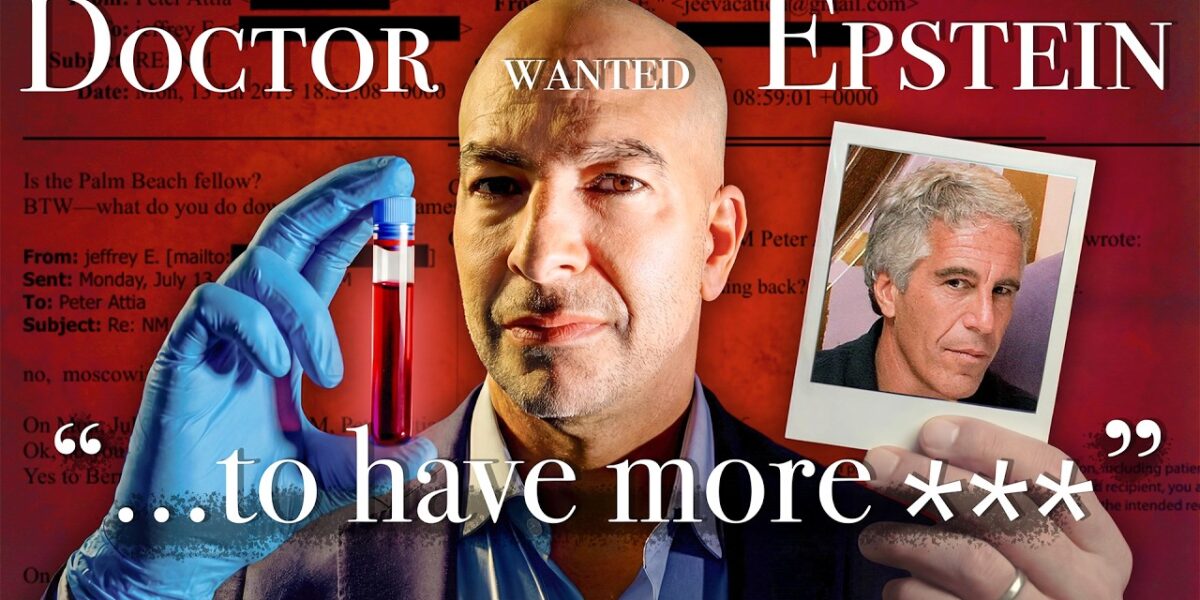
Investigating Dr. Peter Attia’s Health Advice and Associations
Dr. Peter Attia, a prominent figure in the longevity and health optimization space, has recently faced scrutiny following revelations from the Jeffrey Epstein files and questions surrounding some of his prominent health claims. While Attia has addressed some of these issues, a deeper examination of his past associations and the evidence behind his key recommendations reveals a complex picture that warrants careful consideration by those seeking health guidance.
Connections to Jeffrey Epstein Under the Microscope
Over 1,700 documents mentioning Dr. Peter Attia have surfaced in the Jeffrey Epstein files, indicating a more extensive connection than initially apparent. Emails reveal Attia confirming meetings with Epstein, even on the same day his wife rushed their infant son to the hospital due to a breathing and heart stoppage. Attia, who was in New York for “important work,” was unable to return home during his wife’s four-day hospital stay.
Attia’s initial interactions with Epstein, beginning around 2015, were described by Attia as meeting “one of the most interesting people I’ve ever met,” highlighting his self-proclaimed talent for identifying intelligent individuals. Despite later acknowledging awareness of Epstein’s 2008 conviction for “procuring a minor for prostitution” after a Google search, Attia continued to communicate with him.
Emails suggest a level of familiarity and shared interests. Attia expressed a desire to add “5 years or more” to Epstein’s life, even linking it to increased sexual activity. He also noted the difficulty of maintaining a friendship with someone leading an “outrageous” life, the details of which he “can’t tell a soul.” Attia was also present at Epstein’s residences and inquired about his infamous Little St. James Island, expressing a desire to visit. The correspondence between their assistants indicated a desire for them to see each other “as much as possible,” painting a picture of a close relationship.
Further emails touched upon seeking advice for “little quote situation[s]” and shared experiences like “what a rough night.” After a dinner party attended by Epstein, the President of Mongolia, and Kathleen Rumler (a person Epstein contacted when arrested by the FBI), Attia sent an email expressing enjoyment and inquiring about the absence of a woman Attia had previously met at Epstein’s residence. This period also saw Attia asking Epstein to reconnect him with this woman.
Attia’s financial success, with six-figure longevity programs costing close to $100,000, has also been juxtaposed with his association with Epstein, who was known for connecting wealthy individuals. Attia has stated that his plane ticket to Epstein’s ranch in August 2015 was canceled due to Epstein’s unavailability, and he maintains he never visited the island or ranch. Despite expressing repulsion at the 2018 Miami Herald article detailing Epstein’s crimes, Attia continued to communicate with him for at least four more months, inquiring about the “fallout from recent story” and legal changes. Attia claims this continued contact was to hold Epstein accountable, though the majority of emails reportedly concerned scheduling meetings.
Questioning the Science Behind VO2 Max Claims
One of Dr. Attia’s central health claims, highlighted in his book and media appearances, is that VO2 max is “perhaps the single most powerful marker for longevity” and the “single greatest predictor of lifespan.” VO2 max measures the maximum rate at which your body can use oxygen during intense exercise.
However, research suggests this claim may be an oversimplification or misinterpretation. According to Dr. Chris Masterjohn, PhD, who has researched the topic, many studies cited to support the claim that VO2 max is the greatest predictor of lifespan do not actually measure VO2 max. Instead, these studies often measure performance on progressively difficult exercise tests, with the duration of the exercise being the key predictor of longevity. For the general population, especially those who are not elite athletes, reaching their true VO2 max during such tests is often not the limiting factor. Individuals typically stop exercising due to factors like heart palpitations, leg pain, or general exhaustion, rather than hitting their maximum oxygen uptake capacity.
Concerns have been raised that Attia may have misrepresented data, potentially by relabeling tables from studies in his blog posts and book to specifically mention VO2 max, even when the original research did not. This has led to confusion, with the implication that improving VO2 max is the primary goal for longevity, potentially overshadowing the importance of a broader, functionally diverse fitness regimen. Experts emphasize that while increasing VO2 max is healthy, focusing solely on it might detract from other crucial aspects of fitness for longevity, such as balance, coordination, and strength, which are exemplified by athletes in disciplines like gymnastics and pole vaulting who have shown increased lifespans.
Scrutiny of Statin Recommendations and Data Interpretation
Dr. Attia’s stance on cholesterol-lowering drugs, particularly statins, has also come under fire. He advocates for aggressive cholesterol reduction, suggesting individuals should start lowering their cholesterol in their 20s and aim for very low APOB levels (a measure related to LDL cholesterol).
Critics point to a study in Cell Metabolism that suggested statins could lower GLP-1 levels, a hormone important for glucose regulation, and worsen glycemic markers and insulin resistance. It is alleged that Dr. Attia, in a response to this research, ignored a key graph in the study that clearly showed these negative effects, focusing instead on discrediting the study’s overall importance. This selective presentation of data has led to accusations of intentional omission.
Furthermore, Attia’s analogy comparing lowering APOB to not smoking to prevent lung cancer has been criticized. Critics argue that foregoing a toxin (smoking) is fundamentally different from taking a drug with potential side effects. While Attia emphasizes the causal link between APOB and atherosclerosis, the risks associated with aggressively lowering it—such as increased blood sugar, insulin resistance, and depleted GLP-1 levels—are significant and should be weighed carefully. The potential for these therapies to cause harm, especially in younger, metabolically healthy individuals, is a point of contention.
The debate also touches upon the financial incentives in medicine. Critics suggest that aggressively promoting low APOB levels might align with the pharmaceutical industry’s interest in statin sales, potentially downplaying the risks to ensure continued market share. The question of who benefits most from these aggressive targets and whether comprehensive studies on long-term risks in diverse populations are sufficiently funded remains a concern.
Concerns Regarding Arrogance and Closed-Mindedness
A recurring theme in the criticism of Dr. Attia is an alleged arrogance and closed-mindedness that hinders open scientific discourse. This is exemplified by his interactions on his podcast, where he has been accused of interrupting guests excessively, dismissing their ideas, and engaging in what some perceive as condescending behavior.
One notable instance involved Dr. Dave Feldman, who presented a model suggesting that LDL cholesterol might not be as detrimental in metabolically healthy individuals. Attia reportedly interrupted Feldman 66 times during a podcast interview and dismissed his research as “brain damage.” Similarly, Attia has shown disdain for the “no seed oils” movement, calling it “dumb” and insulting to restaurateurs who cater to it.
Critics argue that this dismissive attitude, coupled with a tendency to make definitive, evidence-free statements (such as the claim that there is “no evidence whatsoever” linking Bluetooth headphones to health damage, despite some observational studies suggesting a link), reflects an overconfidence that mirrors the same hubris that may have contributed to his association with Epstein. The principle of maintaining open minds and acknowledging that scientific truth is constantly evolving is presented as a counterpoint to such rigid stances.
Navigating Health Information and Making Informed Decisions
The controversies surrounding Dr. Peter Attia highlight the critical need for consumers of health information to approach claims with a discerning eye. While Attia has made significant contributions to discussions on longevity, the scrutiny of his associations and the scientific basis of some of his most prominent recommendations necessitates a balanced perspective.
It is crucial to seek out information presented with nuance and to be wary of definitive statements that lack robust, multifaceted evidence. When considering any health advice, especially regarding medication or significant lifestyle changes, consulting with a qualified healthcare professional who can provide personalized guidance based on your individual health status is paramount. This article is intended for informational purposes and does not constitute medical advice.
Key Health Takeaways
- Scrutinize Sources: Be critical of health information, especially when presented by individuals with potentially problematic associations or who make overly confident claims.
- Verify Scientific Claims: Understand that metrics like VO2 max are complex. Investigate the evidence behind claims that a single metric is the sole or primary predictor of health outcomes.
- Weigh Risks and Benefits of Medications: When considering drugs like statins, understand the potential benefits and risks, and discuss them thoroughly with your doctor. Be aware that aggressive targets may not be suitable for everyone.
- Embrace Nuance: Seek out health advice that acknowledges complexity and avoids absolute statements. Look for professionals who present information in a balanced, evidence-aware manner.
- Consult Your Doctor: Always discuss significant health decisions, including changes to diet, exercise, or medication, with a qualified healthcare provider.
Source: Hidden Data: How the Top Longevity Doctor tricked us all (YouTube)

Related Articles


Trump FBI Accused of Halting Epstein Probe in 2019
Newly released emails from the Jeffrey Epstein files indicate that the Trump administration's FBI ordered the NYPD to halt their 2019 investigation into Epstein. Further correspondence references a "murder" investigation into Epstein's death, contradicting the official suicide ruling and fueling demands for transparency.


Khanna Urges Trump to Testify Voluntarily in Epstein Probe
U.S. Representative Ro Khanna is calling on former President Donald Trump to voluntarily testify in the Jeffrey Epstein probe, citing Bill Clinton's recent deposition as a new precedent. Khanna believes Trump should follow Clinton's lead in answering all questions from investigators.

Ro Khanna: Americans Not Safer After Iran Leader’s Death
Congressman Ro Khanna argues that Americans are not safer following the death of Iran's Supreme Leader, Ayatollah Khamenei. He criticizes Republican foreign policy and pushes for a War Powers Resolution to limit presidential war-making authority. Khanna also calls for transparency in the Jeffrey Epstein case, advocating for testimony from prominent figures.