London Al-Quds March Faces Ban, Draws Larger Crowds
London's Al-Quds Day march has been restricted to a static demonstration following a government ban, with organizers anticipating a larger turnout due to the controversy. The Islamic Human Rights Commission attributes the ban to pro-Israel lobbying and sees the event as a protest for Palestinian rights, while authorities are on high alert for hate speech and support for banned groups.

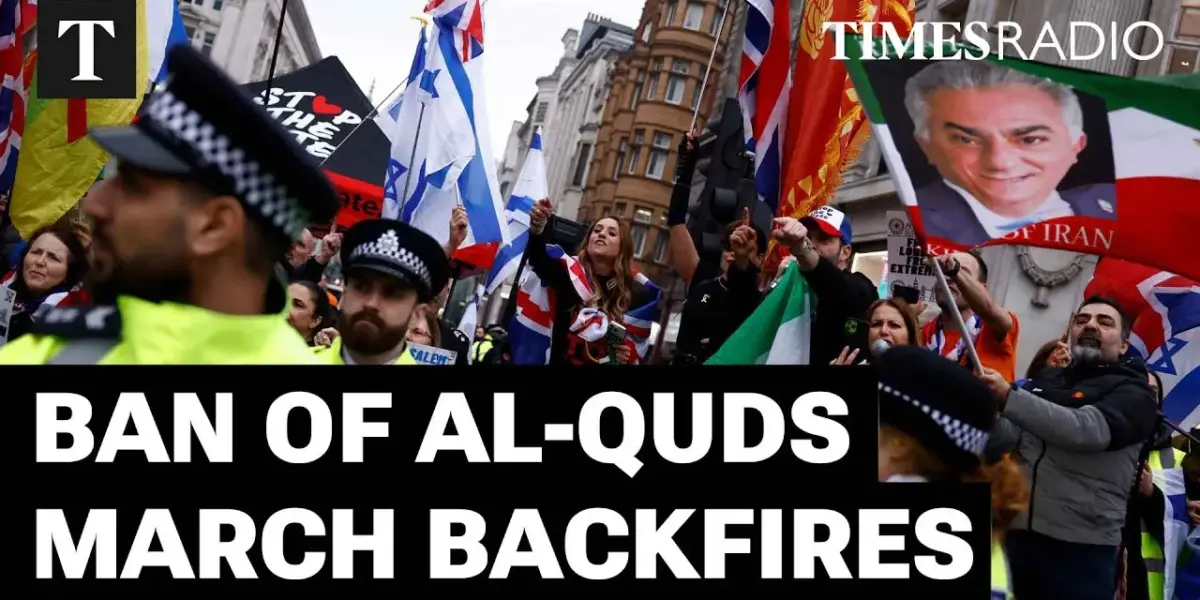
London Al-Quds March Faces Ban, Draws Larger Crowds
LONDON – A planned Al-Quds Day march in London has been significantly restricted by authorities, with a ban on the traditional procession and a shift to a two-hour static demonstration on the South Bank. The Metropolitan Police have mobilized nearly 900 riot officers and issued stern warnings against any displays of hate speech or support for banned groups, threatening immediate arrest for violations. Despite, or perhaps because of, the government’s actions, organizers anticipate a larger turnout than in previous years.
Government Pretext for Ban Cited
Faisal Bodi, representing the Islamic Human Rights Commission and a key organizer of the Al-Quds protest, stated that the ban was not surprising. He suggested that the “Zionist lobby, the pro-Israel lobby in this country has been gunning to get this demonstration banned for a number of years now.” Bodi believes that the current geopolitical climate, specifically referencing an “illegal war against the Iran,” has provided authorities with the “perfect pretext to do so.”
The decision to ban the march has drawn sharp criticism. A spokesperson for the Metropolitan Police, in a dialogue with Bodi, questioned the rationale behind a march glorifying Iran, particularly after alleged Iranian actions targeting British forces and its domestic human rights record. However, Bodi vehemently refuted this characterization.
Organizers Emphasize Palestinian Rights
Bodi clarified that the Al-Quds march, as its name suggests, is fundamentally about supporting Palestinian rights. “It keeps the flag of Palestine flying has done for the last 47 years and it protests against it stands against occupation against oppression and more recently against the genocide,” he explained. He stressed that the core focus remains on protesting occupation and oppression faced by Palestinians.
Controversy Over Iranian Regime Support
A significant point of contention during the discussion was the potential presence of individuals supporting the Iranian regime at the demonstration. While the interviewer pressed Bodi on whether he would welcome such supporters, given the Iranian government’s widely reported human rights abuses, Bodi responded by highlighting public sentiment. He cited a recent YouGov poll indicating that “60% of British people are firmly against this war” (referring to the conflict involving Iran). He added, “If 60% of the British people’s sympathies are with the innocent Iranians who are being bombed to smithereens right now, then yeah, we’re not going to do anything to stop them.”
“The Al-Quds march is a march that supports Palestinian rights. It it keeps the flag of Palestine flying has done for the last 47 years and it protests against it stands against occupation against oppression and more recently against the genocide.”
– Faisal Bodi, Islamic Human Rights Commission
Bodi also challenged the Western media’s portrayal of Iran, suggesting a consistent bias. “Are you interviewing me? Sorry. Are you interviewing me? Are you getting your points across?” he asked the interviewer, defending his right to complete his thoughts. He argued that the British and Western media have “done such a thorough job of discrediting and demonizing the Iranian government.” He questioned when Western media last reported anything positive about Iran, stating, “I’ve never heard it in my 50 years.”
Addressing Accusations of Anti-Semitism
Concerns regarding potential anti-Semitism within the protest were also raised. Bodi dismissed these accusations as a recurring tactic used against pro-Palestinian demonstrations. He pointed to the regular participation of Jewish individuals, Jewish organizations, and rabbis in the Al-Quds march as evidence against such claims. “There’s a massive Jewish contingent that takes uh takes part in in today’s demonstration. So for you to suggest that you know um it is in any way anti-semitic again is totally off the mark,” Bodi asserted.
Concerns Over Violence and Disruptive Elements
The Metropolitan Police’s concerns about potential violence were also addressed. Bodi countered by emphasizing the historical peacefulness of the march, stating that in its 45-year history, “there has not been a single person that’s ever been charged or convicted on the part of the participants, the attendees.” He suggested that the primary threat of disruption comes not from the marchers themselves, but from “disruptive elements that, you know, that regularly show up from the pro-Israel lobby.” He also noted that this year, the “main threat comes from the U pro monarchists um the uh anti-Iranian government elements um who who have been marching in quite large numbers recently.”
Shifting Tactics Amidst Restrictions
The shift from a procession to a static demonstration reflects a broader trend of increased scrutiny and restrictions on public gatherings perceived as politically sensitive. While organizers aim to maintain the protest’s core message of solidarity with Palestinians, the modified format and heightened police presence underscore the challenging environment for such events in London.
Looking Ahead
As the static demonstration proceeds, attention will be on the actual turnout, the adherence to police restrictions, and any potential disruptions. The government’s decision to ban the march is likely to fuel further debate about freedom of assembly, foreign policy, and the influence of lobbying groups within the UK.
Source: Al-Quds Protest Will Be ‘Bigger Than Usual’ After Government Ban | Faisal Bodi (YouTube)

Related Articles

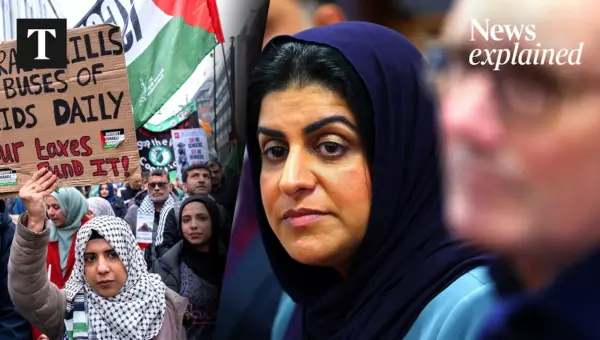
UK Bans Al-Quds March Over Public Disorder Fears
London's annual Al-Quds Day march has been banned by the Home Secretary due to concerns over public disorder and potential extremist propaganda. While the procession is prohibited, static demonstrations will still be permitted. The Islamic Human Rights Commission, organizer of the event, vows to challenge the decision, calling it politically motivated.

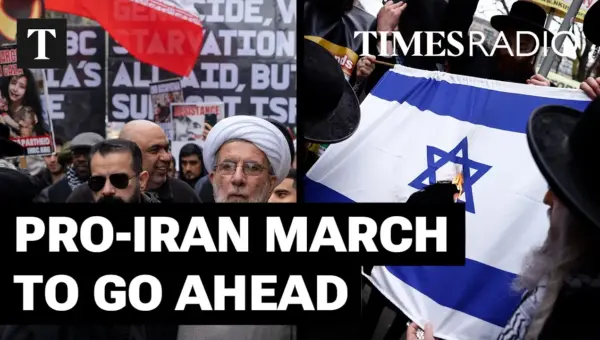
Pro-Iran March Proceeds Despite UK Minister’s Objections
A pro-Iranian Al-Quds march is set to proceed in London this weekend despite strong objections from UK Justice Minister Sarah Sackman, who stated such hate marches have 'no place in British society.' Organizers defend the event as a exercise of freedom of expression, while past controversies including displays of flags from designated groups and calls for Israel's destruction continue to fuel debate.


AI Revolutionizes Textile Recycling, Tackling Fashion Waste Crisis
AI is set to revolutionize textile recycling, offering a solution to the global fashion waste crisis. New technologies use AI-powered cameras to sort fabrics accurately, a crucial step for efficient recycling. This innovation could lead to billions in profits and help revive local manufacturing.