Life Survives Asteroid Impacts, Could Travel Between Planets
New research shows that hardy bacteria can survive asteroid impacts, bolstering the theory that life could travel between planets. This discovery sheds light on the potential for panspermia and the origins of life on Earth.

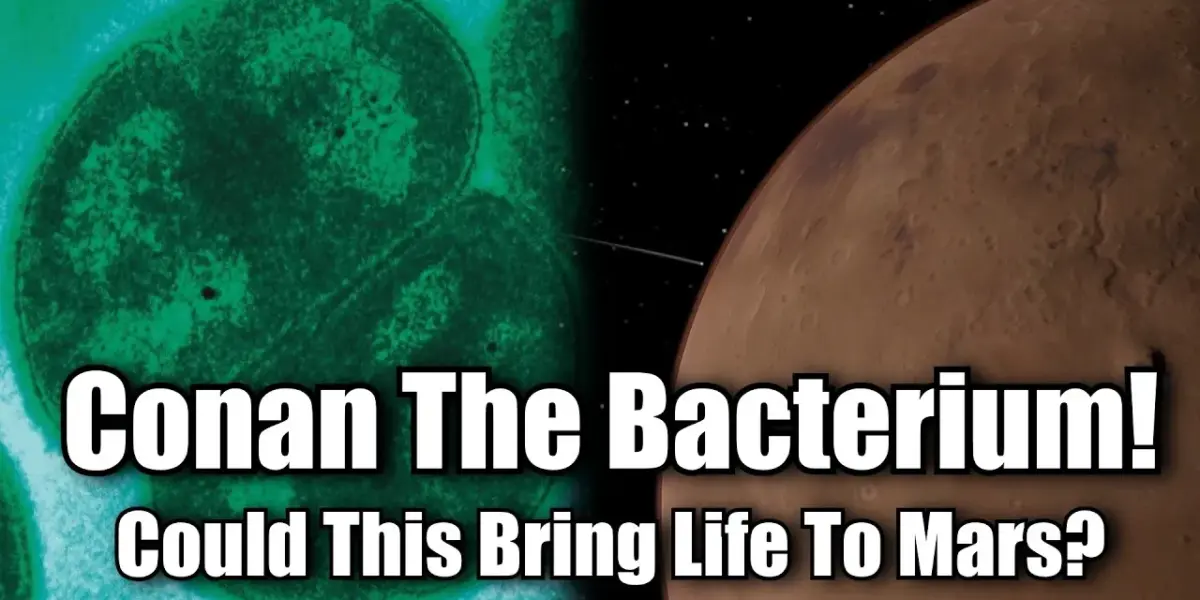
Life’s Cosmic Journey: Asteroid Impacts May Seed Planets
In a discovery that significantly bolsters the possibility of life beyond Earth, scientists have demonstrated that a remarkably resilient bacterium can survive the extreme conditions of an asteroid impact, suggesting that life could potentially travel between planets. This groundbreaking research, focusing on a microbe nicknamed “Conan the Bacterium,” provides compelling evidence for the long-theorized process of panspermia – the transfer of life between celestial bodies.
The Shocking Truth: Microbes and Meteorites
For decades, the idea that life might exist elsewhere in the cosmos has captivated scientists and the public alike. While direct evidence remains elusive, the discovery of meteorites on Earth believed to have originated from Mars has fueled speculation. These Martian meteorites, identified by their unique gas bubbles with isotopic ratios matching Mars’ atmosphere, have even contained microscopic structures that, while debated, hinted at past biological activity. The critical question has always been: could life hitch a ride on these rocky interplanetary travelers?
The prevailing theory for how rocks escape a planet’s gravity to become meteorites is through the immense force of asteroid impacts. Our solar system is a dynamic place, constantly bombarded by asteroids. While the Chicxulub impact 65 million years ago, which wiped out the dinosaurs, is famous, countless other impacts have shaped our planet, leaving behind craters hundreds of miles wide and layers of spherules – tiny glass beads formed from vaporized rock.
When an impact event occurs, the ejected material must go somewhere. Larger impacts throw more debris into space at higher velocities, increasing the chance of it reaching escape velocity and embarking on an interstellar journey. The crucial question then becomes: could any life forms caught in the vicinity of such an impact survive the cataclysmic forces involved?
The Brutal Reality of Impact Pressures
Impact events generate immense shock waves capable of altering the very structure of minerals. For delicate biological organisms, these pressures are unimaginably destructive. Prior experiments using common bacteria like E. coli and Bacillus subtilis (known for its tough endospores) found survival rates to be vanishingly small – on the order of 1 in 10,000 – even at pressures around 20,000 atmospheres (2 gigapascals). These pressures are significant, but the most energetic ejecta, which are most likely to achieve escape velocity, experience even greater forces.
Enter ‘Conan the Bacterium’: An Extreemophile’s Resilience
This is where the recent experiment shifts focus to Deinococcus radiodurans, an extremophile bacterium discovered in the 1960s and nicknamed “Conan the Bacterium” for its incredible hardiness. This microbe is renowned for its ability to withstand radiation levels that would be lethal to virtually any other known organism. Its resilience stems from multiple copies of its DNA, protected within its cells, and exceptionally robust DNA repair mechanisms that can piece together shattered genetic material.
Deinococcus radiodurans is not only resistant to radiation but also to desiccation, freezing, and extreme temperatures. It has even been flown on the exterior of the International Space Station for extended periods, surviving the harsh vacuum and radiation of space, only to be revived upon return to Earth. This remarkable ability to survive and repair damage makes it a prime candidate for surviving interplanetary journeys.
The Experiment: Slapping Microbes with Science
The experiment involved sandwiching samples of Deinococcus radiodurans between metal plates and firing a projectile at them using a gas gun. This allowed researchers to precisely measure the projectile’s speed and, consequently, the magnitude of the pressure pulse experienced by the bacteria. Following each impact, the surviving cells were analyzed to determine not only their survival rate but also their cellular activity in response to the damage.
The results were astonishing. While previous experiments showed minimal survival for common bacteria, Deinococcus radiodurans exhibited near 100% survival rates at pressures up to 2.4 gigapascals (approximately 24,000 atmospheres). Even at the most extreme pressures tested, around 2.4 gigapascals, the survival rate remained a substantial 40%. This is a dramatic increase compared to the less than 1% survival rate seen in other bacteria at similar pressures.
Rethinking Interplanetary Travel
This finding has profound implications. It suggests that a significantly larger proportion of material ejected during an impact event could be accelerated to escape velocity while still harboring viable life. The dynamics of an impact involve shock waves propagating outwards, liquefying and vaporizing surface material, and propelling it into space. The further a fragment is from the impact’s epicenter, the lower the pressure but also the lower the acceleration. The challenge is finding the sweet spot: material accelerated fast enough to escape, yet subjected to pressures survivable by life.
The research indicates that larger impact craters are key. While the 100-mile-wide Chicxulub crater might have been too small for significant life transfer, geological evidence points to much larger impacts in Earth’s early history, some potentially 600 km across. These colossal events, caused by planetesimal-sized impactors, could have ejected vast quantities of material, potentially carrying life between worlds.
Panspermia: A Two-Way Street?
The concept of panspermia suggests that life could travel from Earth to Mars, or vice versa. While Earth’s early history, with its numerous large impact craters, could have seeded Mars, the evidence suggests the opposite direction is far more likely.
- Mars’ Lower Escape Velocity: Being smaller than Earth, Mars requires less energetic impacts to eject material into space.
- Increased Impact Frequency: Mars’ proximity to the asteroid belt means it has experienced more impacts throughout its history.
- Early Habitability: Mars cooled faster than Earth, potentially developing liquid water and becoming habitable millions of years before Earth was ready to support life.
These factors combined suggest that life may have originated on Mars and then been transferred to Earth via meteorites billions of years ago. This would elegantly solve the mystery of life’s origin on Earth without negating the fundamental question of how life arises from non-living matter.
Implications for Future Exploration and Astrobiology
This research has direct implications for current and future space exploration. When returning samples from Mars or other celestial bodies, the risk of biological contamination – both forward (Earth to sample) and backward (sample to Earth) – must be carefully managed. Understanding that Martian rocks, potentially ejected by impacts, could harbor viable microbial life is crucial for planetary protection protocols.
Furthermore, samples collected from Martian moons like Phobos and Deimos, or even from subsurface ice deposits, could potentially contain evidence of past or present Martian life. This research provides a compelling scientific framework for investigating these possibilities and could lead to the first definitive discovery of extraterrestrial life within our solar system.
The journey of life through the cosmos, once the realm of science fiction, is increasingly becoming a subject of rigorous scientific inquiry. The resilience of microbes like Deinococcus radiodurans opens up exciting new avenues for understanding our place in the universe and the potential for life to emerge and spread across the vastness of space.
Source: Sending Life Between Earth And Mars Using Asteroids! (YouTube)

Related Articles

NASA Pivots: Mars Nuclear Probe, Moon Base Ahead
NASA is pivoting its exploration strategy, prioritizing a nuclear-powered Mars probe and accelerating plans for a moon base. The International Space Station's future is uncertain, with a shift towards commercial platforms. Meanwhile, new telescope data reveals overmassive black holes in dwarf galaxies and captures stunning images of Saturn and the Crab Nebula.


US Military Pursues Secret Tech, Lunar Base Plans Emerge
Reports indicate the US military and defense contractors are exploring advanced technologies, possibly reverse-engineering unknown craft. Concurrently, NASA plans a lunar base, while millions of UAP-related files are allegedly deleted, raising transparency concerns. These developments could reshape global power dynamics.


Dark Matter Defies Gravity, Forming Fuzzy Clouds Instead of Stars
Dark matter, which outweighs all visible matter, surprisingly does not collapse under gravity to form stars or black holes. Instead, it forms vast, diffuse clouds around galaxies, baffling scientists with its unique behavior. Understanding this cosmic enigma is key to comprehending the universe's structure and evolution.