Lib Dems’ ‘Unaffordable’ Plan to Ditch US Nuclear Reliance
Liberal Democrats are pushing for an independent UK nuclear missile capability, severing ties with the US. However, the proposal faces strong opposition from Labour and Conservatives, who label it "utterly unaffordable" and "bonkers" due to immense financial and practical challenges.

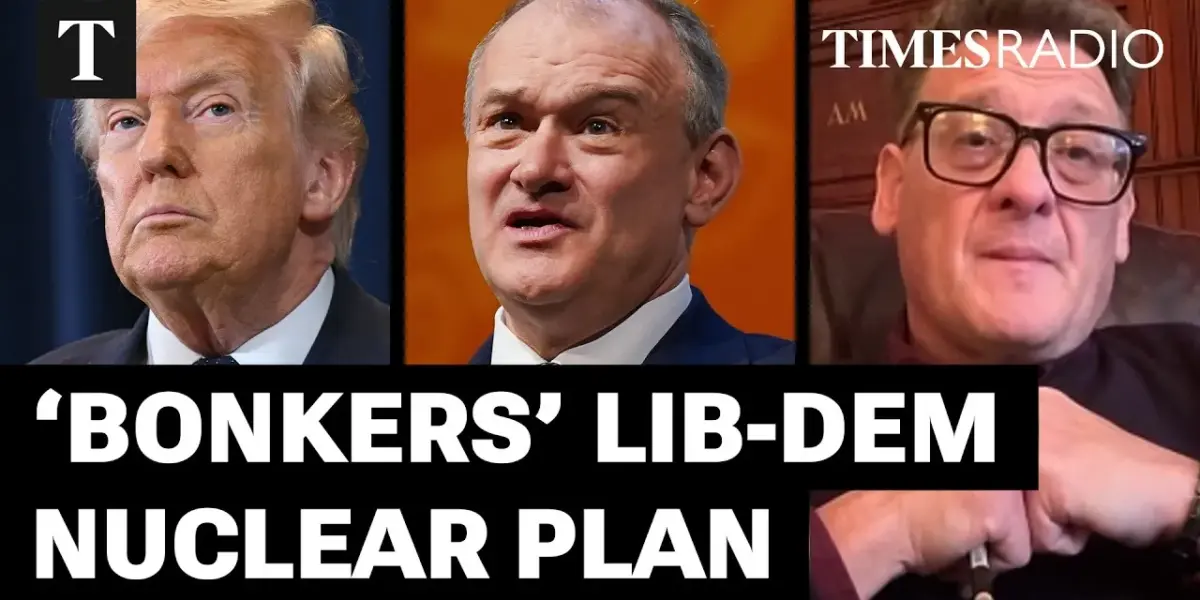
Lib Dems Propose Independent Nuclear Deterrent, Face Affordability Criticism
Liberal Democrat leader Ed Davey has proposed a significant shift in the UK’s defense strategy, advocating for an independent sovereign nuclear missile capability, separate from reliance on the United States. The proposal, outlined at the party’s spring conference in York, has drawn sharp criticism from both the Labour and Conservative parties, who deem the plan “utterly unaffordable” and “bonkers.” The debate centers on the substantial financial and logistical challenges of severing ties with the US for nuclear missile leasing and maintenance, particularly in the current geopolitical climate.
The Case for Sovereign Capability
Sarah Olie of the Liberal Democrats explained the rationale behind Ed Davey’s proposal, stating, “Ed was talking about this morning on uh on the television and also in his speech to our spring conference at York uh this afternoon, a Liberal Democrat spring conference in York uh was about the need uh the now uh sort of urgent need for us to develop our own uh sovereign nuclear missile capability.” Olie emphasized that the current Trident missiles are leased from and maintained by the US. The recent political climate, including statements from Donald Trump, has highlighted for the Liberal Democrats the need for the UK to be in complete control of its nuclear capabilities, reducing dependence on the US, especially given the unpredictability of future American leadership.
“The US will always be our most important ally, but it’s very much an an alliance between the people the people of the UK and the people of the US and the trading links and the historic links and everything else. But it is about ensuring that uh we are not dependent on the US because we don’t know what’s going to happen after Trump. It could be one of his his MAGA team you know pick up the mantle. So, you know, and we can’t rely on these individual presidents,” Olie elaborated.
Economic and Practical Hurdles
The Liberal Democrats acknowledge the significant cost associated with developing an independent nuclear capability. Olie estimated that replicating the German effort in the 1970s would cost approximately 20 billion pounds in today’s money. She suggested that funding could be generated through the issuance of defense bonds, a proposal also linked to increasing overall defense spending to 3% of GDP.
However, this projection was met with skepticism. Karl Turner of the Labour Party dismissed the idea as “bonkers” and “utterly unaffordable.” He argued, “Of course, we’ve got to continue a lease arrangement and we’ve got to continue arrangement where they’re maintained by the US. It would be utterly unaffordable to suggest anything else.” Turner, while not an economist, believed that the Treasury would concur with his assessment, suggesting that the focus should remain on existing arrangements with the US rather than pursuing a costly independent path.
Sir Christopher Choke, representing the Conservative Party, echoed these sentiments, calling the Liberal Democrat plan “completely absurd.” While supportive of increasing defense expenditure to 3% of GDP, he questioned prioritizing an independent nuclear deterrent over other pressing needs, such as enhancing the Royal Navy and increasing armed forces personnel. “I’m all in favor of increasing um our defense expenditure to 3% of GDP, but I wouldn’t choose to uh have trying to get an independent deterrent, nuclear deterrent as as part of that expenditure. I think there are much more important things to do,” he stated.
Political Motivations and Broader Defense Debate
Beyond the financial implications, the proposal has also been framed as a political maneuver. Sam Listister from the Express suggested that the Liberal Democrats might be using the policy to differentiate themselves in a crowded political landscape, particularly as they face challenges in cutting through the daily news cycle and potential leadership questions.
“I wonder if this is perhaps um this is a political thing, isn’t it? This is about the Lib Dems struggling to cut through uh dayto-day in terms of getting their message out there and they’re trying to uh create some kind of policy that sets them apart from from the rest of the crowd,” Listister commented. He also noted that the issue might be strategically timed with the Liberal Democrats’ spring conference and aimed at attracting younger, potentially anti-Trump voters, without the immediate pressure of having to implement such a policy given the timeline of future elections.
Sarah Olie, however, defended the proposal as a reflection of the party’s core values and a genuine response to the perceived unreliability of the US under certain administrations. “Every Lib Dem is anti-Trump and we we not only do we dislike Trump, we dislike the impact that he’s having on our politics here in the UK, particularly the way he’s influencing the Reform Party and Nigel Farage. We think that’s a really really negative impact and we want to fight really strongly uh against it,” she stated, adding that the party believes it is a voice for a “silent majority” concerned about national security and standing up to figures like Donald Trump.
Interdependence and Geopolitical Realities
The discussion also touched upon the nature of the UK-US relationship. While the Liberal Democrats emphasize the need for greater independence, others, including Karl Turner, stressed the importance of the existing lease arrangement and the practicalities of the “special relationship.” Messages from viewers highlighted the transactional nature of the alliance, with one viewer noting, “Realistically, it’s a very transactional relationship with us receiving the benefits of a big brother with real muscle, including intelligence and a nuclear umbrella.”
Sir Christopher Choke reinforced the view that distancing oneself from the US, particularly when Donald Trump is a potential future leader, is unwise. He argued, “He is the the leader of the most powerful member of the Western Alliance and it’s ridiculous for us to try and distance ourselves from him. We should be uh supporting him and recognizing that we may not agree with everything about what he what he does, but that that is our greatest ally and that NATO is the bedrock of our national defense.”
Future Outlook
The debate over the UK’s nuclear deterrent and its relationship with the United States is set to continue. While the Liberal Democrats champion a path toward greater sovereign capability, the significant financial and political hurdles, coupled with unified opposition from Labour and Conservatives, suggest that such a radical shift is unlikely in the immediate future. The core issue of defense spending and the UK’s role within international alliances remains a critical point of discussion as the nation navigates an increasingly complex global security landscape.
Source: Lib Dem Plan For Independent British Nuclear Deterrent Is ‘Utterly Unaffordable’ | Karl Turner (YouTube)

Related Articles
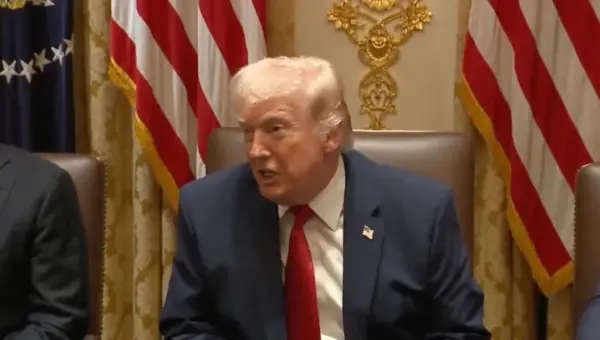
Iran Begs US for Deal After Military Strike, Trump Claims
President Trump claims Iran is 'begging' for a deal after extensive US military strikes, which have reportedly destroyed much of Iran's naval power. The US has presented a peace plan, which Iran has rejected, while also warning of further actions if no agreement is reached.

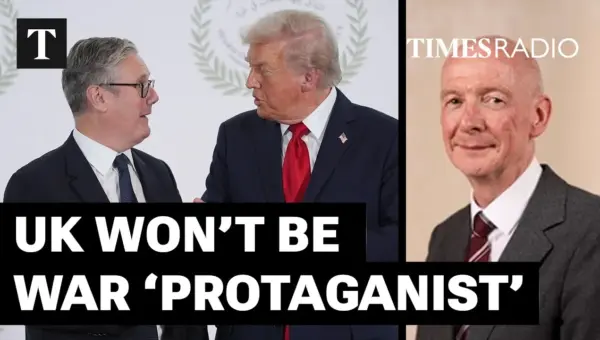
UK Defends Independent Foreign Policy Amidst US Pressure
The UK government has signaled its intention to maintain an independent foreign policy, stating it will not automatically support every US intervention. This comes as a major £1 billion youth jobs initiative is launched to combat rising unemployment among young people.
UK Leader Urges King to Cancel Trump Visit Amid War Outrage
U.K. Liberal Democrat leader Sir Ed Davey is urging Prime Minister Rishi Sunak to advise King Charles III to cancel President Donald Trump's upcoming state visit. Davey cited Trump's "illegal war" in Iran, its economic impact, and potential distractions from the Epstein scandal as reasons for the cancellation. The opposition leader also expressed concerns about the damage to the "special relationship" between the U.S. and the U.K.