Leavitt’s Document Defense Crumbles Under Scrutiny
Karoline Leavitt's defense of Donald Trump's handling of classified documents faced sharp criticism after she dismissed a key memo as a "political stunt." The memo reportedly suggests a business motive for Trump taking documents, a detail crucial for trial but not indictment. Leavitt's response revealed a misunderstanding of legal processes and was framed as a partisan attack.

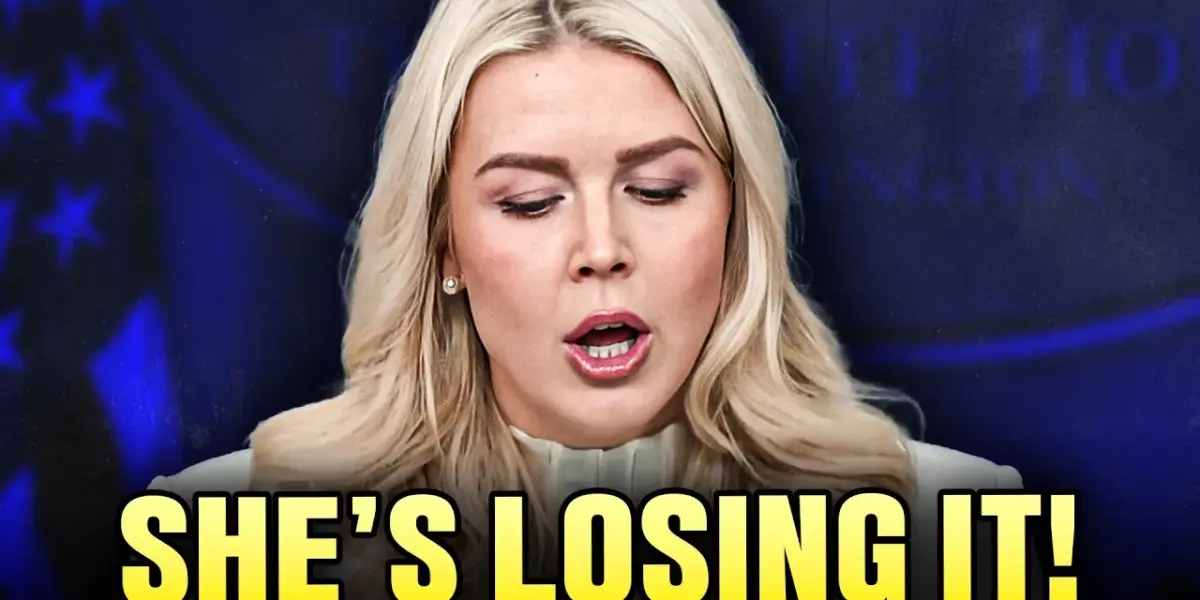
Leavitt’s Document Defense Crumbles Under Scrutiny
A recent revelation about a memo concerning Donald Trump’s handling of classified documents has put Karoline Leavitt, a spokesperson for Trump, on the defensive. The memo, drafted by former special prosecutor Jack Smith during the investigation into Trump, reportedly outlines a possible business motive for why Trump took the documents. This detail suggests that the documents might have been taken not just for personal reasons, but for potential business advantages. The existence of this memo was revealed by Democratic Representative Jamie Raskin.
Leavitt’s Heated Response
When asked about the memo days after its existence became public, Leavitt responded with strong criticism. She dismissed the memo as a “cheap political stunt” and questioned Representative Raskin’s credibility. Leavitt stated that the memo contained “untrue and salacious claims” that were “unverified.” She further argued that because the information was unverified, it was not included in the actual indictment against Trump, and that Jack Smith has been involved in “lawfare” and “witch hunts” against the former president.
Debunking the ‘Motive’ Argument
The analysis of Leavitt’s statement points out a misunderstanding of legal procedures. While motive is not typically included in an indictment, it is crucial for proving guilt during a trial. The memo’s focus on motive, therefore, is relevant for the prosecution’s case as they move towards a trial phase. The argument presented is that Leavitt seems to misunderstand this fundamental aspect of the legal process, suggesting her defense is based on flawed reasoning. This has led to sharp criticism of her understanding of legal proceedings.
Allegations of Political Motivation
Leavitt also accused the Biden administration and the Department of Justice of using this “lawfare campaign” to target Trump ahead of the 2024 election. She suggested that Representative Raskin’s office attempted to get the story published by various news outlets, but some refused due to its unverified nature. Leavitt singled out MSNBC for reporting on the story, labeling the network as “left-wing propaganda.” This highlights a broader narrative often employed in political defense, framing legal challenges as politically motivated attacks rather than legitimate investigations.
Critique of Leavitt’s Perspective
The commentary accompanying Leavitt’s remarks criticizes her perspective, suggesting her strong reaction stems from her close association with Trump. It’s argued that her intense focus on defending Trump leads her to believe that others share her fervent dedication. The analysis suggests that Leavitt’s emotional response, or “meltdown,” as described, is a notable event. The speaker expresses appreciation for such moments, framing them as entertaining, while also underscoring that public interest in such political drama might be overstated.
Why This Matters
This situation highlights the ongoing political and legal battles surrounding Donald Trump. The debate over the classified documents and the potential motives behind their handling is a significant aspect of the legal challenges he faces. Leavitt’s response, and the subsequent critique of it, reveals the deep divisions in how these events are perceived. It also sheds light on the strategies used in political communication, where legal proceedings are often framed through a partisan lens. Understanding these dynamics is crucial for grasping the current political climate and the challenges to the justice system.
Historical Context and Background
The investigation into Trump’s handling of classified documents follows a long history of debates about the preservation of sensitive government information and the laws governing it, such as the Espionage Act. Previous administrations have also faced scrutiny over document security, though the scale and nature of the allegations against Trump have been particularly prominent. The concept of “lawfare,” where legal tactics are used for political ends, is not new but has become a more prominent term in recent years, particularly in highly polarized political environments. Special prosecutors have often been appointed in high-profile cases, and their methods can become a subject of intense public and political debate.
Implications, Trends, and Future Outlook
The legal proceedings against Donald Trump, including the classified documents case, are likely to continue shaping the political landscape for the foreseeable future. The way information is presented and debated in the public sphere, as seen in Leavitt’s response, influences public perception and can impact electoral outcomes. We are seeing a trend where legal defenses are closely intertwined with political messaging, often emphasizing perceived injustices or political persecution. The future outlook suggests that these cases will remain central to political discourse, with legal arguments frequently translated into political talking points. The effectiveness of such strategies, and the public’s ability to discern factual legal matters from political rhetoric, will be critical.
Source: Karoline Leavitt Caught OFF GUARD, Crashes and Burns (YouTube)

Related Articles
Trump’s Iran War Gamble: Broken Promises, Rising Costs
Reports indicate the Pentagon is preparing for ground operations in Iran, signaling a potential escalation of conflict. This move is criticized as a betrayal of campaign promises to avoid new wars and comes with rising gas prices and significant costs to American taxpayers. The analysis questions leadership priorities, contrasting campaign rhetoric with policy actions and highlighting the economic and human toll of prolonged military engagement.
Trump Weaponizes Pain for Voter Suppression, Critics Claim
A heated exchange reveals accusations that Donald Trump intentionally prolonged a government shutdown to weaponize public pain. Critics claim this strategy aimed to force the passage of a voter suppression bill, rejecting multiple Democratic proposals to fund the TSA. The debate also touched on historical funding decisions for agencies like ICE.
Staff Shields Trump’s Mind from Reality, Experts Warn
A former aide warns that Donald Trump's mental decline is not new, but the system around him can no longer cope. This lack of checks and balances is more dangerous than any cognitive issues, creating significant risks for policy and national security.