Leavitt Demands Propaganda, Ignites Press Freedom Debate
Karoline Leavitt's call for the press to focus on military "success" rather than casualties has sparked a debate on propaganda and press freedom. This incident revisits historical tensions between government narratives and journalistic independence, with significant implications for public discourse.

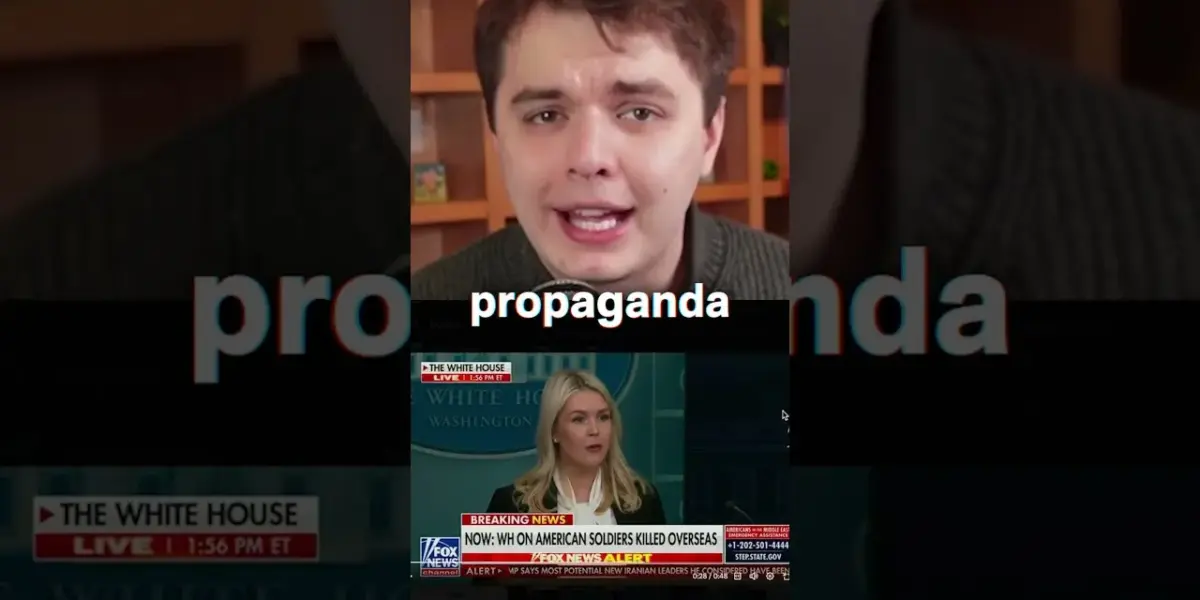
Leavitt Demands Propaganda, Ignites Press Freedom Debate
The intersection of government communication and journalistic integrity was sharply brought into focus during a recent exchange, where conservative commentator Karoline Leavitt accused the press of failing to adequately report on the successes of U.S. military operations and, by extension, the failures of the current administration. Leavitt’s remarks, made in response to a question about the coverage of U.S. service members’ deaths, have ignited a broader debate about the role of the media in wartime and its relationship with those in power.
The Core of the Controversy
The exchange, as captured in a brief video transcript, centers on a fundamental disagreement about how the press should cover U.S. military actions and their human cost. Leavitt appears to be criticizing the media’s focus on the deaths of six service members, suggesting that this coverage is detrimental to the administration and, by implication, to national security. She posits that the press should instead be highlighting the “success” of operations like “Operation Epic Fury” and the damage being inflicted upon the “rogue Iranian regime.”
In Leavitt’s view, the press’s emphasis on casualties is not merely a matter of reporting facts but a deliberate attempt to undermine the president. She states, “The press does only want to make the president look bad. That’s a that’s a fact.” This perspective frames the media’s role as inherently adversarial and, in this instance, unsupportive of U.S. military efforts and the sacrifices made by service members.
Government’s Stance and Media’s Role
The counterargument, as presented by an unnamed official in the transcript, refutes Leavitt’s characterization. The official asserts that the administration’s position is not that the press should avoid covering service members’ deaths, but rather that the press should “accurately report on the success of Operation Epic Fury and the damage it is doing to the rogue Iranian regime.” This framing suggests an expectation for a more balanced or, as Leavitt might see it, a more positive portrayal of military endeavors.
The official further emphasizes the gravity of the threat posed by the Iranian regime, stating, “The Iranian regime had their choice. Uh they would kill every single person in this room.” This highlights the administration’s perspective that the military actions, despite their costs, are essential for national security and that the press should acknowledge the context of these sacrifices in the face of significant threats. The official’s plea for gratitude towards the armed forces underscores the administration’s desire for public and media support.
Historical Context: The Press and Wartime Reporting
The tension between government messaging and independent journalism is a recurring theme throughout history, particularly during times of conflict. From the “yellow journalism” of the Spanish-American War, which sensationalized events to drum up public support for intervention, to the Vietnam War, where unfiltered media coverage brought the brutality of conflict into American living rooms, the press has often been both a tool for and a critic of government policy.
During World War II, for instance, a significant degree of media self-censorship and cooperation with the government was common, driven by a shared sense of national purpose. However, as the transcript suggests, the dynamics have evolved. Leavitt’s demand for coverage that emphasizes “success” and minimizes “negative” aspects like casualties echoes historical attempts by governments to control the narrative during wartime. Conversely, the role of a free press is often seen as holding power accountable, even when that accountability might be uncomfortable for those in office.
Why This Matters
This debate is crucial because it touches upon the foundational principles of a democratic society: freedom of the press and the public’s right to know. When a commentator, particularly one with a platform, calls for the press to focus on specific aspects of a story – particularly those that cast the government in a positive light – it raises concerns about propaganda. The line between reporting the facts and shaping a narrative is often fine, and when that line is intentionally blurred or manipulated, the public’s ability to form informed opinions is compromised.
Furthermore, the way military actions and their costs are reported has a profound impact on public opinion, support for ongoing conflicts, and the perception of sacrifices made by service members. If the press is perceived as either overly critical or overly deferential to the government, its credibility erodes. A healthy democracy relies on an independent press that can critically examine government actions, report on both successes and failures, and provide context for complex events, including the human toll of conflict.
Implications and Future Outlook
Leavitt’s remarks, while perhaps representing a specific viewpoint, highlight a broader trend of political actors attempting to directly influence or discredit media coverage they deem unfavorable. In the digital age, where information (and misinformation) spreads rapidly, the challenge for both the press and the public is to discern credible reporting from politically motivated narratives.
The future outlook suggests a continued struggle for journalistic independence. As governments and political factions become more adept at utilizing social media and direct communication channels, they can bypass traditional media gatekeepers and attempt to shape public discourse more directly. This places a greater onus on journalists to maintain their integrity, provide thorough and unbiased reporting, and educate the public about the importance of a free and vigilant press. The exchange serves as a stark reminder that the fight for objective reporting in the face of political pressure is an ongoing one, essential for the health of democracy and the informed participation of its citizens.
Source: Karoline Leavitt Calls For Propaganda Coverage #politics #fyp #new (YouTube)

Related Articles
Fox News Fights Itself: Trump’s War Exposes Deep Divides
Fox News appears to be grappling with internal dissent and a fractured narrative following Donald Trump's recent foreign policy actions. Analysis of on-air segments reveals conflicting viewpoints on the necessity and impact of military engagement, alongside indications of declining public support for the former president.
Trump’s Gaffes Expose Troubling Cognitive Decline
A Medal of Honor ceremony became a stage for former President Donald Trump's apparent cognitive decline, marked by baffling verbal gaffes and disjointed rambling. The incident raises concerns about leadership fitness and media scrutiny.
Meiselas Navigates Legal Labyrinth Amidst Shifting Political Tides
Ben Meiselas of MeidasTouch offers insights into breaking news, highlighting the crucial intersection of law, media, and public discourse. His analysis underscores the growing importance of legal commentators in shaping public understanding of complex political and legal events.