Leavitt Defends Trump’s Unsubstantiated Iran Missile Claim
A spokesperson defends President Trump's unsubstantiated claim about Iran possessing Tomahawk missiles, highlighting tensions between the administration and the media. This incident raises questions about intelligence dissemination and presidential rhetoric.


Leavitt Defends Trump’s Unsubstantiated Iran Missile Claim
In a recent exchange, a spokesperson attempted to navigate the controversial statement made by President Trump regarding Iran’s alleged possession of Tomahawk missiles, a claim that raises significant questions about intelligence dissemination and presidential rhetoric. The core of the discussion revolved around why President Trump asserted that Iran might possess these advanced weapons, a capability seemingly exclusive to the United States and a handful of its closest allies.
Navigating a Contentious Claim
The spokesperson, when pressed on the President’s statement, emphasized that President Trump would ultimately accept the findings of the Department of War’s investigation into the matter. This stance, while seemingly adhering to official processes, does little to address the immediate concern: the President’s public assertion of a claim that appears to lack immediate, verifiable backing. The spokesperson acknowledged the widespread speculation in the media regarding responsibility for certain events, but firmly stated that the administration would not preempt the official investigation’s conclusions.
Furthermore, the spokesperson defended the President’s right to voice his opinions to the American public, even as the investigation unfolds. This defense, however, walks a fine line. While presidents are indeed entitled to express their views, the dissemination of potentially sensitive or unverified intelligence claims can have far-reaching implications, both domestically and internationally. The assertion about Iran’s missile capabilities, if unfounded, could escalate tensions or create a false narrative that influences public perception and policy decisions.
The Role of Media and Unverified Information
A notable aspect of the spokesperson’s response was a pointed reference to the New York Times, which had published articles on the subject. The spokesperson suggested that the administration would not be “harassed” by media outlets pushing for a swift conclusion to the investigation, particularly when those outlets were making claims not yet corroborated by the Department of War. This indicates a potential friction between the executive branch and the press regarding the pace and content of reporting on sensitive national security issues.
The administration’s apparent frustration with media speculation highlights a broader challenge in the modern information landscape. In an era of rapid news cycles and extensive social media commentary, distinguishing between verified facts and unconfirmed reports can be difficult. The spokesperson’s statement implies a desire to control the narrative and ensure that official findings, rather than media conjecture, shape public understanding. However, this can also be perceived as an attempt to sideline critical journalistic inquiry.
Historical Context of Presidential Claims and Intelligence
Throughout history, presidents have made public statements about national security that have later been subject to scrutiny. The dissemination of intelligence, whether accurate or not, has often played a role in shaping foreign policy and public opinion. The credibility of presidential claims is paramount, as misstatements or fabrications can erode trust and lead to significant diplomatic or military miscalculations. The Tomahawk missile claim, if indeed unsubstantiated, echoes past instances where public pronouncements outpaced or contradicted intelligence assessments.
The Tomahawk missile itself is a sophisticated cruise missile, primarily operated by the U.S. Navy and Air Force, with some sales to allied nations like the United Kingdom, Australia, and Japan. The assertion that Iran, a nation under significant international sanctions and with a known focus on developing its indigenous missile capabilities, would possess such advanced, U.S.-origin technology without a verifiable intelligence trail is a bold one.
Why This Matters
This situation underscores the critical importance of transparency, accuracy, and responsible communication from the highest levels of government, especially concerning matters of national security. When a president makes a public claim about a foreign nation’s military capabilities, particularly one that seems improbable based on available information, it warrants careful examination. The potential consequences of disseminating unverified intelligence can be severe, ranging from damaged international relations to escalating regional tensions, and can also undermine public trust in governmental information.
Implications, Trends, and Future Outlook
The incident raises questions about the current administration’s approach to intelligence sharing and public messaging. Will future claims be more rigorously vetted before public announcement? The trend towards a more immediate and often unverified flow of information through various channels means that the pressure on political figures to respond quickly, and sometimes speculatively, is immense. This case exemplifies the delicate balance required between informing the public, respecting ongoing investigations, and maintaining diplomatic stability.
The future outlook suggests a continued need for robust journalistic oversight and a public that is discerning about information sources. The administration’s stance, while emphasizing adherence to official investigations, also reveals a potential tension with the media’s role in holding power accountable. Moving forward, clear communication, grounded in verifiable facts, will be essential for navigating complex geopolitical landscapes and maintaining credibility on the global stage.
Source: LEAVITT TRIES to JUSTIFY TRUMP’S IRAN SCHOOL BOMB CLAIM (YouTube)

Related Articles


Iran’s Strait of Hormuz Mine Threat: A Dangerous Escalation
Reports indicate Iran has allegedly mined the Strait of Hormuz, a vital global energy chokepoint. This alarming escalation threatens maritime security and global oil supplies, prompting urgent calls for decisive military response and raising fears of wider conflict.
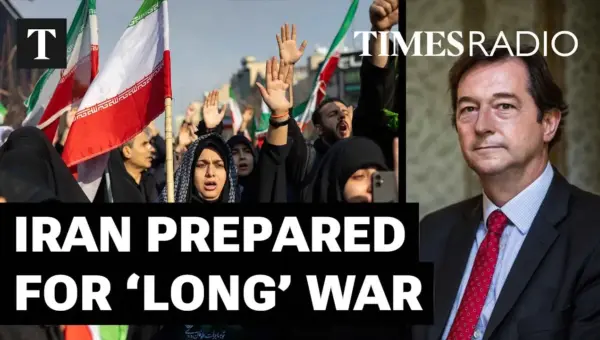
Iran Regime ‘Dug In’ for Long War Amid Shifting US Aims
Iran is preparing for a long-term conflict, digging in its heels despite shifting U.S. objectives and potential calls for de-escalation. Analysts warn of increased regional instability and a potential push for nuclear weapons under the new leadership.

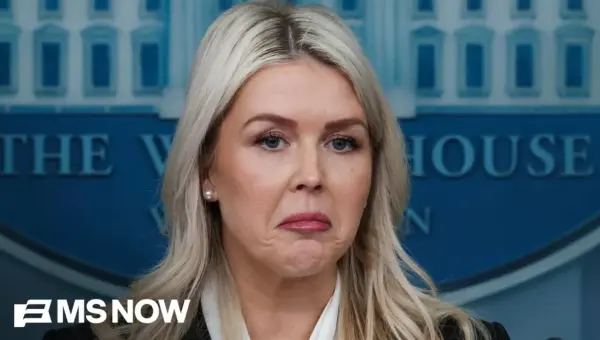
Steele: Iran ‘Objectives’ Unclear Amidst Shifting Intelligence
Michael Steele criticizes the administration's messaging on Iran, calling it "general B.S." and questioning the clarity of objectives amidst shifting intelligence and concerns over Russia-Iran cooperation. The discussion also highlights the potential national security impact of purges within the FBI and DOJ.