Lawmakers Propose ICE Reforms to End DHS Funding Stalemate
Bipartisan lawmakers Tom Suozzi and Brian Fitzpatrick are pushing for reforms to Immigration and Customs Enforcement (ICE) as a way to break the Department of Homeland Security (DHS) funding deadlock. Their proposal aims to standardize ICE practices with other federal law enforcement agencies, including the use of body cameras and improved training.

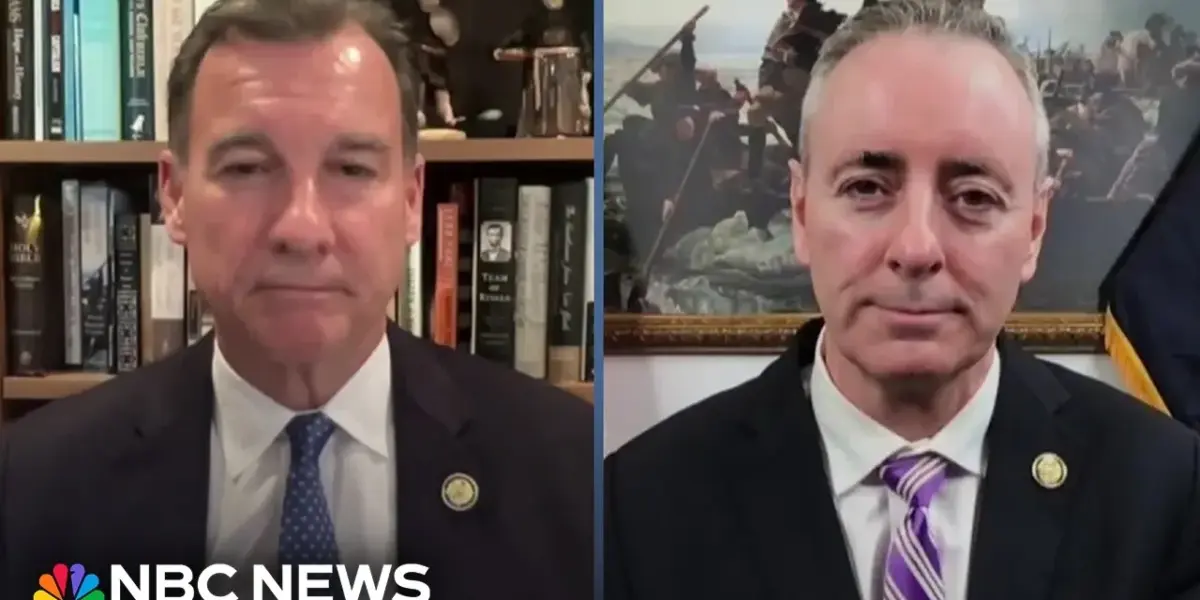
Lawmakers Seek Common Ground on DHS Funding Amidst Gridlock
The Department of Homeland Security (DHS) faces a funding crisis, with House Speaker Mike Johnson indicating no plans to recall members from recess to address the Senate’s proposed bill. This bill aims to fund most of DHS but excludes Immigration and Customs Enforcement (ICE) and Border Patrol. Republican leaders intend to seek separate funding for these agencies through a reconciliation process, requiring only Republican votes. Amidst this stalemate, a bipartisan group of lawmakers is actively working on a proposal to break the deadlock.
Problem Solvers Caucus Offers New Path Forward
The co-chairs of the House Problem Solvers Caucus, Democrat Tom Suozzi of New York and Republican Brian Fitzpatrick of Pennsylvania, have been spearheading efforts to find a bipartisan solution. They both stated they would support the Senate’s funding bill, but emphasized its failure to address necessary reforms for ICE. Their proposal aims to bridge this gap by bringing ICE’s standards in line with other federal law enforcement agencies.
“The bottom line is that we should fund the government and we should do the things that make ICE the same as other federal law enforcement agencies, like the FBI and the DEA and the Alcohol, Tobacco and Firearms Bureau.” – Rep. Tom Suozzi
Key Reforms Proposed for ICE
The proposed reforms focus on several key areas to improve transparency and accountability within ICE. These include implementing body cameras for agents, ensuring agents do not wear masks while on duty unless in exceptional circumstances, and penalizing doxing of officers. The proposal also calls for enhanced cooperation with state and local governments and improved training standards. Currently, ICE agents receive approximately 47 days of training, significantly less than the six months typically required for local police officers and other federal law enforcement agencies.
Building Trust Through Standardized Practices
Representative Fitzpatrick, a former FBI agent, stressed the importance of the “social contract” between law enforcement and the public. He argued that this contract has been strained and needs repair through mutual trust, respect, and cooperation. Standardizing practices like body cameras, training, and independent investigations into use of force are seen as crucial steps.
“Policing is a mutual social contract. And we can’t have barriers like that.” – Rep. Brian Fitzpatrick, on agents wearing masks.
Fitzpatrick highlighted his personal experience as an FBI agent, noting he never wore a mask during hundreds of warrant executions. He believes that removing masks as a baseline rule, with exceptions only for specific high-risk operations like those involving cartels, would help dismantle barriers between law enforcement and the communities they serve.
Addressing Public Frustration and Political Division
Both Suozzi and Fitzpatrick acknowledged the public’s frustration with Washington’s inability to address pressing issues. They believe their proposal offers a practical path to fully fund the government while implementing much-needed reforms. Suozzi pointed out that the current political climate, fueled by partisan extremism and social media, is hindering progress. He urged lawmakers to rise above these systemic problems and focus on serving the people.
A Call for Consensus and Citizen Engagement
The lawmakers are urging their colleagues to join the Problem Solvers Caucus, emphasizing its unique bipartisan approach. They meet weekly to understand each other’s perspectives and build consensus. Fitzpatrick stated that their focus is on representing the people, who are their true bosses, rather than adhering strictly to party lines.
“Governing in a democracy requires building consensus. That’s how it’s defined. And yet we have a lot of people in both chambers from both parties… who are not trying to see the world through the other person’s eyes.” – Rep. Brian Fitzpatrick
Suozzi encouraged citizens to become more involved in the political process, particularly in primary and general elections. He believes that increased public participation is essential for democracy to function effectively and for holding elected officials accountable. He warned that when a large segment of the public disengages, it allows extreme voices to dominate the conversation, leading to the current gridlock.
Looking Ahead
The bipartisan proposal from Suozzi and Fitzpatrick represents a potential breakthrough in the ongoing DHS funding debate. Their focus on both funding essential government functions and implementing critical reforms for ICE could garner broader support. The coming weeks will be crucial in determining whether this common ground can be expanded to overcome partisan divisions and prevent further government shutdowns, ensuring the effective operation of vital agencies like ICE and Border Patrol.
Source: Bipartisan lawmakers work to reform ICE and break the DHS gridlock (YouTube)

Related Articles

Trump Moves to Pay DHS Staff Amid Funding Stalemate
President Trump plans to sign an executive order to pay DHS employees amid a prolonged shutdown. This action comes as the department faces funding challenges and a review of its contracting policies. Expert Andrew Arthur discusses the need for congressional action and the push for greater accountability and efficiency within DHS.


House Delays DHS Funding Vote, Faces Recess
The House of Representatives has delayed a critical vote to fund the Department of Homeland Security, pushing the decision past a two-week congressional recess. The Senate previously passed a funding bill that excludes some immigration enforcement measures, but the House has yet to take it up. This stalemate leaves DHS partially unfunded and highlights deep divisions within the Republican party.


Lawmaker Warns DHS Funding Delay Is “Incredibly Risky”
A GOP lawmaker warns that delays in funding the Department of Homeland Security are "incredibly risky." The House and Senate are locked in a dispute over funding for ICE and CBP, with concerns rising over potential constitutional and operational impacts.