Lamborghini’s New V8 Hybrid: A Blistering Beast with a Soulful Question
Lamborghini's new Temerario replaces the V10 Huracan with a potent V8 hybrid powertrain. While offering mind-bending performance, it raises questions about the loss of its iconic engine note and the brand's evolving identity. Is it the ultimate baby Lambo, or a step too far in the pursuit of speed?

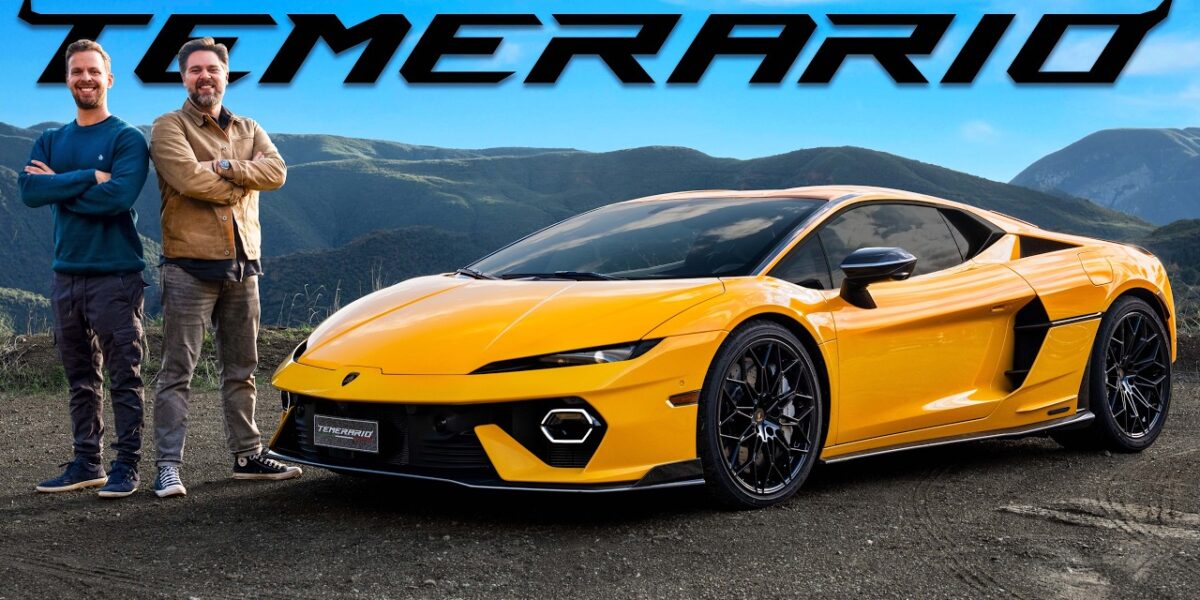
Lamborghini Temerario: The Entry-Level Supercar Evolves, But Loses Its Voice
Lamborghini has unveiled the successor to the beloved Huracan, the Temerario, and it represents a seismic shift for the brand’s entry-level supercar. Gone is the iconic naturally aspirated V10, replaced by a potent twin-turbocharged V8 hybrid powertrain. While the performance figures are nothing short of astonishing, the question remains: has Lamborghini sacrificed the soul of its baby supercar in the pursuit of ultimate speed?
The lineage of the ‘baby Lambo’ is well-established. From the Jalpa to the Gallardo and the Huracan, each has offered a more accessible, albeit still thrilling, Lamborghini experience compared to their V12 brethren. The Countach was a beast, the Jalpa was its gentler sibling. The Diablo stood alone, but the Murcielago welcomed the Gallardo, and the Aventador paved the way for the Huracan. Now, the V12 Revuelto’s smaller sibling, the Temerario, arrives, and it’s a far more complex and powerful machine than its predecessors.
Performance: Unhinged Speed, Unsettling Silence
The heart of the Temerario is a new 4.0-liter twin-turbocharged V8 engine, paired with three electric motors. This potent combination unleashes a staggering 890 horsepower (a slight correction from the transcript’s 97 horsepower, which is clearly a misstatement given the context of supercar performance). Lamborghini claims a 0-60 mph time in the low 2-second range, a figure that feels even more aggressive in practice. The car’s acceleration is described as violent and wild, feeling significantly quicker than any Huracan. The gearbox has been tuned for aggressive, almost brutal shifts, designed to unsettle the car’s balance if upshifted mid-corner. While all-wheel drive is present, the rear wheels bear the brunt of the power, contributing to a slightly unnerving, almost scary driving experience.
The powertrain features one electric motor between the engine and the transmission, and two on the front axle. However, this technological leap comes at a cost: the loss of the V10. For over two decades, the V10 has been the soul of Lamborghini’s V10 offerings, producing a sound that could be described as musical. The Temerario’s V8, while powerful, simply cannot replicate the natural, aspirated howl of its predecessor. Lamborghini’s press materials emphasize the V8’s ability to reach 10,000 RPM, thanks to a flat-plane crankshaft, and they’ve employed intricate exhaust routing to emphasize combustion processes. Yet, as one reviewer noted, the V10’s scream is gone, replaced by a sound that, while having some good elements near the redline, doesn’t quite capture the same emotional resonance. The car is so fast that reaching the upper echelons of the RPM range is a challenge, with first gear alone exceeding 60 mph, a characteristic reminiscent of the Ford GT.
Handling and Dynamics: Sharpness Meets Lightness
Despite its considerable weight, the Temerario doesn’t feel heavy in corners. It’s described as razor-sharp and incredibly agile, with performance that feels almost untouchable. However, this extreme capability comes with caveats. The steering is criticized for being too light and lacking feedback, a step down even from the Huracan’s less-than-stellar steering. The immense power can turn minor road undulations into significant bumps, causing the car to skip over the surface. This makes it difficult to put the power down effectively on imperfect roads, as the car arrives at the next imperfection far too quickly.
The car’s usability on public roads is called into question. While not explicitly a track car, its performance envelope is so high that even a world-class canyon road becomes a challenge to exploit fully. The Temerario exists in a state of compromise, a fact that becomes apparent during everyday driving scenarios, such as a quick trip for tacos.
Interior and Value: A Premium Experience, A Premium Price
The interior has seen significant improvements. While not perfect, it’s a massive step up from previous generations, offering comfortable sport seats and an optional $6,500 sound system that is reportedly quite good. The cabin design makes occupants feel special and cool, fulfilling a key aspect of the Lamborghini ownership experience for many buyers. The sense of being cocooned in a carbon shell is immediate, a clear step up from more conventional sports cars like an AMG GT or a Porsche 911.
The Algerita package, which adds carbon fiber elements and lightweight doors, shaves off 25 kg for a cost of approximately $78,600 USD (a significant price for the weight saved). However, the fundamental issue, according to some, is that Lamborghini may have overcompensated for the loss of the V10 by making the car too powerful and too fast. This raises questions about its identity as a ‘baby Lambo.’
Pricing for the Temerario starts around $380,000 USD. This places it in a higher bracket than its predecessors, especially when adjusted for inflation. The idea of a ‘baby Lamborghini’ is diluted by this price point, as it’s significantly more expensive than the original Gallardo. Compared to the Corvette ZR1X, which offers 1250 horsepower for a fraction of the price, the Temerario’s value proposition is primarily in its design and brand prestige, rather than outright performance metrics alone.
Verdict: A Brilliant Machine, But Is It a True Lamborghini?
The Lamborghini Temerario is an outrageously quick machine with agility that belies its weight. Its looks are stunning, and the interior matches the premium badge. However, compared to the Huracan, the new powertrain pushes the accessibility and enjoyment of its performance just out of reach on the road. The sound department leaves much to be desired, lacking the emotional connection of the V10. The Temerario, while a technically brilliant supercar, falls just short of greatness, particularly for those who value the traditional Lamborghini V10 soundtrack and a more approachable driving experience.
Direct competitors include the McLaren 750S, which offers a different flavor of twin-turbocharged performance. While the Temerario boasts incredible speed and a distinct visual presence, the loss of the V10 and the heavy German influence (design by Germans, owned by VW Group, German CEO, German lead designer) leads some to question its Italian soul. It’s a car that feels German in its relentless pursuit of performance, potentially at the expense of the emotional connection that has defined Lamborghini for generations.
Ultimately, the Temerario is for the buyer who wants to feel incredibly cool and special, and in that regard, it succeeds. It breaks necks and turns heads, fulfilling the brand’s promise of exoticism and showmanship. Yet, for the purists, the V10’s departure marks the end of an era, leaving a void that even 890 horsepower can’t quite fill.
Target Buyer:
The target buyer is likely someone seeking the ultimate statement of automotive desire and performance, but perhaps with a slightly more refined taste than the V12 Aventador owner. They appreciate cutting-edge technology, head-turning design, and the prestige of the Lamborghini badge. While they may not be track-day enthusiasts, they desire a car that offers exhilarating performance for spirited road driving and a guaranteed presence at any social gathering. They are likely less concerned with the nuanced feedback of a naturally aspirated engine and more focused on the sheer, unadulterated speed and the ‘wow’ factor that the Temerario undeniably delivers.
Source: 2026 Lamborghini Temerario Review + GRAND TOUR ANNOUNCEMENT (YouTube)

Related Articles

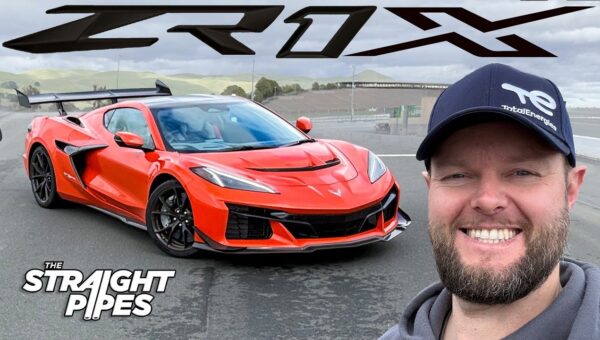
1250HP Corvette ZR1X: America’s New Hypercar King
The 2026 Chevrolet Corvette ZR1X arrives with a mind-bending 1250 horsepower, hybrid powertrain, and hypercar-shattering performance figures. Chief Engineer Josh Holder details the engineering marvels behind America's newest performance icon.


RUF Yellowbird: A Legend Reborn on Track
Experience the raw power and legendary status of the RUF Yellowbird. This 1991 widebody example offers a thrilling twin-turbo, six-speed driving experience, representing a pinnacle of 80s and 90s supercar engineering. A true multi-million dollar icon.

Hypercar Entry: A Tight Squeeze for the Elite
The dream of hypercar ownership encounters a surprisingly mundane hurdle: fitting inside. A recent glimpse into the exclusive world of hypercars reveals that accessing these automotive masterpieces can be a tight squeeze, demanding a certain physical dexterity from potential owners.