Labour’s “Passive Premiership”: Starmer’s Leadership Under Scrutiny
Authors Gabriel Pogrund and Patrick Maguire describe Keir Starmer's government as a "passive premiership," marked by indecisiveness and a lack of clear vision. Drawing on insider accounts, their updated book "In the Black" reveals a leader who struggles to translate diligent study into decisive action, leaving officials waiting for direction.

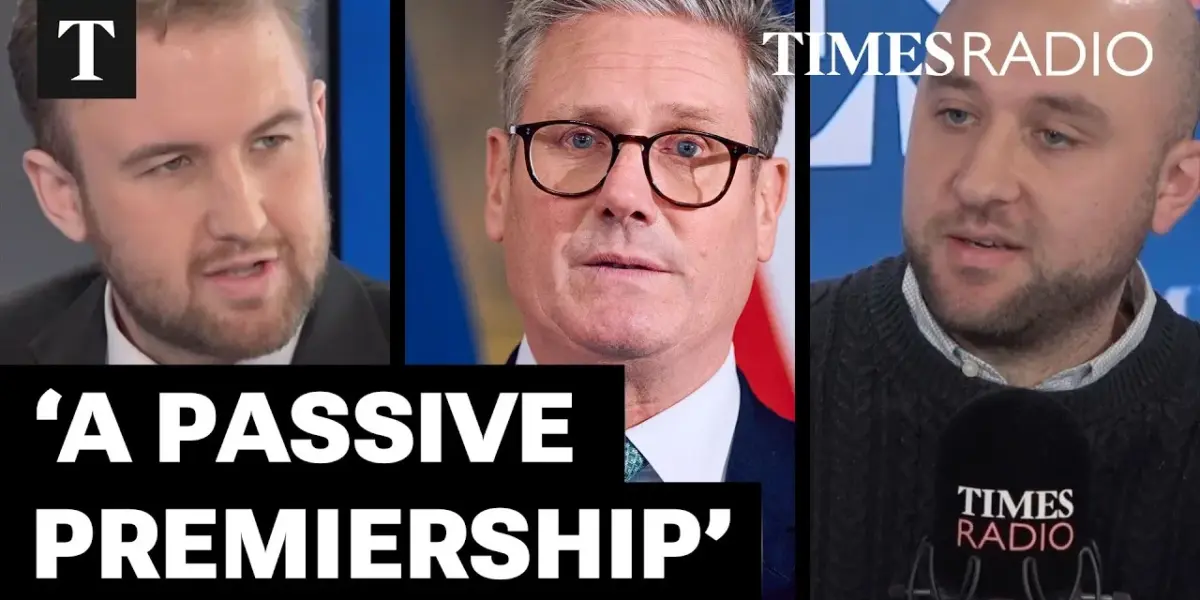
Starmer’s Downing Street Marked by “Passive Premiership,” Authors Claim
LONDON – A new edition of the bestselling book “In the Black,” by Gabriel Pogrund and Patrick Maguire of The Times, sheds light on a perceived lack of decisive action and strategic vision within Keir Starmer’s government, characterizing his premiership as “passive.” The updated section, titled “The Passive Premiership,” draws on extensive interviews with senior officials and insiders to paint a picture of a leader who, despite immense preparation, struggled with making critical decisions and articulating a clear agenda.
The “Deathly Hush” of Downing Street
Pogrund and Maguire describe a striking atmosphere within Downing Street, characterized by a “deathly hush” as Starmer spent hours poring over documents, reminiscent of his time as a barrister. This approach, while indicative of a meticulous nature, often left those around him waiting in vain for instructions or clear direction. “It’s not a premiership where Boris Johnson barrels around the building or you’ve got Gordon Brown sending furious emails at 4:00 a.m.,” Maguire explained, contrasting Starmer’s style with that of his predecessors.
One senior official described Starmer’s routine as “reading time,” a period where he would study papers as if expecting the correct answer to eventually present itself through sheer diligence. This passive approach, while seemingly methodical, often mystified those awaiting his leadership. “The phrase ‘passive premiership’ comes from one of the senior officials who was waiting in vain for instructions,” Pogrund noted. “And you write that one of the definitive features of Starmer’s Downing Street was the kind of deathly hush as Star sat for hours and hours studying papers as if he was still a barrister.”
Scunthorpe Steel Crisis: A Test of Leadership
The authors highlight the April crisis involving the potential closure of the Scunthorpe steel plant as a pivotal moment that exposed Starmer’s perceived indecisiveness. As the business secretary, Jonathan Reynolds, contemplated invoking emergency legislation to prevent the plant’s shutdown, Starmer reportedly appeared overwhelmed, repeatedly asking, “What’s the correct answer?”
“It was one of those moments where actually, Prime Minister, that’s on you,” Maguire recounted, emphasizing the expectation that the ultimate decision rests with the leader. The authors suggest this moment, along with others, revealed a struggle to translate diligent study into decisive political action.
Morgan McSweeney’s Departure and the “Category Error”
The book posits that the departure of Morgan McSweeney, a key architect of Starmer’s rise and a figure often described as the “Thomas Cromwell” of the Labour party, was an inevitability. Pogrund and Maguire suggest that a “category error” was made by assuming McSweeney could simultaneously overhaul the party’s internal structures and govern effectively.
“Perhaps it was a category error for the Labour party… to assume that as well as transforming the party, engaging in all the internal organizing and reform, he could separately govern,” Pogrund stated. McSweeney himself reportedly felt overwhelmed, telling colleagues, “I need help. I’m drowning.” The authors conclude that McSweeney’s project, while transformative for the party, ultimately failed to translate into a functioning government.
Lack of Preparation and the Sue Gray Factor
The authors also address the persistent question of why the Labour party, despite anticipating power, seemed unprepared for government. They attribute this, in part, to a lack of coordinated preparation, with Sue Gray’s management style creating bottlenecks. However, they also note that this situation suited figures like McSweeney, who could then exert greater control over the political narrative.
“Not enough serious preparation for government, coordinated preparation for government, was done,” Maguire admitted. “A lot of that was down to Sue Gray’s… leadership style… but let’s not pretend that that Sue Gray being over there… didn’t suit people like Morgan McSweeney because it meant they had their fief, they controlled the politics.”
Starmer and Reeves: A Partnership of Circumstance?
The relationship between Keir Starmer and Shadow Chancellor Rachel Reeves is examined, with the authors drawing a distinction between their partnership and those of previous Labour leaders, such as Blair and Brown, or Cameron and Osborne.
Pogrund noted that the Starmer-Reeves dynamic appears to be “purely a partnership born of circumstance and of mutual benefit,” rather than a deep intellectual or political alignment. He cited Reeves’s role in whipping the parliamentary party to vote for Boris Johnson’s Brexit deal as a key factor in her appointment, rather than a profound shared vision with Starmer.
The lack of a “shared political project” and limited shared history between Starmer and Reeves is seen as a significant differentiator. “The big thing… is that Starmer himself isn’t gripped by a big idea or any sense of political economy,” Maguire stated, suggesting this absence of a driving ideology limits the potential for a robust partnership.
The Peter Mandelson Appointment and Its Aftermath
The book details the “astonishing” circumstances surrounding the appointment of Lord Peter Mandelson as US ambassador. Despite McSweeney’s long-standing relationship with Mandelson, Starmer reportedly did not speak with him before or after the appointment.
“The first comment Peter Mandelson, Keir Starmer makes… that Peter Mandelson is aware of during that process is the quote in the press release that says, ‘Peter Mandelson, great guy, great to have him as ambassador,'” Maguire recounted. This lack of direct engagement is seen as revealing of a broader systemic issue where individuals can become influential without direct interaction with the principal.
The authors suggest that the fallout from Mandelson’s tenure has been “destructive” for the government, and that the complex relationships at play, including McSweeney’s admiration for Mandelson and Starmer’s apparent distance from both, contributed to the situation.
The Future of Starmer’s Leadership
With key figures like McSweeney and Tim Allen (Starmer’s short-lived director of communications) having departed, and with the government facing ongoing challenges, the authors question the path forward.
Maguire described the current dynamic as akin to Starmer being “sat at the front of the DLR” – a driverless train. He suggests that power now resides with a different group of people, including figures like Lucy Powell, who see Starmer’s survival as the best way to advance their version of Labour politics. “Karma’s style hasn’t changed, the emphasis and substance of what he’s saying might change, but the dynamic, the politics are coming from elsewhere, and Karma as a cipher for them has is the thing that’s changed and that will persist until this group of people decides okay, this ain’t going to work,” Maguire explained.
The article concludes by noting that external events, such as the war in the Middle East, could potentially reshape public perception of Starmer, offering a “reprieve” similar to those experienced by previous leaders. However, the core challenge remains whether Starmer can move beyond his perceived “passive premiership” and articulate a compelling vision for the country.
Source: The Real Reason The Starmer Government Isn’t Working | Gabriel Pogrund & Patrick Maguire (YouTube)

Related Articles
US-UK ‘Special Relationship’ Strained by Iran War Dispute
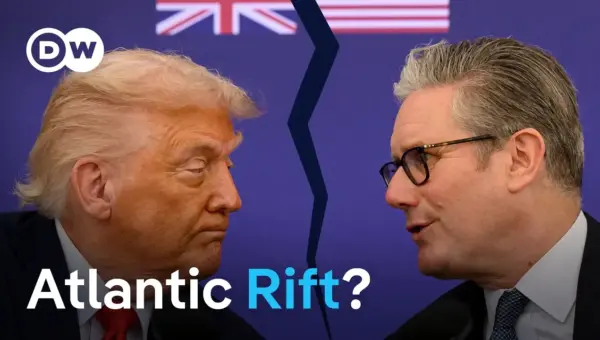
The long-standing 'special relationship' between the US and UK is facing unprecedented strain following the UK's reluctance to support the opening strikes on Iran. Public criticism from Donald Trump has intensified the debate over the alliance's future. Experts suggest this rift highlights deeper shifts in global priorities and evolving military capabilities, potentially reshaping transatlantic ties.
UK Rejects US Military Action Against Iran, Sparks Debate
The UK has refused to allow its bases to be used for US military action against Iran, sparking a national debate on foreign policy. Former minister Clare Short urged the UK to "stop being a poodle" to America, while Foreign Secretary James Cleverly defended the decision as acting in the UK's national interest.

UK PM Must Court Trump Despite Party Backlash
British Prime Minister Keir Starmer faces a difficult balancing act, needing to maintain a crucial relationship with the US President despite domestic criticism. Rising global tensions and economic instability add further pressure, complicating the government's agenda and public finances.