Labor’s Welfare Reform Stalled by Political Weakness, Expert Warns
UK welfare spending is on an "inexorable rise" with no political appetite for reform, warns The Times Political Editor Steven Swinford. Projected to hit £47 billion by 2030, the rising costs place a burden on taxpayers amidst concerns of high taxation disincentivizing work.

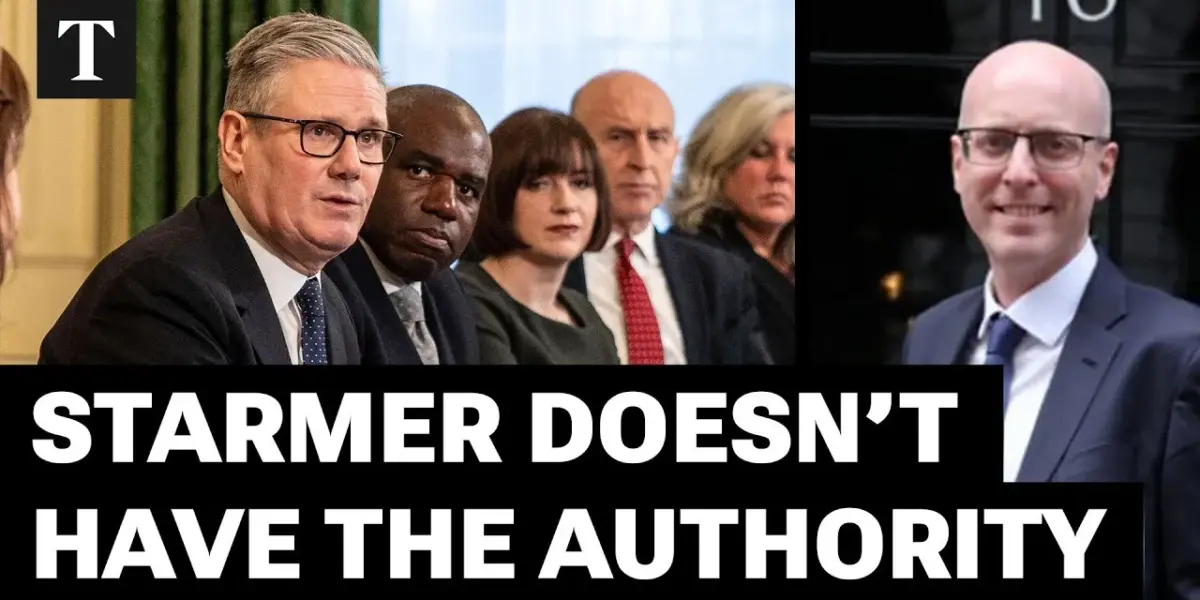
UK Welfare Spending Set for Inexorable Rise Amidst Political Paralysis
London, UK – The United Kingdom’s welfare system is on an “inexorable rise,” with spending projected to climb significantly in the coming years, but the current government lacks the “political strength” to enact meaningful reforms, according to Steven Swinford, Political Editor for The Times. Speaking on a recent broadcast, Swinford detailed how deep-seated issues within welfare spending, coupled with a significant revolt from Labour MPs during a previous attempt at reform, have left the party hesitant to pursue further changes. This, he warns, could lead to unsustainable costs borne by taxpayers.
Projected Welfare Spending and Claimant Increases
New figures indicate a stark increase in welfare expenditure. James Murray, in a televised exchange, was pressed on the projected rise of welfare spending to £47 billion by 2030, a figure seven times the defense budget. Despite acknowledging that welfare spending “needs to be kept under control” and that certain parts of the system have “gotten out of control,” Murray stopped short of committing to a reduction in spending. He highlighted efforts to reduce fraud and error and to rebalance Universal Credit towards getting people back into work, but the core question of whether the £47 billion figure is acceptable remained unanswered with a definitive “yes” or “no” regarding reduction.
Swinford elaborated on the scale of the challenge, stating that the welfare bill would still have risen even if previous controversial reforms had been enacted. He pointed to projections that the number of disability benefit claimants is set to rise from 6.5 million to 8.8 million by 2030, with incapacity benefit claimants increasing from 3.4 million to 4 million. “The net result is we are going to be spending a lot more on welfare and ultimately the costs of that are going to have to be borne by working people by taxpayers,” Swinford stated.
Political Hurdles to Welfare Reform
The primary obstacle to reforming the welfare system, Swinford argued, is a lack of political will and support. He recalled the “biggest revolt of this parliament so far” experienced by Labour when they attempted welfare reform previously, which dealt a “massive blow to Starmer’s authority.” The recent results of by-elections, such as the one in Gordon and Denton, suggest that the Labour party is more likely to “tilt towards the left,” further diminishing the appetite for cuts or significant reform.
“Labor clearly doesn’t have the political will or support to do so. And if Labor doesn’t, it’s going to be very hard for whoever comes next to do so. And at the moment, we’re in this kind of bizarre situation where there are no plans for welfare reform on the horizon. There is no concrete dates. There is no legislation coming. There is nothing. There is just this inexorable rise.”
– Steven Swinford, Political Editor, The Times
The refusal of ministers like James Murray to explicitly state a desire to “cut” welfare spending, Swinford explained, stems from the inability to do so. “They do not have the political strength. They do not have the legislation in place to do that. And that’s a massive problem,” he asserted.
Broader Economic Concerns: Taxation and Disincentives
Beyond welfare spending, Swinford raised concerns about the broader economic landscape, particularly the record levels of taxation anticipated over the course of this parliament. The “tax burden,” representing the proportion of national income taken as tax, is projected to hit 38%. The Office for Budget Responsibility (OBR) is reportedly investigating whether this high level of taxation is becoming a disincentive for people to earn more or work, potentially creating a “perverse distorting effect on the economy.” This is a significant worry, especially in light of current unemployment and youth unemployment figures.
International Relations and Political Commentary
The discussion also touched upon international relations, specifically the comments made by Donald Trump regarding Keir Starmer. While acknowledging concerns about potential trade issues and the impact of Trump’s views on the “special relationship” between the UK and the US, Swinford suggested that Starmer might have felt compelled to draw a line in the sand, particularly regarding the initial action against Iran, which some perceived as lacking a clear plan and potentially being illegal. The differing messages emanating from the US administration on this matter could, in the short term, play well with Labour MPs, but the long-term implications for bilateral relations are significant.
The Path Forward
With no clear plans for welfare reform on the horizon and a projected increase in spending, the UK faces a critical juncture. The government’s current inability to tackle the rising welfare bill, coupled with high taxation levels, presents a complex challenge. Future attention will likely focus on whether any administration can muster the political capital to address these issues, or if the trend of rising welfare costs and tax burdens will continue unabated, impacting the economic well-being of working Britons.
Source: Starmer’s Government ‘Doesn’t Have Political Strength’ For Welfare Reform | Steven Swinford (YouTube)

Related Articles

Starmer Presses Sunak on Iran, Economy in Fiery PMQs
Keir Starmer challenged Prime Minister Rishi Sunak during a heated Prime Minister's Questions, focusing on the UK's response to Iran tensions and the ongoing economic crisis. Political analysts dissected the exchange, assessing the leaders' performances and the strategic implications for both parties.
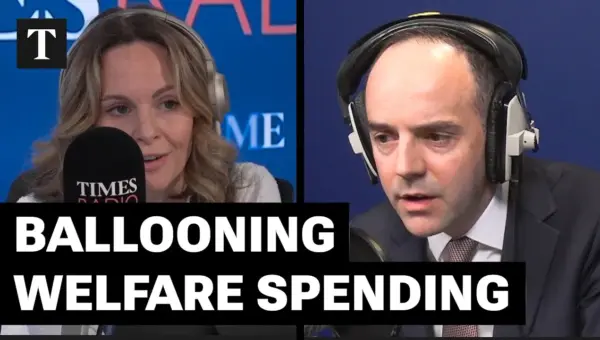
Minister Dodges Welfare Cut Question Amid Defense Concerns
UK Chief Secretary to the Treasury, James Murray, faced intense questioning on welfare spending and defense readiness. Murray repeatedly sidestepped direct answers on whether the government plans to reduce the welfare budget, despite projected increases and concerns over defense funding.


Trump Slams Starmer’s ‘Stupidity’ on Iran, Threatens UK-US Relations
Donald Trump has strongly criticized UK Labour leader Keir Starmer's handling of the Iran situation, calling it "stupidity" and a "disaster for transatlantic relations." The former US President's remarks highlight a significant strain on UK-US ties, with concerns raised about Britain's decision to deny US access to military bases.