Kristi Noem’s Dog Scandal Unearths Government Corruption
New allegations against Kristi Noem link the controversial death of her dog to potential government corruption. Investigations into her time at DHS suggest a pattern of 'pay-to-play' schemes and misuse of taxpayer funds.


Noem Faces Scrutiny Over Dog Incident and Government Contracts
A recent political discussion has brought South Dakota Governor Kristi Noem under intense scrutiny, focusing on two main areas: the tragic death of her dog, Cricket, and serious allegations of corruption during her time at the Department of Homeland Security (DHS). The conversation, featuring Democratic Representative Jared Moskowitz, suggests that these issues could have significant consequences for Noem’s political future.
The Cricket Controversy
The death of Governor Noem’s dog, Cricket, has become a focal point, with Moskowitz presenting a theory that the dog’s demise was linked to something it may have witnessed. He suggests that Cricket might have seen too much regarding Noem’s husband’s activities, leading to the dog’s fatal shooting. Moskowitz describes Noem as “the least empathetic person in the country” and believes this incident, along with the alleged corruption, could mark the end of her public career.
Moskowitz stated, “We have all those for those of us who are dog lovers. The dogs know all our secrets. They’re sitting in the corner being all quiet, but they’re watching. They’re listening. And yeah, no, Cricket knew. Chrissy Gnome said today that the family was blindsided. Cricket wasn’t blindsided. He cricket knew. Cricket was blindsided when she took Cricket out to the rock pit and shot him in the face. That’s when Cricket was blindsided.”
Allegations of ‘Pay-to-Play’ Schemes
Beyond the personal tragedy, the discussion delves into significant financial impropriety during Noem’s tenure. Investigations are reportedly being launched into a massive $200 million commercial, which was apparently more expensive than major Hollywood blockbusters like the Barbie movie or Jurassic Park. This spending is being questioned as a potential “pay-to-play” scheme, where contracts might have been awarded in exchange for kickbacks.
Moskowitz elaborated on the procurement process, highlighting how contracts were allegedly awarded to companies that were very new, lacked established headquarters, or were connected to Noem’s associates. He contrasted this with standard procurement practices. “Usually you would write a solicitation. The solicitation would have minimum requirements. The solicitation is the invitation to bid that lists what you’re looking for sources sought. What am I looking for for some private entity to provide a service to the government? And you would write it out and it would have minimum qualifications. One of those qualifications would be how many years you’ve been in the industry. You know, most qualifications would say you’d have to be in the industry at least five years or at least 10 years in the industry.”
He further explained, “None of that existed here. And that’s how they were able to give this contract to a company that existed for 11 days with no website to their friends.” The implication is that this process bypassed normal competitive bidding, which is designed to ensure the best services are obtained at fair prices.
Corey Lewandowski’s Role
Central to these corruption allegations is former Trump campaign manager Corey Lewandowski. Moskowitz suggests that Lewandowski played a key role in controlling the flow of money within DHS. “Everything went through Corey. Everything. That $100,000 rule that we came up with, anything on $100,000 had to come to the secretary. It didn’t go to the secretary, it went to Corey. He wanted to see where the money was going because if you don’t know where the money’s going, you don’t know who to shake down.”
The theory is that Lewandowski ensured that funds, whether grants, vendor payments, or contracts, would not be disbursed without his approval, suggesting a system designed to extract kickbacks. This alleged control extended to stacking procurement teams with his own trusted individuals who would provide him with inside information.
Broader Implications and Historical Context
The discussion links these alleged actions by Noem and her associates to a broader pattern of behavior within the Trump administration. Moskowitz argues that the perceived corruption at the highest levels, including Donald Trump’s own financial dealings, may have sent a message that such practices were acceptable or even encouraged. This is referred to as “trickle-down corruption.”
Moskowitz stated, “Anyone who’s been following Donald knows that that’s not how the rules work. The rules don’t apply to Donald and his family, but he doesn’t let you live by those same rules. And so, yeah, sure, other people could see this, the airplane, the crypto stuff, and think, well, I’m going to do it too. But that’s not how it works in this universe. You don’t get to live by those rules, especially not without permission.”
Historically, government procurement processes are designed to prevent fraud and ensure taxpayer money is spent wisely. When these processes are circumvented, it raises serious questions about accountability and the integrity of public institutions. The allegations against Noem and Lewandowski echo concerns about the misuse of power and public funds that have surfaced in various administrations, but the scale and specifics of these claims are particularly striking.
Why This Matters
These allegations are significant because they touch upon fundamental issues of trust, accountability, and the responsible use of taxpayer money. If proven true, they suggest a pattern of corruption that goes beyond mere mismanagement, potentially involving deliberate schemes to enrich individuals at the public’s expense. The involvement of a high-profile figure like Kristi Noem, and the potential impact on her career, highlights the ongoing tension between political ambition and ethical governance.
Furthermore, the mention of investigations by both Democrats and Republicans, including key figures in the House Homeland Security committee, indicates that these concerns are being taken seriously across party lines. The potential for bipartisan probes suggests that the evidence may be compelling enough to warrant thorough examination, regardless of political affiliation.
Future Outlook
The future outlook for Kristi Noem appears uncertain. The ongoing investigations, coupled with the public relations damage from the Cricket incident, could indeed pose a significant threat to her political career. Moskowitz anticipates that if Democrats gain control of the House, more corruption probes will be opened, with a particular focus on the DHS. The ability to subpoena bank records and compel testimony from staffers and lobbyists could uncover further evidence of wrongdoing.
The legal and political ramifications of these investigations will likely unfold over the coming months. The outcomes could set precedents for accountability in government contracting and serve as a stark reminder of the consequences of alleged corruption. The public will be watching closely to see how these serious allegations are addressed and whether justice is served.
Source: New Kristi Noem Bombshell Ends Her Career Forever (YouTube)

Related Articles
Congress Stalls on Funding Amid Political Games
US lawmakers are locked in a political battle over Department of Homeland Security funding, risking a government shutdown. This deadlock highlights how political point-scoring often overshadows critical policy decisions, potentially impacting national security and public trust ahead of the November elections.
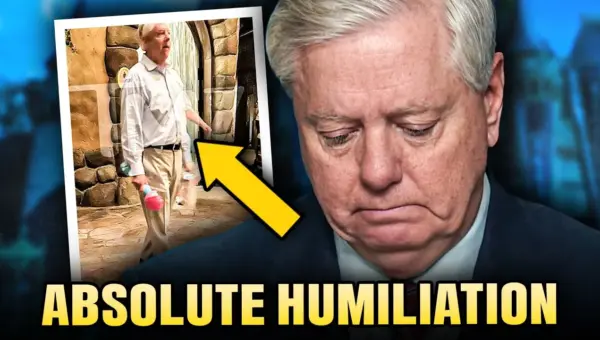
Senator Graham’s Disney Detour Sparks Outrage Amid Shutdown
Senator Lindsey Graham faced public backlash after being photographed at Disney World during a government shutdown and later holding a pink bubble wand. His attempts to explain his actions and later project a masculine image with a rifle backfired, leading to widespread mockery and highlighting concerns about public perception during times of hardship.

Governor’s Husband’s Secret Life Poses National Security Threat
National security experts are concerned that Governor Kristi Noem's husband's private online activities, including cross-dressing, could make her vulnerable to blackmail by foreign intelligence agencies. If media can find this out, hostile nations likely can too, raising serious security questions.