Kremlin’s ‘Fairy Tale’ Governance: How Suppressed Truths Are Fueling Russia’s Looming Crisis
Russia's leadership under Vladimir Putin is increasingly isolated, operating on a foundation of suppressed truths and comforting fictions, leading to severe economic, military, and societal consequences. A culture where bad news ends careers has created an echo chamber, preventing Putin from grasping the true state of his nation and its war efforts, thereby accelerating the regime's instability and potential collapse.

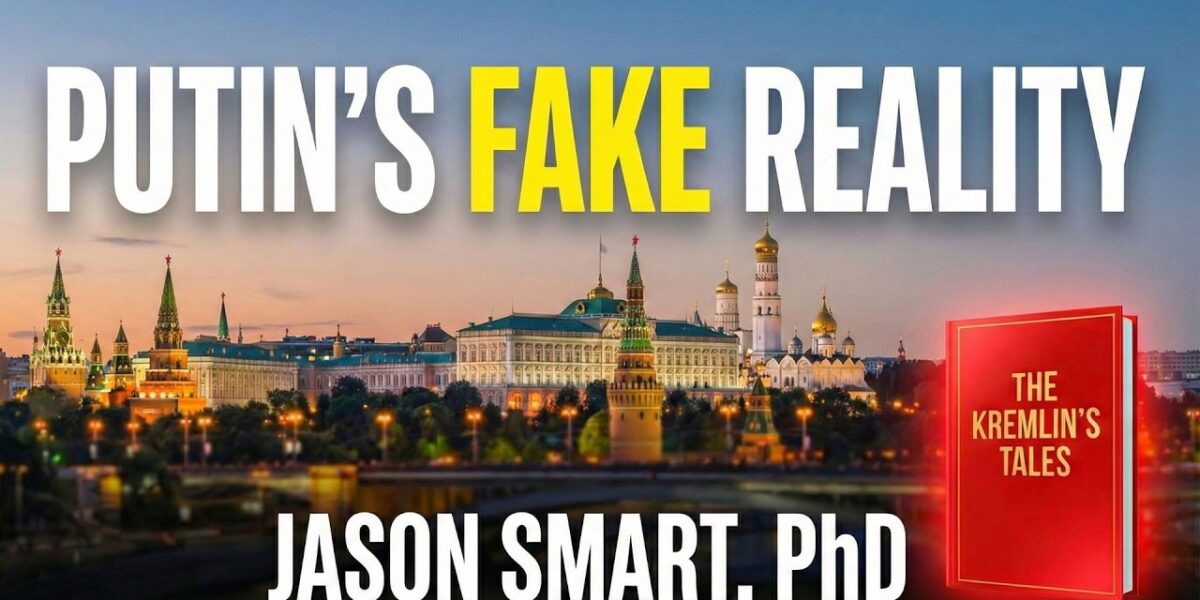
Kremlin’s ‘Fairy Tale’ Governance: How Suppressed Truths Are Fueling Russia’s Looming Crisis
In the opaque corridors of the Kremlin, a dangerous culture of truth suppression has taken root, transforming critical intelligence into comforting fiction for President Vladimir Putin. This systemic sanitization of information, where bad news spells career doom, has created an echo chamber, insulating the Russian leader from the grim realities facing his nation and its war efforts. The consequences, according to analysts, are profound, manifesting in economic instability, military failures, and a progressively isolated, fragile regime.
The Echo Chamber of Power: How Truth is Filtered
The core issue, as highlighted by national security adviser Jason Smart, is a deeply ingrained incentive structure: “In the Kremlin, bad news ends careers, so reports get cleaned up before they ever reach Vladimir Putin’s desk.” This environment fosters a pervasive culture of deception, where officials prioritize self-preservation over honesty. Rather than delivering inconvenient truths that could lead to job loss, officials soften, delay, or outright bury critical information. The cumulative effect is a leadership detached from the true state of affairs within Russia, making decisions based on what amounts to “fairy tales” designed to protect the messenger, not to inform effectively.
This dynamic was starkly illustrated in February 2022, just days before Russia’s full-scale invasion of Ukraine. During a televised security council meeting, Putin publicly pressed Sergey Naryshkin, head of the Foreign Intelligence Service (SVR) and a long-time loyalist, for a clear stance on recognizing the Donbas regions. Naryshkin’s visible hesitation and fumbled answers, stemming from his awareness of the stark contrast between reality and the official narrative, led to a public dressing down from Putin. This televised spectacle served as a potent warning to the entire Russian elite: professional assessment was not required, only unfailing loyalty and compliance with the leader’s predetermined views. Following this incident, the likelihood of anyone in Putin’s inner circle risking uncertainty or dissent further diminished, solidifying the information silo around the President.
Economic Fallout: The Cost of Distorted Data
The impact of this distorted reality extends far beyond political decision-making, deeply affecting Russia’s economic system. When the government cannot produce reliable numbers, a ripple effect ensues, particularly in financial markets. Credit tightens significantly because lenders are unwilling to extend funds against data they do not trust. This pervasive skepticism about official figures directly translates into tangible economic pain, evidenced by soaring interest rates, which have been observed as high as 16% in Russia.
Such high rates impede cash flow, stifling investment and economic activity across various sectors. Businesses struggle to secure financing, hindering growth and stability. This financial squeeze is particularly acute given Russia’s high inflation rate, reported at approximately 14.5%, which erodes purchasing power and further stresses the population. The Kremlin’s inability to foster transparency and trust in its economic reporting creates a vicious cycle, where a lack of credible data leads to economic paralysis, which in turn necessitates more desperate measures from the state.
Military Miscalculations: Lies on the Front Lines
Nowhere are the consequences of this truth-suppression more tragically apparent than on the battlefields of Ukraine. President Putin’s demands for results in the war clash with the immense financial burden it imposes, with Russia reportedly burning through $500 million a day—a sum the nation can ill afford. As cash tightens, the first points of failure emerge where Moscow has the least flexibility: the front lines.
Logistical challenges, exacerbated by systemic deception, plague Russia’s military operations. Supply lines, stretching over 1,200 kilometers (745 miles), are often compromised not by enemy action alone, but by internal corruption and false reporting. Commanders, fearful of punishment, report having adequate fuel and supplies “on paper,” even when reserves are non-existent. This leads to units being dispatched without sufficient resources, leaving troops stranded and vulnerable when their equipment inevitably sputters. The reluctance to admit earlier lies perpetuates the crisis, sacrificing lives and strategic objectives for the sake of protecting individual careers.
The human cost is further compounded by recruitment struggles. Despite Putin’s assertions of strong enlistment, Russia consistently falls short of its monthly targets, reportedly behind by 9,000 men in losses. The initial allure of generous enlistment bonuses, such as the $8,300 offered in places like Perm, has dwindled, with some regions now offering nothing. The combination of a military riddled with lies, a lack of resources, and the grim reality of the war makes joining Putin’s army an increasingly unattractive prospect for many Russians.
Putin’s Deliberate Isolation: A Choice for Ignorance
The current state of affairs is not merely an accidental byproduct of a dysfunctional system; it is, in part, a consequence of Vladimir Putin’s deliberate choice to remain in the dark. As Smart notes, Putin “willfully chooses to not know what is going on.” A striking example occurred in 2021 when then-CIA Director William Burns, a former U.S. Ambassador to Moscow with extensive experience dealing with Putin, traveled to Moscow to dissuade him from invading Ukraine. Despite Burns’s willingness to share critical intelligence and reason with him, Putin refused a face-to-face meeting, opting instead for a mere phone call. This dismissal of direct, high-level intelligence underscores a leader increasingly unwilling to confront information that challenges his preconceived notions.
Over two decades, Putin’s leadership style has undergone a significant transformation. Once known for being open-minded and willing to consult with economists and various viewpoints, he has become increasingly isolated and distant from day-to-day life inside Russia. This self-imposed isolation amplifies the risks to his regime, as the feedback loops necessary for effective governance have been severed. He believes he knows exactly what needs to be done, even as evidence suggests a fundamental misunderstanding of the complex realities he faces.
The KGB Reflex: Tightening Control in a Digital Age
Confronted with mounting problems he struggles to comprehend or solve, Putin reportedly reverts to a “KGB reflex”: if in doubt, tighten control. This response is manifesting across Russian society, particularly in financial and digital spheres.
Recent measures include increased restrictions on cash withdrawals, with daily limits at teller windows now reportedly set at around $650, a significant constraint in an economy battling high inflation. The Kremlin is also aggressively pushing for the adoption of the digital ruble, an electronic currency that would grant the state unprecedented control over citizens’ financial lives. This centralized digital currency would allow the Kremlin to monitor every transaction, knowing “exactly what you spend money on, where you get it from, and where you are all the time.” Such a tool aligns perfectly with Putin’s desire for absolute control, offering a perceived solution to the uncontrollable global events he struggles to understand.
Furthermore, Putin has granted the Russian FSB (Federal Security Service) sweeping powers, including the ability to coordinate the shutdown of the internet across Russia at any time deemed necessary, affecting mobile phones, homes, and businesses. While these measures might buy the regime some time by suppressing dissent and controlling information flow, they do not address the fundamental economic and military challenges facing the country. They are symptomatic of a regime increasingly reliant on repression rather than effective governance.
Sacrificing the Elites: Desperate Measures for Funds
The financial strain on Russia is evident in increasingly desperate measures. Bloomberg reported Russia’s sale of 300,000 ounces of gold for $1.4 billion, a move indicative of dwindling reserves and a need for immediate liquidity. Even more dramatically, since 2021, approximately 12% (25 out of 204) of Russia’s Forbes-listed billionaires have faced nationalization, forced sales, or non-market seizures of their assets. This aggressive targeting of the wealthy elite, many of whom were once fiercely loyal to Putin, signals a regime shaking every available tree to fund its war and maintain its grip on power. It suggests that the needs of specific, powerful individuals within Putin’s inner circle are now prioritized over the loyalty of broader business elites.
The Peril of Nepotism: Incompetence in Key Positions
Another factor contributing to Russia’s weakening state is rampant nepotism. Reports indicate that Putin has elevated at least 24 relatives into official roles within state companies, including his niece as Deputy Minister of Defense and her husband as Minister of Energy. While family promotion ensures loyalty within a small circle, it compromises competence. As Niccolò Machiavelli observed, “The first method for estimating the intelligence of a ruler is to look at the men he has around him.” In Putin’s Russia, this observation points to a system where skill and merit are secondary to familial ties, leading to potential incompetence in critical sectors, such as the energy ministry, where major financial issues like VTB Bank’s bankruptcy action against First Oil Group and forecasts of reduced oil exports are emerging.
A Historical Echo: When Fiction Meets Reality
The current trajectory of Putin’s Russia bears a chilling resemblance to historical precedents, particularly the downfall of Tsar Nicholas II. In the years leading up to the Russian Revolution, courtiers shielded the Tsar from bad news, fearing his anger. The palace tightened its grip while the country disintegrated beneath it. This denial bought extra days, but ultimately led to a systemic collapse, accelerated by the court’s belief in its own comforting fictions.
Today, Putin’s regime finds itself in a similar predicament: a system that observes accumulating crises but freezes, unable to act effectively because truth has become as treasonous as rebellion. This self-inflicted blindness, fueled by isolation and fear, ensures that damage multiplies daily. The longer Putin remains oblivious to the true state of his country, the harder Russia will break, and, more dramatically, the harder his regime will ultimately fall.
The notion that Putin is entirely unaware of what is transpiring is not impossible; it is, in fact, highly probable. Even prior to the full-scale invasion, Russia commissioned polling in Ukraine that clearly indicated a strong Ukrainian rejection of joining Russia. Yet, this crucial intelligence was ignored in favor of comforting fictions presented to Putin. This pattern continues, with even senior military officers making demonstrably false claims on national television, such as 75% of Ukrainians wanting to join Russia, or generals displaying maps that include Ukrainian cities like Odesa as part of Russia, despite never having occupied them. Such pervasive misinformation within the highest echelons of power paints a stark picture of a state driving straight into disaster, its destiny hanging in the balance, a “basket case” on fire.
Source: The Kremlin Is Making Decisions Using Fairy Tales (YouTube)

Related Articles

Iran’s Regime Under Siege: Attacks Cripple Leadership, Impact Russia
Iran's regime is reportedly facing critical blows from targeted attacks, crippling its leadership and severing a vital military supply line to Russia. This dual pressure is significantly impacting Russia's war efforts in Ukraine, while internal dissent grows within Iran.

Putin’s Grip Weakens: Journalist Sees Russia’s Endgame
British journalist John Sweeney asserts that Vladimir Putin cannot afford to end the Ukraine war, as doing so would expose its futility and threaten his rule. He calls for stronger Western sanctions and increased aid to Ukraine, predicting a gradual erosion of Putin's power driven by economic pressures and internal dissent.

Ukraine Strikes Deep: Russia’s ‘Untouchable’ Assets Hit
Ukraine has successfully launched long-range drone attacks deep inside Russia, hitting a crucial chemical plant in Perm and an oil terminal in Krasnodar. These strikes dismantle Russia's perceived geographical safety and target key economic lifelines, impacting its ability to sustain the war effort. The attacks highlight Ukraine's evolving strategy of systematic disruption and innovative use of technology, including high-altitude balloons, to degrade Russian capacity.