Kremlin’s Deepening Quagmire: As War Drags On, Economic Cracks and Geopolitical Pressures Mount
The war in Ukraine is projected to last another one to three years, as Russia negotiates in bad faith while facing internal economic and recruitment challenges. While a leadership change in Moscow could offer a window for peace, certain EU leaders like Hungary's Orban and Slovakia's Fico are engaging in political blackmail, threatening Ukraine's supplies and EU integration, prompting strong warnings from Brussels.

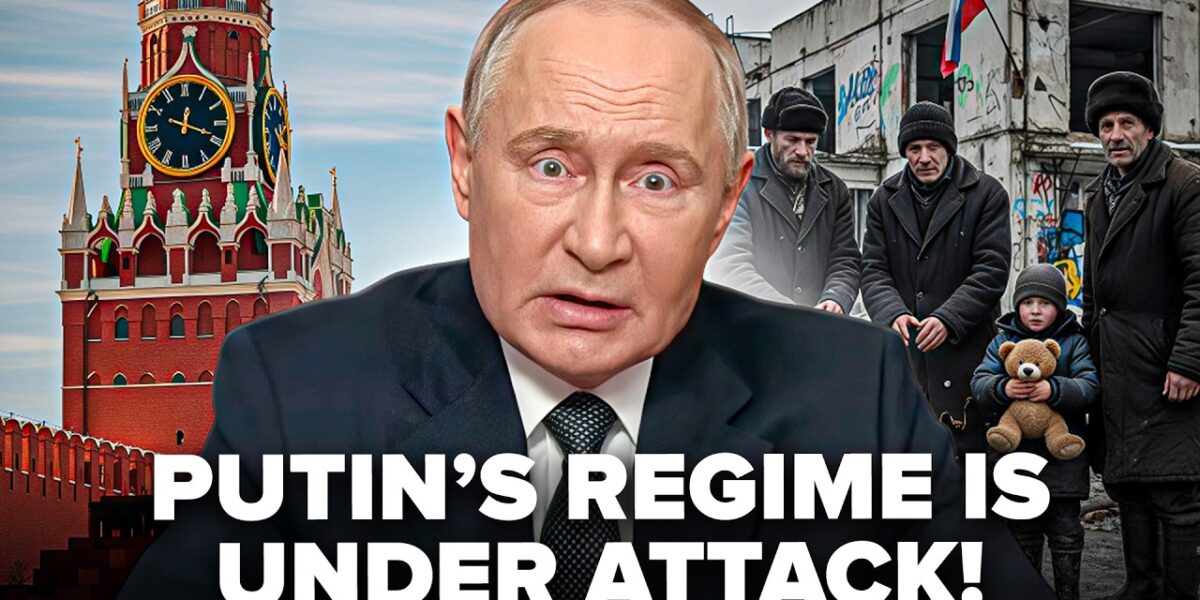
Kremlin’s Deepening Quagmire: As War Drags On, Economic Cracks and Geopolitical Pressures Mount
The protracted conflict in Ukraine shows no immediate signs of abating, with mounting evidence suggesting the war could continue for another one to three years. This grim forecast, echoed by European Union officials cited by the Wall Street Journal and increasingly acknowledged by Ukrainian leadership, underscores a stark reality: Russia continues to pursue its objectives through diplomatic means what it has failed to achieve on the battlefield, particularly control over the Donbas region. Meanwhile, internal economic pressures, the potential for a leadership change in Moscow, and divisive actions by certain European leaders complicate the already volatile geopolitical landscape.
Former Deputy Prime Minister for EU Integration, Volodymyr Bachuk, offered a comprehensive assessment of these intertwined challenges, highlighting Russia’s precarious economic situation, the implications of a post-Putin era, and the controversial stances of Hungarian Prime Minister Viktor Orban and Slovak Prime Minister Robert Fico.
The Protracted Conflict: A Multi-Year Horizon for Ukraine
The consensus among intelligence communities and political analysts is increasingly leaning towards a prolonged conflict. Bachuk notes, “The number of voices saying that the war might go for another year or three is growing.” This sentiment is not merely speculative; it is reportedly shaping Ukraine’s strategic planning. President Volodymyr Zelensky, according to recent information, has asked his closest aides to prepare a defense strategy for the next three years, signaling Ukraine’s readiness for a sustained struggle.
Further reinforcing this outlook are informal briefings from the ‘Five Eyes’ intelligence alliance – comprising the United States, United Kingdom, Canada, Australia, and New Zealand. All members of this elite group reportedly see “no signs of reaching a peace agreement this year,” primarily due to the conspicuous absence of any credible hints from President Putin suggesting a genuine desire for a peaceful resolution. This stands in stark contrast to the singular view of former U.S. President Donald Trump, who, for reasons Bachuk describes as “mysterious,” appears to believe Putin is willing to sign a peace deal.
The prevailing mood is clear: without a shift in Putin’s stance, or significant external pressure, the warfare will continue. While a U.S. President could theoretically escalate pressure, current actions, such as the extension of existing sanctions, are not deemed “critical.” A much more severe package of sanctions is reportedly prepared in the U.S. Congress and Senate, yet Trump has not indicated a willingness to push for its enactment or to sharply increase pressure on Russia’s energy and banking sectors.
Instead, the narrative persists that Ukraine must rush to the negotiating table because Putin is willing, and Ukraine is not – a story that has been circulating for nearly a year. Bachuk’s personal assessment aligns with the broader view: “I personally do not see at this point any signs of visible perspectives for a peace deal.”
Economic Levers: Sanctions and Russia’s Shrinking Lifeline
While military solutions remain elusive, economic pressure is increasingly seen as a potent, albeit slow-acting, force. Bachuk emphasizes, “Economic pressure can get its results because numerous sources both in Russia and outside Russia say that Russian economy is under pressure and the situation is deteriorating much quicker than Russians expected both economically, financially.”
The ‘Shadow Fleet’ and Oil Market Dynamics
A significant area of impact is the “shadow fleet” of oil tankers, which Russia has actively employed to circumvent Western sanctions and export its oil. However, pressure on this illicit network is intensifying. The effectiveness of these sanctions is amplified by the shifting dynamics in global oil markets.
India, once a major beneficiary of discounted Russian oil, has noticeably reduced its purchases following pressure, particularly from the U.S. While India has not implemented a total refusal, as it seeks to balance its energy needs and leverage its position as one of the largest buyers to dictate lower prices, its willingness to consider alternative suppliers is a crucial development. The availability of diverse suppliers from American and Arab countries provides India with flexibility, reducing its dependence on Russian crude.
This strategic shift aligns with former President Trump’s broader objective: “The strategy of Trump is actually to push Russia to squeeze Russia mostly out of largest oil and gas markets.” While this strategy has geopolitical implications, it also carries “egoistic motives” for the U.S., aiming to bolster American energy exports and market share.
The shrinking pool of countries willing to purchase Russian oil, coupled with the increasing scrutiny on the shadow fleet, suggests a gradual but persistent erosion of Russia’s economic lifelines. The long-term impact of these pressures could be profound, limiting Russia’s ability to finance its war machine and sustain its economy.
The Kremlin’s Internal Pressures: Economic Strain and Manpower Crisis
Beyond external sanctions, Russia’s war economy is grappling with significant internal challenges. The nation faces rising debt, declining revenues, and growing difficulties in reallocating resources to meet wartime demands. One critical aspect is the reintegration of soldiers returning from the front, a process fraught with economic and social complexities.
The recruitment strategy itself reveals underlying issues. Russia is increasingly reliant on financial incentives rather than patriotic motivation to attract new soldiers. This shift indicates a potential decline in public enthusiasm for the war. Compounding this, insufficient support for veterans and disputes over compensation with families of fallen soldiers are driving up recruitment costs and potentially eroding morale within the armed forces and among the populace.
These internal strains, while not immediately visible on the battlefield, represent a slow-burning crisis that could undermine Russia’s long-term capacity to sustain the war. A deteriorating economy, coupled with a disillusioned populace and a strained military, creates a fertile ground for dissent and instability.
The Putin Question: Leadership Change and its Potential Impact
A frequently debated question is whether the death or removal of Vladimir Putin would fundamentally alter the course of the war. President Zelensky, when asked about ordering Putin’s assassination, gave an indirect response suggesting that such an event might not fundamentally change the situation, given the deeply entrenched system in Russia. Bachuk largely agrees with the premise of a “collective Putin” ruling Russia, a system he identifies with the pervasive influence of the KGB/FSB security apparatus.
The ‘Collective Putin’ and Russia’s Deep State
Bachuk recalls interactions from 20 years ago with Putin’s close aides, who boasted about controlling every aspect of Russia, from top businesses and oligarchs to foreign banks, through their KGB or FSB offices. While Putin has since consolidated immense personal power, the underlying system of control remains deeply embedded. This ‘deep state’ structure means that even without Putin, the initial successor might emerge from the same security establishment, potentially maintaining similar policies.
However, Bachuk argues that despite this institutional continuity, a change in leadership would still offer a “big chance of changes.” He draws a parallel to the death of Joseph Stalin, who was revered as a living god in Russia. His demise, however brief, ushered in a period of “softening the grip” of the communist nomenclature, leading to a temporary pursuit of “socialism with a human face.”
Historical Precedents and Elite Motivations
Bachuk believes that if Putin were to die or be removed, a “window of opportunity” would emerge. He posits that a significant portion of Russian elites, while deeply corrupt, are also deeply integrated into Western capitalist countries. Their children study there, they own real estate, and they move their money there. They appreciate Western living standards and would likely seek to shed the burden of sanctions.
Moreover, many thinking Russian generals reportedly realize that they are not gaining ground and lack the chances to win the war within a year or two, feeling increasingly exhausted and tired. Macroeconomists within Russia clearly understand the destructive impact of the war on the national economy and financial system. Businesses, too, recognize that expanded international contacts and access to financial markets depend on becoming more predictable and friendly with European countries and the USA.
Therefore, Bachuk concludes, there is a strong chance that whoever succeeds Putin “might considerably change at least for foreseeable future change the policy and probably stop war in Ukraine and try to make a peaceful solution instead of continuing expansion and war paying huge prices economically and from Russian soldiers’ lives point of view.” Such a shift, driven by pragmatic self-interest and a desire to alleviate economic and social pressures, could represent a genuine turning point.
The Hungarian Anomaly: Orban’s Anti-Ukraine Stance and Domestic Politics
Amidst the broader geopolitical struggle, certain EU member states have adopted stances that appear more aligned with Russian interests than with collective European security. Hungarian Prime Minister Viktor Orban has been a prominent figure in this regard, launching an anti-Ukraine campaign video ahead of elections. The footage, featuring images of President Zelensky, accuses Kyiv of attempting to block oil supplies via the Druzhba pipeline, destabilizing Hungary, and financing opposition forces.
Orban’s Electoral Desperation and Populist Playbook
Bachuk assesses Orban’s motivations as stemming from desperation. “Orban is definitely getting desperate,” he states, noting Orban’s eagerness to associate himself with Donald Trump, even attempting to leverage Secretary Rubio’s visit to Budapest to project an image of full U.S. support. This behavior is seen as a classic example of Trump’s transactional foreign policy, where personal allegiance trumps national interest.
Facing unfavorable sociology in the final weeks of his campaign, Orban is employing a populist playbook designed to instill fear and rally support. His central argument is that if he loses, Hungarians will be forced to “go and die for those Ukrainians,” implying that the EU and Ukraine seek to drag Hungary into the war. “I am your only hope. I can defend you from EU. I can defend you from from Ukraine because EU supports war in Ukraine,” Orban’s rhetoric suggests, positioning himself as the last fortress against an encroaching conflict.
This strategy is a diversion from Hungary’s internal problems. Bachuk points out that “Hungary is now the most corrupt and one of the poorest countries in European Union” under Orban’s leadership. By manufacturing external threats and blaming Ukraine and the EU, Orban attempts to deflect criticism from his government’s domestic performance and maintain power.
The Druzhba Pipeline: A Weaponized Narrative
Regarding the specific accusation of Ukraine blocking oil supplies via the Druzhba pipeline, Bachuk clarifies the reality. The pipeline’s pumping station was destroyed by Russians. The EU has made it clear that it will not press Ukraine to prioritize repairing this section, given Ukraine’s daily struggle to repair its own energy infrastructure, which is under constant Russian attack. “Ukraine has different priority,” Bachuk asserts.
The EU has also informed Orban that the situation is not desperate, as Hungary has alternative suppliers and sufficient oil and gas reserves to last through the winter and into summer. The blame for the disruption, therefore, lies squarely with Russia, not Ukraine. Orban’s rhetoric is regrettable and casts Ukraine in a negative light, raising concerns that Hungary’s policies are increasingly aligned with Russian interests rather than with the collective security and democratic values of the European Union.
Slovakia’s Echo: Fico’s Blackmail and EU Tensions
Slovak Prime Minister Robert Fico has mirrored Orban’s contentious stance, claiming Ukraine is deliberately delaying the repair of the damaged Druzhba pipeline section due to a political decision by President Zelensky. Fico has gone further, threatening to suspend electricity supplies to Kyiv and reconsider Slovakia’s support for Ukraine’s European integration if these claims are confirmed. Bachuk views this as clear “political blackmail.”
Fico and Orban are, in essence, acting as a coordinated team. Hungary had also threatened to stop selling diesel to Ukraine, a crucial import for Kyiv. While these threats are serious, Bachuk expresses doubts about their actual implementation due to the potential for a “very harsh reaction from EU.”
The EU’s Red Line: Protecting Ukraine and Member State Accountability
The EU has already communicated unequivocally to both Hungary and Slovakia that the Druzhba pipeline repair cannot be Ukraine’s top priority. With hundreds of thousands of Ukrainians living without gas and oil due to Russia’s systematic destruction of energy infrastructure—including electricity, gas, oil, and even water supplies—Ukraine cannot be expected to divert its limited resources to reopen supplies to Hungary or Slovakia.
Bachuk warns that if Orban or Fico were to risk “joining Putin in attacking our energy sector”—either indirectly by withholding critical supplies like diesel or directly through their rhetoric and policy—they could face “very painful response from EU.” Both leaders are highly dependent on EU funds, a significant leverage point for Brussels.
While the EU has been somewhat less vocal in its public criticism of Orban recently, fearing it might inadvertently bolster his narrative that the EU is undermining his campaign, any overt actions that align with Putin’s objectives would cross a red line. Stopping diesel supplies or withdrawing support for Ukraine’s EU integration would be seen as directly assisting Russia’s war effort to force Ukraine’s surrender. Such actions would likely trigger severe consequences from the EU, making it improbable that Orban or Fico would dare to fully execute their threats.
Conclusion: A Shifting Geopolitical Landscape
The war in Ukraine is evolving into a prolonged conflict, with economic pressure emerging as a critical, albeit gradual, force for change within Russia. The prospect of a post-Putin era, driven by the pragmatic self-interest of Russian elites and the realization of the war’s immense costs, presents a potential, albeit uncertain, path towards a peaceful resolution. Simultaneously, the divisive actions of certain EU member states like Hungary and Slovakia underscore the internal challenges facing European unity, even as the EU seeks to maintain a firm stance against Russian aggression and hold its members accountable to collective values. The coming years will undoubtedly test the resilience of Ukraine, the resolve of its allies, and the stability of the Kremlin’s increasingly fragile edifice.
Source: 😱Catastrophe in Kremlin! After negotiations, Putin is completely unsettled. Economy is collapsing (YouTube)

Related Articles
Trump’s Putin Stance: US Strategy and Global Implications
Analysis suggests Donald Trump's approach to the Ukraine war involves pressuring Kyiv, but US involvement is crucial for resolution. China's influence and the 'MAGA' agenda's geopolitical implications are key factors.

Melania Trump’s Quiet Diplomacy on Ukraine War
Former First Lady Melania Trump has emerged as an influential, though unofficial, voice on the Ukraine war, reportedly shaping her husband's perceptions and engaging directly on humanitarian issues like the deportation of Ukrainian children. Her advocacy, possibly influenced by her European background, has drawn international attention and sparked unique reactions, including widespread social media support from Ukrainians.

Iran’s Regime Under Siege: Attacks Cripple Leadership, Impact Russia
Iran's regime is reportedly facing critical blows from targeted attacks, crippling its leadership and severing a vital military supply line to Russia. This dual pressure is significantly impacting Russia's war efforts in Ukraine, while internal dissent grows within Iran.