Kremlin’s Ceasefire Refusal Exposes Deliberate War Continuation
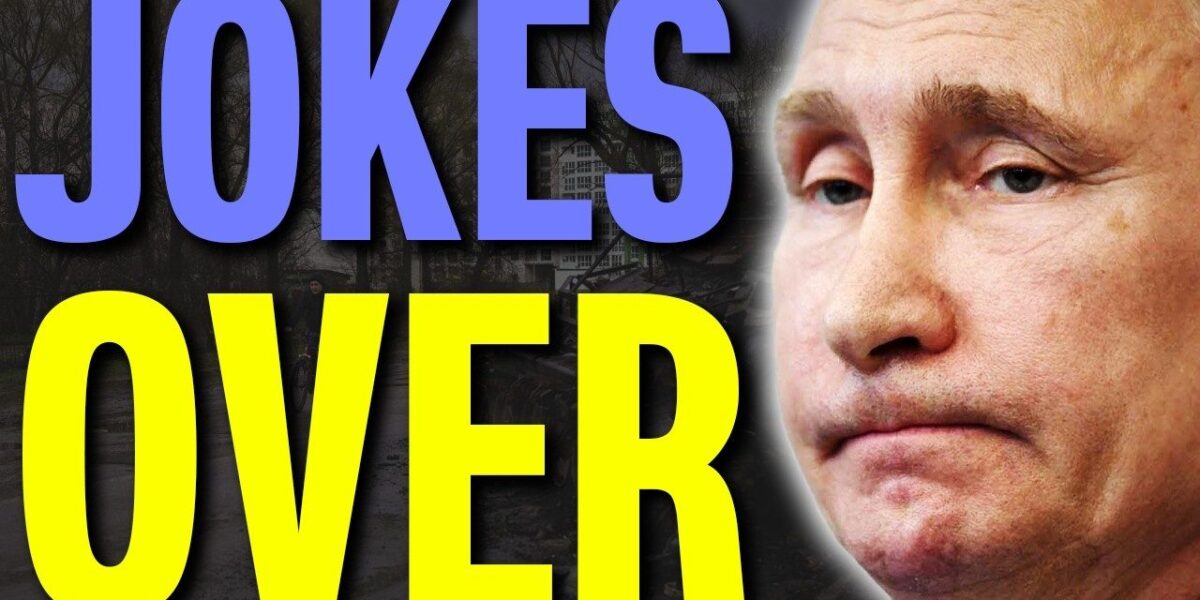
Kremlin spokesperson Dmitry Peskov's repeated rejections of ceasefire proposals reveal a deliberate strategy to prolong the conflict. By cloaking refusals in complex diplomatic language and redefining "peace," Moscow aims to prevent its populace from realizing that an end to hostilities is a choice, not an inevitability.

Kremlin’s Ceasefire Refusal Exposes Deliberate War Continuation
MOSCOW – In a recent series of statements, Kremlin spokesperson Dmitry Peskov has once again rejected proposals for an unconditional pause in hostilities along the current front lines, a move that has been met with agreement from Ukraine and international mediators. These repeated refusals, cloaked in diplomatic jargon about “consistency” and “well-known positions,” reveal a deliberate strategy by Moscow to prolong the conflict rather than seek an immediate cessation of fighting. This calculated ambiguity aims to prevent a critical question from forming in the minds of the Russian populace: if a ceasefire is possible now, why is it not happening?
The Art of Evasive Refusal
Peskov’s pronouncements, which consistently refer to Russia’s “well-known” and “consistently adhered to” positions, serve not to inform but to obscure. This communication style is designed to project an image of diplomatic engagement while actively blocking the most straightforward path to de-escalation. The proposal itself is remarkably simple: an agreement for both sides to halt military operations along existing front lines on a specific date, without preconditions or complex declarations. This mechanism, a historical tool for ending large-scale destruction, is framed by the Kremlin not as a pragmatic solution but as a risky gambit akin to surrender.
The tactic involves shifting the narrative from a direct refusal to a discussion of insurmountable complexities. Moscow cites numerous unanswered questions, perceived contradictions from the opposing side, and a host of risks that supposedly preclude a pause. This framing transforms a simple ceasefire into something suspicious and perpetually postponable, effectively removing the fact that implementation could occur immediately from public discourse. This linguistic maneuvering is primarily aimed at a domestic audience, designed to forestall the realization that the current situation is a choice, not an inevitability.
Cracks in the Smokescreen
Occasionally, the carefully constructed narrative falters. These moments occur when individuals embedded within the system, such as Kremlin-friendly commentators or anonymous pro-war bloggers, inadvertently reveal inconvenient truths. When such figures refer to a ceasefire as a missed opportunity or admit that an immediate halt along current positions is realistic and available, it punctures the official illusion that Russia has no agency in the conflict. These candid admissions undermine the foundational myth that the state has no choice but to continue fighting, a narrative that serves to mask the scale of coercion in recruitment and absolve leadership of responsibility for prolonging the conflict.
However, reality increasingly intrudes upon this carefully crafted narrative. The prolonged stagnation of front lines, the mounting human and economic costs, and the noticeable deterioration of daily life for ordinary Russians are becoming harder to ignore. As citizens grapple with the impact on their livelihoods – demanding affordable loans, stable prices, and future certainty – the official silence regarding the rejection of a pause breeds frustration. This growing unease compels the Kremlin to invest heavily in controlling not just facts, but their interpretation, a process that involves redefining fundamental concepts like “peace.”
Redefining “Peace” Beyond Recognition
A particularly effective element of the Kremlin’s information campaign is the conflation of a ceasefire with a comprehensive peace agreement. The public is repeatedly told that halting hostilities requires the prior resolution of all disputes, the demarcation of all borders, and the settlement of every grievance. While presented as common sense, this assertion is historically inaccurate. Numerous conflicts have seen active fighting cease long before final peace treaties were signed, with normal relations, travel, and trade resuming in the interim.
By insisting on a grand settlement as a prerequisite for a pause, the Kremlin creates a paradox: officials can speak of a desire for peace while ensuring it remains perpetually out of reach. The longer the list of preconditions, the more secure the status quo becomes. For an audience less attuned to diplomatic nuances, the distinction between a ceasefire (stopping immediate damage) and a peace treaty (potentially delaying that stop indefinitely) is easily missed. This is further compounded by the presentation of a false binary: either continue fighting or accept humiliation, with any alternative framed as weakness. Simultaneously, outdated statements from Ukraine are favored over its current positions, creating an illusion of inflexibility on Kyiv’s part, even when it has accepted the very option Moscow rejects. This orchestrated confusion aims to deflect blame from decision-makers and prevent the public from questioning why an obvious, immediate step is being avoided.
Confusion as a Survival Strategy
The Kremlin’s propaganda efforts are not always aimed at persuasion; often, the goal is exhaustion. By overwhelming the audience with a barrage of overlapping and contradictory explanations, clarity becomes elusive. The messaging has adapted to acknowledge a growing segment of the Russian population that desires an end to the fighting. Instead of emphasizing territorial expansion, official narratives now focus on purported efforts to secure peace, portraying the leader as tirelessly working behind the scenes against hostile external forces.
The continuation of fighting is attributed not to a lack of will but to the alleged complexity of the peace process. This message is tailored to different audiences. Those weary of the conflict are shown images of destruction and suffering, with responsibility firmly placed on external actors. Conversely, hardliners are presented with commentators who dismiss the idea of stopping the fighting, while simultaneously claiming momentum exists. These contradictions are not flaws but deliberate features of the strategy, with different narratives serving distinct listeners, all converging on the outcome of continued hostilities.
At its core, this strategy thrives on overcomplication. Simple demands for a ceasefire are buried under hypothetical scenarios concerning disputed regions, future governance, and international reactions. Each question is presented as an insurmountable obstacle, despite the fact that none require active fighting to address and can all be discussed once silence replaces chaos. The leadership understands that a simple idea, once embraced, becomes powerful. The notion that the fighting could have stopped months ago, and still can, is dangerous because it strips away excuses and transforms abstract suffering into a ledger of avoidable losses. This compels the narrative to spiral outward, inventing new complications to obscure a straightforward reality.
The realization that months of hardship, fear, and decline were not inevitable, and that a return to normalcy was within reach but deliberately postponed, is precisely what the Kremlin seeks to prevent. This is not due to a lack of diplomatic options, but because clarity would necessitate accountability. Ending the fighting requires a single decision to stop, not the overnight resolution of every problem. Instead, millions are fed a diet of confusion designed to make a simple demand unspeakable. The prolonged continuation of this strategy incurs immense costs, not only in abstract numbers but in damaged lives, depleted resources, and irretrievable time.
The path forward remains known and available, yet it is being actively avoided. As long as the current leadership remains in power, a complete end to the war in its current form appears highly unlikely. The intricate machinery of narrative construction, designed to mask critical decisions and their consequences for ordinary people, continues to operate, with many more layers yet to be uncovered.
Source: Kremlin's Spokesperson JUST CONFIRMED Our WORST SUSPICIONS. (YouTube)

Related Articles
Iran’s Regime Under Siege: Attacks Cripple Leadership, Impact Russia
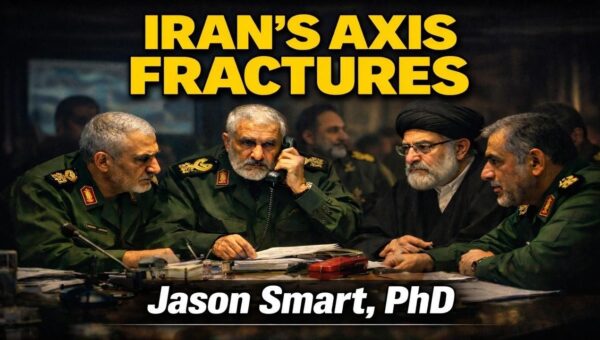
Iran's regime is reportedly facing critical blows from targeted attacks, crippling its leadership and severing a vital military supply line to Russia. This dual pressure is significantly impacting Russia's war efforts in Ukraine, while internal dissent grows within Iran.

Putin’s Grip Weakens: Journalist Sees Russia’s Endgame
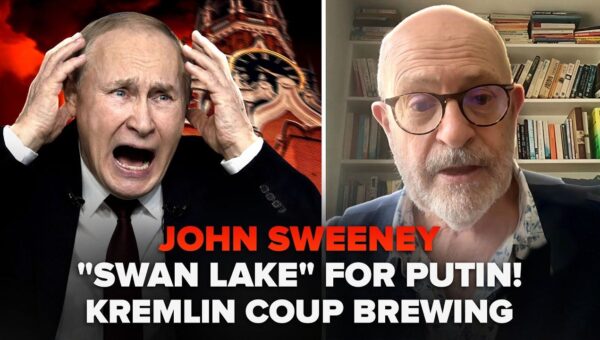
British journalist John Sweeney asserts that Vladimir Putin cannot afford to end the Ukraine war, as doing so would expose its futility and threaten his rule. He calls for stronger Western sanctions and increased aid to Ukraine, predicting a gradual erosion of Putin's power driven by economic pressures and internal dissent.

Ukraine Strikes Deep: Russia’s ‘Untouchable’ Assets Hit
Ukraine has successfully launched long-range drone attacks deep inside Russia, hitting a crucial chemical plant in Perm and an oil terminal in Krasnodar. These strikes dismantle Russia's perceived geographical safety and target key economic lifelines, impacting its ability to sustain the war effort. The attacks highlight Ukraine's evolving strategy of systematic disruption and innovative use of technology, including high-altitude balloons, to degrade Russian capacity.