Kremlin’s Aggression Exposed: Diplomacy, Espionage, and Global Tensions
Moscow escalates tensions with belligerent rhetoric and alleged espionage activities while diplomatic efforts for Ukraine's post-war recovery gain momentum. Meanwhile, international conflicts simmer with Pakistan declaring war on Afghanistan and Hungary criticizing Ukraine over energy supplies.

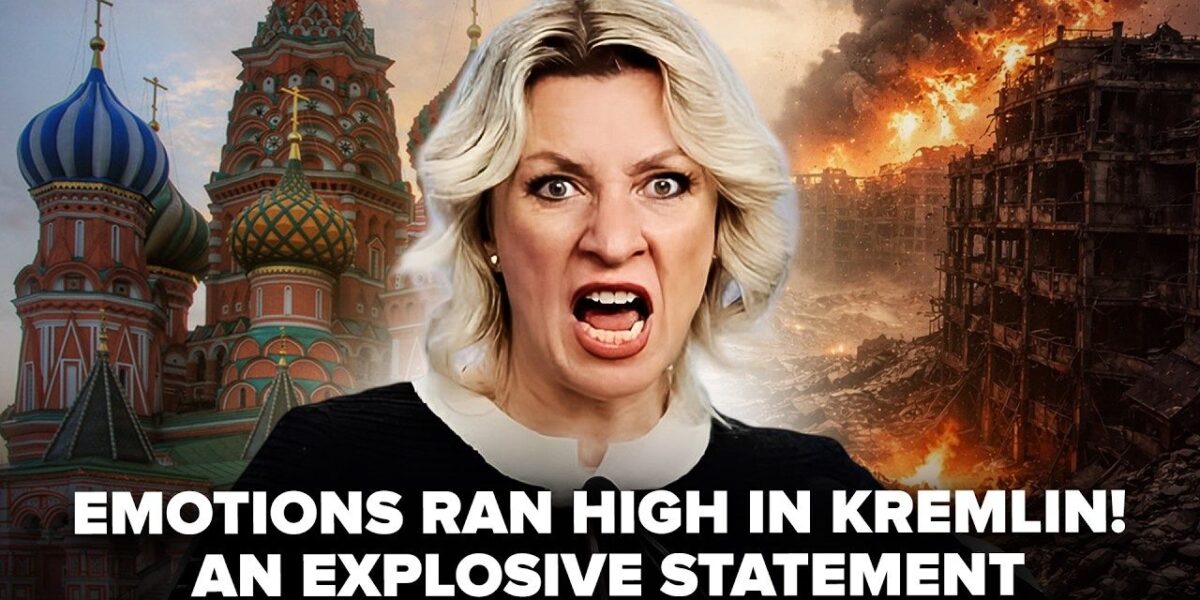
Moscow Issues Belligerent Statement Amidst Diplomatic Maneuvers and Espionage Concerns
In a display of increasingly aggressive rhetoric, Moscow has issued a stark statement on peace while simultaneously engaging in actions that underscore its ongoing geopolitical maneuvering. Russian Foreign Ministry spokesperson Maria Zakharova employed crude language towards European leaders, suggesting they remain silent on negotiations concerning Russia’s war in Ukraine. This aligns with a broader Kremlin strategy to sideline the European Union from peace discussions, positioning Russia and the United States as the sole arbiters, with Ukraine relegated to a bargaining chip.
EU’s Peace Process Stance Met with Kremlin Hostility
The Kremlin’s nervousness is palpable in response to the European Union’s insistence that any peace settlement cannot equate to a Russian victory following battlefield setbacks. Russian propaganda has intensified its focus on Germany, particularly after Chancellor Friedrich Merz characterized Russia as a nation in a state of “deep barbarism.” Zakharova’s retort, filled with insults and ridicule, highlights Russia’s defensive posture and lack of substantive arguments, attempting to mask its battlefield failures with a barrage of abuse.
Espionage Allegations Mount: Sweden Drone Incident Points to Russian Activity
Beyond verbal sparring, concerns over Russian espionage activities across Europe have been amplified by a recent incident near Malmo, Sweden. Swedish forces detected a suspected drone in close proximity to the NATO aircraft carrier Charles de Gaulle. The drone vanished from radar after countermeasures were deployed, coinciding with the presence of a Russian military vessel in Swedish territorial waters. Sweden’s defense minister indicated the drone was most likely Russian, reinforcing long-standing Western warnings about Moscow’s systematic surveillance of military installations in nations supporting Ukraine. This incident is seen as a deliberate test of NATO defenses and a demonstration of Russia’s reach extending far beyond the immediate conflict zone.
Russia Celebrates Special Forces Amidst Continued Ukrainian Suffering
President Putin has congratulated Russian special forces on what Moscow touts as a military milestone. However, for Ukraine, this date signifies the brutal commencement of occupation, war, and the systematic destruction of lives and national identity. It was Russian special forces who initially seized key sites in Crimea, initiating the full-scale aggression against Ukraine. The Kremlin’s public honoring of these units, directly referencing their role in strengthening Russian sovereignty through the annexation of Crimea, is framed by Russia as the “Russian Spring.” For Ukraine, it represents invasion, annexation, and an ongoing, devastating conflict.
Criminal Recruitment Schemes Draw Africans into Ukraine Conflict
Ghana’s foreign minister revealed that nearly 2,000 Africans from 36 countries have been drawn into Russia’s war in Ukraine through illicit recruitment schemes. Ukrainian authorities have documented these individuals, lured by trafficking networks. An estimated 272 Ghanaian citizens may have been involved since 2022, with at least 55 reported killed and two taken prisoner. The minister described these figures as “deeply troubling,” representing “real lives and real families.” Ghana plans to launch a public awareness campaign and dismantle illegal recruitment channels to protect its citizens.
Post-War Recovery Talks: Ukraine and Allies Plan for Reconstruction
Despite stalled negotiations with Russia, diplomatic efforts are underway for Ukraine’s post-war recovery. Recent talks in Geneva between U.S. and Ukrainian officials focused on a reconstruction plan estimated to be worth up to $200 billion. Ukraine aims to finalize key elements at a trilateral meeting in early March, potentially in Abu Dhabi, to prepare for a future leaders’ summit. The discussions included economic recovery and security guarantees to ensure the viability of any political agreement. Ukraine estimates reconstruction costs will exceed hundreds of billions over the next decade, with the World Bank placing minimum recovery costs at nearly $600 billion. These diplomatic initiatives proceed even as Russia continues its attacks on Ukrainian infrastructure.
Continued Russian Attacks Underscore Diplomatic Challenges
Hours before the Geneva meeting, Russia launched over 400 drones and dozens of missiles targeting Ukrainian energy and critical infrastructure. Kyiv views these attacks as evidence that Moscow prioritizes pressure and destruction over compromise. On the battlefield, Russian forces persist with grinding offensives along the 2,200 km front, despite significant losses, while demanding further control over the Donbas. Ukraine remains resolute in its refusal to cede territory, underscoring the distant prospect of peace. Meanwhile, Russia continues its overnight strikes, with a recent drone attack damaging a hotel in Sumy, leading to the evacuation of 50 people.
France Enhances Military Support and Rethinks European Security Architecture
France is intensifying its military support for Ukraine, currently training Ukrainian pilots on Mirage 2000 fighter jets. Paris plans to deliver two additional Mirage 2000 aircraft by early 2026 and is increasing deliveries of AASM Hammer precision-guided bombs. Concurrently, France is engaging in broader discussions about Europe’s security architecture, with officials contemplating France’s role as a central military and nuclear power. President Macron’s anticipated speech is expected to clarify the role of French nuclear deterrence in the evolving geopolitical landscape, particularly in light of the war in Ukraine and potential shifts in U.S. foreign policy.
Potential US Strike on Iran Could Impact Russia and Benefit Ukraine
Analysts suggest that a potential U.S. strike on Iran could have significant implications for Russia and potentially benefit Ukraine. While a U.S. strike might deplete air defense missile stockpiles, crucial for both Ukraine and the U.S., it would also curtail Iran’s ability to supply Russia with weapons and technology. Should Russia choose to directly support Iran, it could weaken its own defenses and reduce resources available for the Ukraine war, thereby enhancing Ukraine’s long-range strike capabilities and worsening Moscow-Washington relations. Conversely, if Russia refrains from assisting Iran, U.S. operations would proceed more effectively, still diminishing a key Russian partner.
Pakistan Declares Open War on Afghanistan Amidst Border Clashes
Pakistan has declared open war on Afghanistan following airstrikes in Kabul, Kandahar, and border regions. Islamabad cites militant attacks originating from Afghanistan as the reason for its actions. The strikes were a response to ongoing border clashes, with both nations reporting casualties and territorial gains, though figures remain unverified. Pakistan accuses Afghan authorities of harboring the Tehrik-i-Taliban Pakistan (TTP), a charge the Taliban denies, asserting that Pakistan’s security is its own responsibility. Strained relations are further exacerbated by a disputed border and deep mutual distrust. The declaration of open war significantly elevates the risk of a major escalation between the two countries.
Afghanistan’s Human Rights Crisis Deepens Amidst New Conflict
The United Nations has described Afghanistan as a “graveyard for human rights” under Taliban rule since 2021. The UN Human Rights Chief, Volker Türk, highlighted the severe deterioration of life for Afghans, particularly women and girls, who are denied education, work, and freedom of movement. New laws have expanded the use of the death penalty and corporal punishment, effectively pushing women out of public life. Media operates under strict censorship, and the humanitarian situation is rapidly worsening, with millions facing poverty and refugees being forcibly returned. The new conflict with Pakistan is expected to deepen this crisis and further destabilize the country.
Hungary’s Orban Attacks Ukraine Over Oil Pipeline Halt
Hungarian Prime Minister Viktor Orbán has sharply criticized Ukraine, accusing Kyiv of imposing an oil blockade and alleging that President Zelensky is misrepresenting the reasons behind the halt of Russian oil supplies through the Druzhba pipeline. Orbán described the suspension of transit as an economic attack on Hungary that could lead to chaos. Ukraine, however, maintains that the pipeline was damaged by Russian strikes on energy infrastructure and cannot be safely repaired during ongoing attacks. Hungary remains one of the few EU states still receiving Russian energy and has previously threatened to block EU financial aid to Ukraine and vetoed sanctions against Moscow. Orbán’s rhetoric comes amid a challenging election campaign and his continued role as the Kremlin’s closest partner within the EU.
Source: ⚡️Shouting in the Kremlin! Moscow issued an urgent statement on peace. Putin addressed Russian (YouTube)

Related Articles


Trump: Iran Strikes Ahead of Schedule, Expects ‘Great Deal for World’
Three U.S. service members have been killed amid escalating conflict with Iran, President Trump confirmed. He stated that strikes are ahead of schedule, with senior Iranian leaders killed, and expressed optimism for a "great deal for the world" despite ongoing talks with Iranian officials.

Trump’s Putin Stance: US Strategy and Global Implications
Analysis suggests Donald Trump's approach to the Ukraine war involves pressuring Kyiv, but US involvement is crucial for resolution. China's influence and the 'MAGA' agenda's geopolitical implications are key factors.


US Strikes Iran: Mounk and Fukuyama Discuss Unpredictable Conflict
Leading political scientists Yascha Mounk and Francis Fukuyama analyze the recent US strikes on Iran, warning of unpredictable outcomes and internal instability. They question the objectives of the "war of choice" and its potential to destabilize the region, while also discussing the shifting global perceptions of Israel.