Kremlin Under Siege: Fear Grips Moscow’s Elite
Moscow is experiencing unprecedented security measures and internal shifts, suggesting fear and instability at the highest levels of the Kremlin. Elite clans are consolidating power, sidelining rivals, and positioning their successors, while military performance in Ukraine shows no improvement. This points to a regime under significant stress and potentially nearing its end.

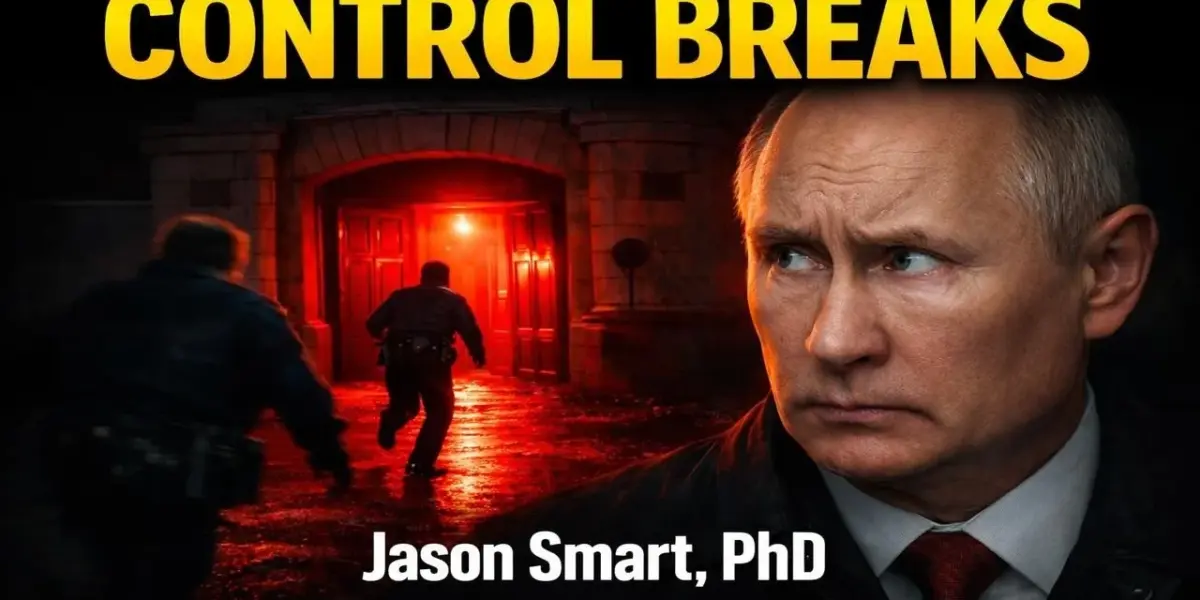
Kremlin Under Siege: Fear Grips Moscow’s Elite
Moscow is signaling a facade of strength, but a closer look reveals mounting unease within the Russian capital. Increased security measures and restricted internet access suggest a government grappling with internal instability. These developments point to a growing fear at the highest levels of power, raising questions about the future of Vladimir Putin’s regime.
Unusual Security Measures Blanket Central Moscow
In recent days, central Moscow has seen an unusual surge in security forces. The Federal Protective Service (FSO), responsible for guarding top officials, has expanded its presence, reportedly checking manholes and infrastructure throughout the downtown area. This heightened activity is mirrored by a significant increase in riot police and National Guard units, whose deployment around the Kremlin and iconic sites like Lenin’s Mausoleum is unprecedented.
The visual of police filling Red Square and surrounding Lenin’s Mausoleum is striking. It contrasts sharply with Putin’s desire to be remembered as a great historical figure, akin to Lenin. Instead, it projects an image of a leader deeply concerned about immediate threats within his own capital. A secure government typically does not require such a heavy show of force in its own center.
These actions suggest a deep-seated concern about potential sabotage, betrayal, or unrest. The deployment of armed units in pickup trucks with mounted machine guns, described as “over the top,” further emphasizes the perceived level of threat. While internet restrictions might aim to quell public dissent, the extensive security sweeps point to a fear of more direct and immediate actions, possibly involving explosives or covert attacks.
A System Under Strain: The Rise of Elite Clans
For two decades, Dr. Jason Smart, a special correspondent and national security advisor, has studied the Putin regime. He notes that the current situation in Moscow is unlike anything he has witnessed before, even during times of normal political activity. This period of heightened tension and visible security operations suggests something significant is unfolding beneath the surface of Russian politics.
Beneath the visible security, a complex power struggle appears to be shaping the future of Russia. Observers point to the increasing influence of interconnected clans within the security and state elite. These groups, often with ties stretching back to Vladimir Putin’s early career in the KGB, are strategically positioning their next generation within key financial and intelligence institutions.
One prominent example is the family of Nikolai Patrushev, a close Putin confidant. His son, Dmitry Patrushev, is considered a strong contender for future leadership. Similarly, the sons of other long-serving officials, like FSB head Alexander Bortnikov and former Prime Minister Mikhail Fradkov, now hold significant positions in major state-owned banks and entities crucial to defense spending. This pattern suggests a deliberate effort to control Russia’s strategic financial resources and future economic direction.
Nepotism or Strategic Control?
This trend extends beyond the highest echelons. The son of Sergey Korolev, a trusted lieutenant within the FSB, heads a company that provides crucial technical services to the government. This includes systems for monitoring telecommunications (SORM) and filtering internet traffic, granting them significant intelligence-gathering capabilities. These interconnected networks, built on decades-old friendships, appear to be consolidating power by controlling both coercive state apparatus and vital information infrastructure.
The recent arrests and sidelining of figures like Ruslan Tsalikov, previously associated with the Ministry of Defense, are seen as part of this broader consolidation. These individuals, often linked to corruption or perceived inefficiencies, are being replaced by those with financial backgrounds. The appointment of figures like Andrei Belousov, who comes from a finance and economics background, to key positions, including potentially heading the military, signals a shift. His role may be to identify and root out corruption, channeling funds towards the regime’s objectives rather than military effectiveness.
However, this focus on financial control and internal purges does not appear to be improving Russia’s military performance in Ukraine. Reports from the front lines continue to describe confusion and a lack of clear strategy among Russian forces, even as Russia loses territory.
Nationalists vs. Pragmatists: A Shifting Ideology
While nationalist voices, like those of Alexander Dugin, are sometimes amplified in Western media as “Putin’s brain,” their actual influence appears limited. Putin himself seems to use nationalist rhetoric to achieve his goals but does not appear to share a deep ideological commitment to it. His primary focus, according to observers, remains personal enrichment and the consolidation of power for himself and his inner circle.
This focus on personal gain is evident when examining the military’s sons. They are not leading patriotic organizations or serving in the military themselves. Instead, their positions are secured within lucrative state-controlled enterprises, suggesting that the current power structure views the state and military primarily as tools for financial gain rather than ideological advancement.
The Kadyrov Conundrum and Unseen Forces
The situation with Ramzan Kadyrov, a key regional enforcer and head of the Chechen Republic, further illustrates the regime’s evolving dynamics. Kadyrov’s recent disappearance from public view for 17 days, amid reports of failing health, has fueled speculation. His desire for his son, Adam Kadyrov, to succeed him has reportedly been thwarted by the Kremlin, which is now applying legal measures to prevent the succession. Adam Kadyrov’s own serious car accident, which resulted in fatalities and reportedly left him with vision impairment, adds another layer of complexity.
Putin’s decisions regarding the Kadyrov family suggest a proactive approach to shaping the post-Putin era, determining who is trusted and who is not. This extends to the use of parallel structures, like Unit 795, which operates outside traditional intelligence services. This unit is reportedly tasked with carrying out sensitive operations abroad, including sabotage and assassinations, suggesting Putin relies on trusted, deniable assets for his most critical missions.
The Looming Instability
The confluence of heightened security in Moscow, the internal consolidation of power among elite clans, and the sidelining of figures like Kadyrov points to a regime under significant stress. The system appears increasingly destabilized, with a palpable sense that something major is about to occur. While the exact nature of these events remains unclear, it is evident that the end of the Putin era may be drawing closer.
“What’s going on inside of Moscow is truly inexplicable. We’ve never seen this sort of thing happen in Moscow. Not during normal times, and it’s all a sign that there’s probably, in fact, something really going on.”
Source: Kremlin’s Succession Fight Just Exploded (YouTube)

Related Articles

G7 Allies Clash Over Iran War Strategy, Urge Focus on Russia
G7 foreign ministers met in Paris, revealing deep divisions over the U.S. war with Iran. European allies urged the U.S. to pressure Russia, linking its actions to the conflict and fearing support for Ukraine will wane.


US Must Block China’s Tech Access for Security
US national security experts are raising alarms about China's access to advanced AI chips, arguing it threatens strategic advantages. This, coupled with charges against Chinese entities for fentanyl precursor sales and a ban on foreign routers, signals a growing effort to prioritize security over business ties.

Iran Blocks China Ships, Exposing Beijing’s Weak Grip
Iran's recent decision to block Chinese ships at the Strait of Hormuz is exposing the limits of Beijing's influence in the Middle East. This action is causing delays and cancellations for Chinese manufacturers, turning a perceived geopolitical win into an economic strain.